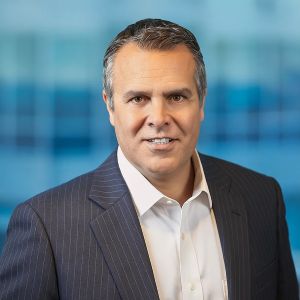
Roland Austrup Podcast Transcript
Roland Austrup joins host Brian Thomas on The Digital Executive Podcast.
Brian Thomas: Welcome to the Coruzant Technologies, home of The Digital Executive podcast.
Do you work in emerging tech, working on something innovative? Maybe an entrepreneur? Apply to be a guest at www.corruzant.com/brand.
Welcome to The Digital Executive. Today’s guest is Roland Austrup. Roland Austrup serves as Chief Growth Officer and member of the executive Committee at Innventure, an industrial growth conglomerate that creates and operates standalone companies from breakthrough technology solutions developed by multinational corporations.
Since joining Innventure’s leadership in 2021, Roland Austrup has held multiple strategic roles, including Chief Financial Officer and Head of Capital Markets, bringing decades of financial expertise to the company’s unique model of commercializing, validated R and D.
Well, good afternoon, Roland. Welcome to the show.
Roland Austrup: Thanks, Brian. Nice to be here.
Brian Thomas: Absolutely, my friend. I appreciate it. And you’re coming way of Toronto, Canada via Florida or vice versa. I know you travel quite a bit and back and forth. I’m in Kansas City. I just appreciate you making the time to jump on the calendar and making this happen. So Roland, jumping into your first question.
You’ve served as Chief Financial Officer, Head of Market, Capital Markets, and now Chief Growth Officer. What have you learned about scaling industrial technology companies that most growth leaders overlook?
Roland Austrup: Well, that’s a good question, Brian. I’ve certainly learned a lot. I imagine other growth leaders may learn these same lessons along the way, but I think the main lessons I’ve learned are that specifically with industrial technology, that you can really underestimate lead times and capital intensity.
And similarly, customer adoption cycles can also be slow. There are barriers to overcome. Buyers that are generally very conservative and move cautiously. They need warranties. They need proven reliability. They need, quality assurance. They need to know there’s a supply chain.
They just won’t take risks in adopting innovation. And so, there’s a trust building and validation period before adoption. And I think a lot of growth leaders underestimate that. The last couple of things I would say is you don’t know what you don’t know, particularly when you’re transforming, uh, an industry or disrupting an industry, you, you’re creating new paths and so you have to be very adaptive.
And I think the last lesson would be, don’t assume if you build it, they will come and. And that that’s both in terms of the customer and capital. Oftentimes growth. Leaders assume that if they have a good strategy, capital will be available. You have to have a capital strategy internally as well, and, and you really just have to mitigate.
The bottom line is you have to mitigate a lot of the risks before you decide to embark on skilling and in industrial technology.
Brian Thomas: Thank you. And there’s certainly a lot there. It’s can be a difficult industry. You’ve had some guests on here that talk quite a bit about this, but just highlight a couple things.
You did mention customer adoption cycles are slow. Typically in this industry people are more risk averse. Right? Slower to kind of adopt that. And then of course you need, definitely need to have that capital strategy, which I think is important. So, I appreciate that. And Roland Innventure has a unique model.
Creating standalone operating companies from validated technologies inside multinational corporations. How does this approach differ from traditional venture capital or corporate venture models?
Roland Austrup: Good question again, Brian. I, so there’s a couple parts to that. What’s our process, I think right at the front?
How do we differ from venture models? Venture models are typically models whereby investors are investing in a diversified way across a number of entrepreneurial businesses. I don’t. It’s more of a game of, uh, probabilities. If you make a number of investments, you expect a certain percentage of them to be very successful, other ones not to be, and you’re sort of starving the losers and feeding the winners.
So, it’s a little bit like spread betting. In our model, we are the owners and operators of the businesses we create, and we are not investing in first time entrepreneurs. As mentioned, our, what makes our model unique is that we’re 100% focused on a systematic approach of working with multinational corporations.
To unlock technologies, they’ve developed. And for us, that’s a multinational research. It’s a 700 billion to a trillion dollar a year ore body where we can look for proven technologies that they’ve developed beyond a proof of concept and where they help us a catalyze adoption by, providing pathways to the market or themselves being an early customer or first customer.
So, our model is very, very different. We’re not investors in a number of other people’s businesses. We create a small basket of companies that we manage carefully and expect to have a high growth corporate venture. The difference between corporate ventures is a little bit different and it really has to do with some of the barriers that stand in the way of corporate innovation.
And I think we, we actually offer a solution because part of the problem with corporate venture is. That they’re spawned from within an organization that has, more vertical structures and they’re not necessarily attuned to innovation and entrepreneurial ship.
Brian Thomas: Thank you, and I appreciate you unpacking that for our audience we can get into the weeds sometimes, which is helpful to get us up to speed on, on what you’re really doing, but I like the fact that. Your model you talked about is very unique typically from, those venture models where investors are investing in that diversified.
Portfolio with, there’s some probability, right? You’re unique. Your model is unique because you’re a hundred percent focused on that systematic approach to those types of technologies in those multinational corporations. So, I appreciate that. And Roland, many corporations struggle to turn R and D into real world commercial success.
What systematic barriers do you see inside large organizations and how does Innventure help or overcome them?
Roland Austrup: That’s a good follow on to the previous question in terms of how we differ from venture models. I mean, I think some of the barriers that exist within large corporations is that innovation doesn’t necessarily align with core.
Business models, large corporations are very good at R and D. That incrementally improves what they’re doing, but it’s not necessarily geared towards innovation, we also don’t, the, the risk tolerances are also very different within large organizations. They tend to be more focused on predictable, ROI, not on ventures that might have long lead times and adoption cycles.
They’re, again, they’re much more focused on, their risk tolerance are much more focused on. How do we maintain certain growth rates and have a predictable ROI? And as I mentioned earlier, the organizational structures of large corporations don’t naturally align with innovation. You need, with innovation. You need a lot of cross collaboration amongst an organization. So you really need horizontal structures, not vertical structures that are, that are quite siloed. So, really what we do, and that’s, that’s the whole, beauty of our model is we think we are a bridge between corporate R and D and entrepreneurial execution to get disruptive technologies to market.
So, we really unlock commercialization pathways for major multinationals.
Brian Thomas: Thank you. I appreciate that. And I like how you talked about those larger organizations, their risk tolerance, right? It’s a lot, lot, very different. Of course. And their focus is on that predictable ROI, which I thought is interesting and I know.
Yet, you need to be very prudent in these large corporations when you’re trying to make decisions like that. And then of course you talked about some of that siloing and, and it’s better to have that horizontal structure. So again, I appreciate that and Roland, in the last question of the day.
What macroeconomic or technical forces like AI, supply chain shifts, reshoring pressures, et cetera, will most impact the industrial growth landscape over the next five to 10 years?
Roland Austrup: Yeah, I think well you, you have a, you have a, I think really there’s two main sets of forces that you have to pay attention to, as you mentioned, macroeconomic forces.
And really what you’re looking at there is you’re looking at things like long-term growth rates, inflation geopolitical factors, and demography as well, or demographics. We do definitely have an aging workforce in large parts of the industrial world. And so, those can provide, I mean, today you could argue that there are some headwinds from growth and inflation growth concerns, inflation concerns, and geopolitical landscape.
And again, demographics you could say is headwind, due to the aging population of developed countries. But offsetting that I really. Think that the number of ways in which you can increase global GDP growth from productivity are, are just enormous. I mean, you’ve heard the term, industrial Revolution 4.0 or Industry 4.0.
AI, industrial robotics are going to create incredible pathways to improve productivity. And that I think is a big tailwind. And that can more than offset macroeconomic headwinds. So, the future’s uncertain. You really can’t predict. What you can do though, is understand where the fault lines are and, and take advantage of that in terms of how they how they, fallen one way or the other, but my own personal view is that the opportunity is very significant. Certainly North America has done a very good job of unlocking innovation and, and the trend towards Nearshoring or reshoring is very real. And that’s the whole part of the Innventure model is that we are trying to systematically find disruptive or transformative technologies from major multinationals, find ways in which to create businesses on shore and create.
Productivity enhancement in North America. And I really think that’s that, that future looks bright.
Brian Thomas: Thank you. I appreciate that. You talked about Industry 4.0, right? It’s a pretty big thing. We talk about a lot on the podcast here. But in, in your words, basically.
Industry 4.0 should be a tailwind, like all this innovation and technological growth and automation to the macroeconomic headwinds you talked about, which is geopolitics, demographics, growth, inflation, et cetera. So, I appreciate you sharing your insights with our audience today, and Roland it was such a pleasure having you on today, and I look forward to speaking with you real soon.
Roland Austrup: Well, thank you very much, Brian. It’s been a pleasure being here today.
Brian Thomas: Bye for now.
Roland Austrup Podcast Transcript. Listen to the audio on the guest’s Podcast Page.