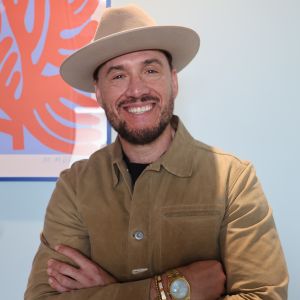
Jason Allan Scott Podcast Transcript
Jason Allan Scott joins host Brian Thomas on The Digital Executive Podcast.
Brian-Thomas: Welcome to The Digital Executive. Today’s guest is Jason Allan Scott. Jason Allan Scott is an entrepreneur who has built 11 companies and been involved in nine successful exits over the past 35 years. He has built seven-figure businesses without employees and has spent decades helping founders build businesses that are more valuable, more profitable, and less dependent on the owner.
Today, he advises entrepreneurs on growth, positioning, authority, and creating businesses that generate freedom rather than obligation. He is also the founder of the Soul Method, a premium body transformation brand building a global network of practitioners through training, licensing, and education. His philosophy is simple: build a business that gives you more choices tomorrow than it takes away today.
Well, good afternoon, Jason. Welcome to the show.
Jason Allan Scott: So, Brian. Pleasure to see you.
Brian Thomas: Appreciate that, really do, and I know we’re traversing some time zones to do this today. You’re in London, England. I’m in Kansas City, so I appreciate you making the time navigating those time zones and calendars. So Jason, if you don’t mind, I’m gonna jump into your first question.
You’ve built 11 companies, achieved nine successful exits, and spent more than three decades as an entrepreneur. Looking back, what pivotal moments or decisions shaped the path that brought you to where you are today?
Jason Allan Scott: I think there was two. I think as a child, I saw a film by Sir Anthony Hopkins and the actor Alec Baldwin, of which takes place your side of the pond, where two men are left stranded in the middle of a forest and they have to fight off a grizzly bear to survive.
And in it, Sir Anthony plays this incredible entrepreneur and Alec is, is a photographer for supermodels, and which makes complete sense, and not much suspension of of belief needed for that. And in it, Alec isn’t scared. Sorry, Alec is incredibly scared. Sir Anthony is not scared. And Sir Anthony says this line, “What one man can do, another man can do.”
He says, “Say it with me. What one man can do, another man can do. Men for thousands of years have fought against grizzlies and survived, so we can do it as well.” And as a child, that made me think that, one, entrepreneurship was probably one of the greatest ideas in the history of the world, and coming from a very poor family in a minority in a country that was going through civil unrest, this was the mantra that would save my life.
And the second was something that happened much, much later when I realized that I was measuring the wrong thing. Early on when I started my businesses, I chased revenue because I- that’s what everyone talked about. That’s what everyone celebrated. The bigger the, the turnover, the sort of, the idea was the, the bigger you were as a company.
But then I started meeting founders who were doing 10 million or 100 million a year or more, but they couldn’t take a weekend off. I once, couple of years back, did six weeks in Mexico just going five-star res- re- resort after five-star resort, and I’d meet these multimillionaires, mostly from your side again, from America, who said, “How can you take so much time off?”
And I realized that success isn’t the money or the revenue. It’s where the options are. And since then, every business I’ve built has been designed around this idea of creating more freedom, more value, and more choice. Which is ironic because those businesses become easier to sell because business buyers, well, they want systems, not heroes.
Brian Thomas: That’s awesome, and I appreciate the backstory there and the, the movie you talked about. And gosh, like at the top of my head, I can’t remember that, but I did see that years ago. The Edge. The Edge, that’s right. But that’s, that, that’s amazing. And, and that’s a perfect correlation there to the business industry and being an entrepreneur.
What one man can do, another man can also do absolutely, if you put your mind to it. And I just love the freedom that you’ve built around this in, in your system, and we’ll get into that here, just here in a second. And, and that’s where I’m, I’m kind of switching gears. You’ve often said that entrepreneurs should build businesses that create freedom rather than dependency.
What experiences taught you that lesson, and why do so many founders end up building the opposite?
Jason Allan Scott: I think, I think it’s a situation of– this is difficult because I used to have a, a canned answer, and a canned answer is an easy way to say I have an answer that I say all the time because it resonates with the most amount of people.
But the truth is, recently I’ve, I’ve had a very different insight, and I think people do what they’ve always done, and I think people do what others have always done. So I think that has been the most difficult thing is, is realizing that mindset and the ability to learn, the ability to say, “I don’t know the answer,” is the hardest thing a business person has to do, right?
I, I always tell founders, when you don’t know your options, you don’t have any options. And most businesses, they accidentally become jobs because most businesses are started by experts. There’s another– a great book called The E-Myth that talks about experts who start businesses. Someone’s good at cooking, someone else says, “You should open a restaurant.”
They become a cook for someone else’s restaurant. They think, “I could do this better.” They open a restaurant. They don’t know anything about business. They understand the expert side of their business, and their business becomes a job. And every time they get an invoice, they think, “Well, I have to stay and do this.”
And every problem they solve is within their expertise. And event- and this happens when they close sales or… In the beginning, it’s all exciting because you’re going, “My expertise makes money. There’s this reward system for being an expert in my space.” But eventually it becomes a set of golden handcuffs, right?
It becomes a prison. And buyers, well, they don’t want businesses that fall apart when the owner leaves. So instead, we should be asking, “What does the end of this look like?” I, I say I’m very good at business. I’ve got a great track record. I’ve got a terrible track record romantically. I’ve had three divorces.
And that’s because in a business relationship, you start at the end. What does the end look like? And in a love relationship, you should be starting every day with what’s today look like, and am I willing to change as you change? And it’s very different. The one sort of moves forward and the one moves backwards.
So I, I talk about systems. I say, “How does this grow? How does this get to where it needs to be? What has to happen for this result to be inevitable?” And that’s where real value comes from
Brian Thomas: Thank you. And that’s absolutely foundationally in all, all businesses we talk about that, having a good system, framework, process in place so that when the owner does leave or take some time off, six weeks in Mexico, they’re able– that business is able to continue to churn and run like like, like the owner was still there.
So I, I really appreciate that, and that really helps businesses succeed and thrive in that space. Jason, your latest venture, I wanna talk about the Soul Method, takes you into the wellness and aesthetics industry. What attracted you to the market, and how do you evaluate opportunities before committing your time and capital?
Jason Allan Scott: I’m gonna break that up into two parts, ’cause I think it’s an excellent question. It’s actually the, my favorite question. The first is people sometimes think this idea of Soul Method is a big change for me, that I’ve recently sold a media company, I sold a platform that rented workspace and creative places by the hour or by the minute.
But it’s the same business philosophy I’ve applied to every different industry I’ve been in. I don’t invest in something, whether with time or money, because it’s fashionable. I look for industries where demand is growing, customers get measurable results, people doing it can be profitable in their businesses, and the model can eventually be licensed or scaled.
And Soul Method is, is exactly that. It’s I’m basically building an operating system behind thousands… I mean, there’s more in the US, where you are, there are more med spas currently than there are McDonald’s. There are twelve thousand five hundred McDonald’s as of this podcast, whereas there are over fourteen thousand med spas.
That means there is a growing need for something. There’s an aging population, and yet there are people that start these things and don’t know how to turn it into a profitable business, because the business side again is missing. And I think there’s a real opportunity to help people help themselves, their families, and their communities by adding all the stuff that I’ve done previously to what is basically a gym.
And I’ve, I’ve worked in gyms before. I have happened to have worked and built as a big part of Holmes Place, which eventually sold to Sir Richard Branson, which became Virgin Active gyms. And I look for a formula. I have an exact formula for what I think a perfect business is. Unique, sticky, expensive, air.
It needs to be in a category where you are not compared to someone else. There’s a great book called The 22 Immutable Laws. It is the category… It is The Law of Category, it is chapter two, and it talks about that someone should think of you as being the only one in that space. It needs to be sticky. You wanna sell to someone once, and they just keep buying.
You don’t have to keep selling to them again and again and again and again. You want it to be expensive, because you want the profit margin so great that you care more about every single sale But also you’ve got buffer. I once sold med tech equipment, and I had a med tech company that I built with my dad back in 2008, which we sold in 2023.
Made my dad a decamillionaire, now lives on an island in Mauritius. And the idea was very simple. You’d buy a machine from us for 25 grand, we’d spend three days with you, we’d make you- we’d help you make 50 grand, and you’d go and tell everyone. We bought those machines for 12 grand. So we had a lovely profit margin to be able to help.
20 locations later, we managed to sell that company to a big medical company. So I think that’s what I look for, unique, sticky, expensive, and then AIR. What does AIR mean? It means that anyone should be able to explain what you do to their friends, so that every single person that meets you, that speaks to you, becomes a billboard for you, becomes a salesperson.
Every customer becomes your advertising. They’re telling people how they spent 25 grand and made 50 grand over the space of five days, five working days, because I didn’t work on weekends. And that is… And we opened the very first medi-spa in the Hamptons. We, we tr- flew all across the US. We did Asia, we did the UK, we did Europe, a- and it was just this idea of one by one by one, unique, sticky, expensive, AIR.
And every business I’ve created, bar one I built a as I said, a, a marketplace for spaces. That was very similar to Airbnb. It wasn’t that unique. It was very similar to Peerspace in the US. It wasn’t that unique. There were quite a few other examples of the same idea. I just did it in a unique way, so that was kind of my way of separating myself from the herd
Brian Thomas: That’s amazing. Thank you. Th- this industry, obviously med spas, you talked about them, health and wellness is a big thing and of course- Bigger than pharma
Jason Allan Scott: currently in the US.
Brian Thomas: Wow. I think there’s a shift there too, and that’s another… for another podcast, pharma and, and natural health natural healing as I like to call it.
But that sticky expensive, unique- Unique … and, and air, right? I, I think tho- that’s interesting, and thank you for unpacking that, and you really helped a lot of our entrepreneurs think outside the box, I would say, that are listening today because again, whenever I get an entrepreneur founder on the podcast and they share some tidbits, it’s always great, and I, I– we always get feedback, so I appreciate that.
And Jason, the last question of the day, as you look ahead, what major shifts do you see shaping entrepreneurship over the next decade? And what advice would you give founders who want to build businesses that are not only profitable, but enduring?
Jason Allan Scott: You do have some great questions, by the way, and I do a lot of podcasts.
I really thought your questions were incredibly poignant, but also maybe more importantly, that they give you a chance to really offer value to the audience. I think AI is gonna make information almost worthless because everyone will suddenly have access to it. Everyone will suddenly have Alexander the Great’s famous library.
But what we know from, the, the last twenty or thirty years of the internet alone, is that if information was truly implemented, everyone would be billionaires with six-packs. Information is simply not enough. What will become scarce are things like judgment, things like taste, things like trust, execution, relationships, distribution.
So I tell founders to spend- You know, spend less time trying to know more, more about the technology, more about the agents, more, more, more, and more time building things that people can’t easily copy. Again, be unique. That they own the relationship with the customers. One of the big problems with med spas, for example, as I learned, is that if someone finds your, your process and can then take it and open their own med spa, right?
So you really do wanna own the relationship with the customer. The customer comes to you personally. You wanna build systems that work independently by themselves without you. The greatest thing McDonald’s ever did wasn’t to find another way to invest with land or to put an asset behind something as crazy as a relat- as a relationship with a restaurant.
It was about an operating system that could be handed to absolutely anyone, and they could immediately create a successful McDonald’s. You wanna focus on solving real problems. I’m not talking about real problems, I’m talking about pain. You wanna run a hospital, not a vitamin shop. You can walk in a vitamin shop, walk out of a vitamin shop and feel no guilt.
But if you cut off your leg, you will pay anything in the world to a hospital to solve that pain. You wanna solve the problem of pain. The next, and this is probably the most important, is that revenue is vanity. Profit and freedom is sanity. If your business gives you more options every single day, every single week, every single month, every single year, you’re probably building something insanely valuable, and it’s in value that everyone will come to you.
People will bang at your door. I was saying this to someone yesterday who does fifty million ARR, and he was saying, “Why do you wanna work with me?” And I said, “Because I have somehow got through thirty years without doing a single stitch of advertising.” I’m really good at sales. I’m really good at product and service.
And if you’re really good at those things, you don’t really need to ever worry about advertising. You worry about advertising ’cause you’re not good at sales, and you worry about s-sales ’cause you haven’t made a great product. So start with a great product. Work your way backwards from what does this look like at the end?
Make sure it’s a pain. Make sure you know who the people are that have the pain. Make sure those people who have the pain have the money to pay you to solve the pain. Make sure it’s unique, sticky, expensive air, and you will have a business anywhere, no matter what future we’re in.
Brian Thomas: That’s beautiful. Thank you for sharing those nuggets, those gems, as I like to call them.
And then you said that revenue is vanity, but profit and freedom is … Sanity … sanity. That’s right. That’s, that’s awesome. I, I thought that was really cool. And again w- s- absolute gems today. And of course, we know this, if you can help people find a solution for their pain, that’s kinda where the, the sales come together.
And we’ve heard l- many of sales leaders and entrepreneurs talk about the same thing. But you, you put everything so succinctly today, and I really appreciate, and I know my audience will as well. So thank you. Jason, it was certainly a pleasure having you on today, and I look forward to speaking with you real soon.
Jason Allan Scott: I’d absolutely love that. Where I’m from, we have a saying, it’s called Sawubona. It means I see you, and I’m better off because I see you. So, I say to you and your audience, Sawubona.
Brian Thomas: Thank you. Bye for now.
Jason Allan Scott Podcast Transcript. Listen to the audio on the guest’s Podcast Page.