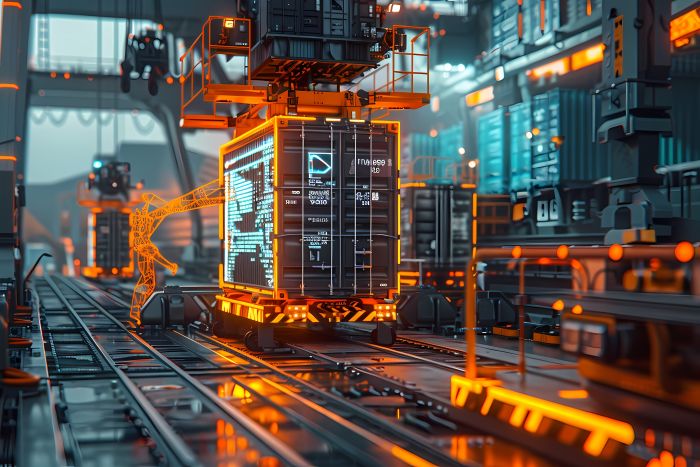
Industrial workplaces have shifted from environments defined by manual labor and mechanical routine to spaces shaped by sensors, software, and connected machinery. The pace of this shift has caught many operators off guard, with older facilities racing to catch up while newer plants are designed around digital systems technology from the ground up. What used to be a slow upgrade cycle measured in decades has compressed into yearly improvements, and the businesses that adapt fastest tend to capture the biggest gains in safety, output, and worker satisfaction. The trends driving this transformation are not isolated experiments but interlocking systems that depend on one another to function well.
Key Takeaways
- Industrial workplaces are transforming into digitally connected environments driven by smart technology, improving efficiency and safety.
- Connected machinery allows for predictive maintenance, enabling teams to address issues before they escalate, thus maximizing uptime.
- Automation now goes beyond repetitive tasks, allowing workers to focus on problem-solving through intelligent machine interactions.
- Wearables enhance worker safety by monitoring conditions and guiding safe practices, which increases employee buy-in for technology use.
- Digital twins and energy management tools support planning, training, and sustainability, making industrial operations more efficient and competitive.
Table of contents
- Smart Maintenance Technology for Heavy Equipment
- The Rise of Connected Machinery
- Automation Technology Beyond Repetitive Tasks
- Wearables and Worker Safety
- Digital Twins for Planning and Training
- Energy Management Technology and Sustainability Tools
- Cloud-Based Collaboration Across Sites
- Preparing the Workforce for Continued Change
Smart Maintenance Technology for Heavy Equipment
Heavy equipment on industrial sites takes a beating, and aerial lifts are among the hardest worked machines in the mix. For example, JLG units are common across warehouses, construction zones, and maintenance operations, and, like every other lift, these lifts also rely on dozens of small components that wear out under heavy-duty cycles. When a JLG boom lift or scissor lift goes down, the work above ground stops entirely, and crews scheduled around that lift lose hours they cannot recover. Learn more about sourcing replacement parts built specifically for JLG aerial lifts if you’re using them in your warehouse, including the components that fail most often during heavy use.
The Rise of Connected Machinery
Machinery on the factory floor no longer operates in isolation. Equipment now communicates with central systems through embedded sensors that track temperature, vibration, runtime, and dozens of other variables. Supervisors can pull up a dashboard and see at a glance which machines are performing normally and which are showing early warning signs. This visibility allows maintenance teams to address small problems before they grow into shutdowns, and it gives planners accurate data to schedule production runs around actual machine availability rather than guesswork. The shift from reactive to predictive maintenance has been one of the clearest wins of the connected era.
Automation Technology Beyond Repetitive Tasks
Automation in industrial settings used to mean a single robotic arm performing the same motion thousands of times a day. The newer generation of automated systems handles tasks that require judgment, including quality inspection, material sorting, and adjustments based on changing inputs. These systems learn from the patterns they observe and improve their accuracy over time. Workers who once spent shifts on repetitive checks now focus on supervising the automated process, intervening when something falls outside expected parameters, and refining the logic that guides the system. The result is a workforce that spends more time on problem-solving and less on routine motion.
Wearables and Worker Safety
Personal technology has entered the industrial workplace through wearables designed to protect the people doing the work. Helmets with built-in sensors can detect impacts and alert supervisors immediately. Vests track posture and warn workers when they are lifting in a way that risks injury. Smart glasses can display instructions or schematics directly in the field of view, reducing the time a worker spends consulting a manual while handling delicate tasks. These devices generate data that safety teams use to identify patterns and redesign processes that lead to repeated near misses. Worker buy-in has grown as people see the technology preventing injuries rather than monitoring their performance for punishment.
Digital Twins for Planning and Training
A digital twin is a virtual replica of a physical asset, whether that asset is a single machine, a production line, or an entire facility. Engineers use these models to test changes before applying them to the real environment, which saves time and avoids costly mistakes. A team can simulate the impact of a new layout, a different raw material, or an adjusted shift schedule and see how the system responds. Training programs have also adopted digital twins, allowing new workers to practice on virtual versions of equipment before touching the real thing. This approach shortens the learning curve and reduces the risk of accidents during onboarding.
Energy Management Technology and Sustainability Tools
Energy costs and environmental requirements have pushed industrial operators to adopt tools that measure and manage power consumption at a granular level. Smart meters track usage by machine, by line, and by shift, revealing where energy is being wasted and where efficiency improvements would have the biggest impact. Some facilities now run software that automatically adjusts equipment behavior based on grid demand and pricing, shifting energy-intensive tasks to off-peak hours. The same systems often feed sustainability reports that companies need for regulatory compliance and customer requirements. What started as a cost-cutting effort has become a core part of how plants present themselves to the wider market.
Cloud-Based Collaboration Across Sites
Industrial companies that operate multiple facilities now rely on cloud platforms to share data, coordinate production, and standardize processes across locations. A quality issue identified at one plant can be flagged across the network within minutes, allowing other sites to check for the same problem before it reaches customers. Engineering teams collaborate on design changes in real time, with version control handling the complexity of multiple contributors. This connectivity has flattened the old structure where each facility operated as a near-independent unit, replacing it with a network that learns from itself and improves at the speed of its fastest site. Smaller operators are also tapping into the same platforms, gaining access to coordination tools that were once limited to enterprise budgets.
Preparing the Workforce for Continued Change
The technologies reshaping industrial workplaces depend on people who understand how to use them, maintain them, and improve them. Training programs have expanded to cover data interpretation, basic coding, and the operation of advanced equipment. Companies that invest in upskilling their existing workforce tend to retain talent better than those that try to hire entirely new teams for each technology wave. The future of industrial work belongs to organizations that treat technology and people as two sides of the same investment, recognizing that even the most advanced system needs skilled hands and informed judgment to deliver its full value.