
Online education is an ever-growing demand in this digital-forward world, and learning platforms are becoming the primary gateway to knowledge for millions of learners worldwide. However, when digital course materials are not designed with online learning accessibility in mind, they unintentionally exclude students who rely on assistive technologies, alternative formats, or simplified content structures.
To truly scale education, platforms must ensure learning materials are accessible to everyone, regardless of ability or learning context.
Table of contents
Why Online Learning Platforms Must Prioritize Accessible Course Materials
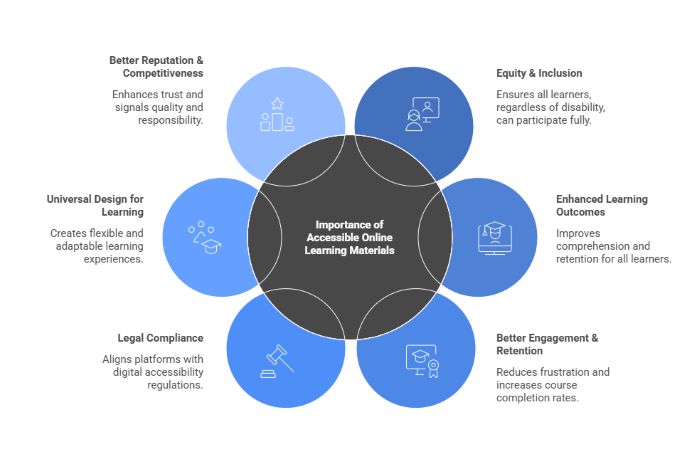
Creating inclusive digital education requires more than high-quality content. It demands intentional design choices that ensure materials are usable, understandable, and navigable for all learners. Here are some of the most valid reasons that make accessible online learning materials non-negotiable:
1. Equity & Inclusion
Online learning accessibility materials ensure that learners with visual, auditory, cognitive, or motor disabilities can participate fully in online education. When e-learning platforms design content that accommodates diverse student needs, they take a step forward in closing learning gaps and promoting equitable access to knowledge across global audiences.
2. Enhanced Learning Outcomes
Clear structure, readable layouts, captions, transcripts, and accessible documents benefit all learners. Accessible online courses can lead to improved comprehension, reduced cognitive load, and better information retention, especially in self-paced learning environments.
3. Better Engagement & Retention
When learners can easily navigate course materials and understand content without barriers, they are more likely to stay engaged and complete courses. Accessible online courses reduce frustration, improve user satisfaction, and help platforms retain learners over time.
4. Legal Compliance
Many regions enforce digital accessibility regulations for educational content. Failure to meet accessibility standards can expose online learning platforms to legal risks, reputational damage, and lost partnerships. When platforms prioritize online learning accessibility, they stay aligned with evolving compliance requirements, reducing their chances of non-compliance.
5. Universal Design for Learning (UDL)
Online learning accessibility aligns closely with Universal Design for Learning principles, which encourage multiple ways of presenting content, engaging learners, and assessing understanding. Applying UDL principles makes courses flexible, adaptable, and effective for a broader audience.
6. Better Reputation & Competitiveness
Platforms known for inclusive design are viewed as more trustworthy, future-ready, and socially responsible. Accessibility signals quality, professionalism, and long-term commitment, which are key factors in earning a learner’s trust.
How to Make Course Materials Accessible
Creating accessible course materials is not a one-time task—it requires a structured, ongoing approach. By integrating accessibility into your content development process, you can ensure that all learners, including those using assistive technologies, have equal access to educational resources. A well-planned strategy also helps maintain consistency, reduce rework, and improve overall learning outcomes.
Below are key approaches to make your course materials more accessible:
1. Use Online Learning Accessibility Software Tools
Accessibility tools play a crucial role in identifying and fixing issues early in the content creation process. These tools can automatically scan materials and highlight common problems, helping teams save time and avoid costly revisions later.
They typically help detect:
- Missing headings or improper document structure
- Poor color contrast affecting readability
- Unlabeled images or missing alt text
- Inaccessible PDFs and multimedia elements
By integrating these tools into your workflow, you can ensure that accessibility is built into your materials from the start rather than added as an afterthought.
2. Outsource to Online Learning Accessibility Service Providers
For organizations managing large volumes of content or complex document formats, outsourcing accessibility work can be a practical and scalable solution. It ensures that materials meet required standards without overburdening internal teams.
Professional pdf remediation services by Continual Engine help you convert PDFs, documents, presentations, and learning resources into fully accessible formats. These services ensure compatibility with screen readers and other assistive technologies while maintaining the original content quality and structure.
Outsourcing is particularly useful for:
- Legacy content that needs remediation
- High-volume course libraries
- Technical or compliance-driven projects
3. Hire Accessibility Experts
Accessibility is more than just fixing technical issues—it involves understanding user behavior, inclusive design principles, and compliance standards. Hiring specialists can significantly improve the quality and effectiveness of your accessibility efforts.
Online learning accessibility experts can:
- Conduct audits and identify gaps in existing content
- Ensure alignment with standards like WCAG
- Guide design and development teams on best practices
- Improve usability for diverse learners
Their expertise enables e-learning platforms to move beyond basic compliance and create genuinely inclusive and user-friendly learning experiences.
4. Train Your Team
Building accessible content becomes much easier when your entire team understands the fundamentals. Training ensures that accessibility is consistently applied across all stages of content creation—from design to development.
Effective training programs should focus on:
- Writing accessible content and using proper structure
- Designing with color contrast and readability in mind
- Creating captions, transcripts, and alternative text
- Understanding how assistive technologies interact with content
Regular training not only improves content quality but also reduces dependency on rework and external fixes over time.
Conclusion
Accessible education is about creating learning environments where every student can succeed. When online learning platforms prioritize accessibility, they unlock better learning outcomes, broader reach, and stronger engagement. By embedding online learning accessibility into course design and delivery, platforms can support inclusive growth while delivering high-quality digital education for all learners.