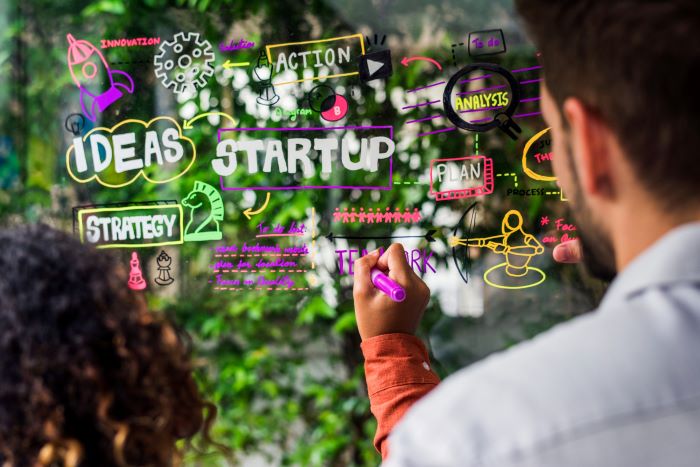
European tech startups have emerged as a powerful engine of innovation, transforming industries from healthcare to climate tech and redefining economic growth across the continent. Unlike ecosystems in the U.S. or Asia that often prioritize rapid scaling and headline valuations, European tech entrepreneurs are increasingly blending sustainable impact with cutting-edge technologies; from AI and blockchain to clean energy and advanced manufacturing. Within this evolving landscape, groups like Eurofounders have helped spotlight how tech businesses are built in Europe, while discussions around startup EU funds have become central to how new ventures access non-dilutive capital to scale and compete globally.
Across major European capitals; including Berlin, Amsterdam, Stockholm, and Lisbon — early-stage startups are emerging with solutions tailored to local and global demand. Unlike traditional large industrial players that defined European markets for decades, today’s tech founders are unencumbered by legacy systems and often approach problems from fresh angles. Their innovations are reshaping everything from digital health records and telemedicine to autonomous robotics and climate modeling platforms. Yet the journey from idea to impact is complex, requiring not only creativity but also strategic access to capital, talent, infrastructure, and support networks.
Key Takeaways
- European tech startups drive innovation across sectors, blending sustainable impact with advanced technologies.
- Emerging tech hubs in cities like Berlin, Amsterdam, and Sofia attract talent and foster collaboration between startups and established enterprises.
- Access to funding is critical, with diverse sources including angel investors, venture capital, and European public funding supporting growth.
- Despite challenges such as talent competition and regulatory complexity, European startups thrive through strategic advantages like cultural diversity and responsible innovation.
- Future trends include distributed computing, blockchain applications, and human-centered AI, positioning European startups to redefine technological standards.
Table of contents
- The Rise of Tech Hubs Across the Continent
- Funding Landscape: From Angels to European Instruments
- Strategic Advantages in the European Model
- Challenges That Persist for European Tech Startups
- Stories of Innovation: European Tech Startups Leading the Charge
- Ecosystem Dynamics: Collaboration Over Competition
- Talent and Workforce Evolution
- The Influence of Regulation and Standards
- What’s Next: Future Trends in European Tech Startups
- How Founders Can Navigate Funding and Growth
- Conclusion
The Rise of Tech Hubs Across the Continent
Europe’s tech ecosystem today is decentralized but deeply interconnected. While cities like London, Paris, and Berlin continue to serve as flagship hubs, emerging clusters in Sofia, Porto, Tallinn, and Kraków are drawing attention for their vibrant talent pools and lower cost structures. These cities are attracting both international founders and local innovators who bring domain expertise from industries such as finance, engineering, and scientific research.
Government incentives, co-working networks, and public-private partnerships have helped cultivate these ecosystems. Universities, research institutions, and incubators play a vital role in bridging ideas with commercial execution. What once were isolated academic breakthroughs now frequently enter the market as scalable enterprises, supported by mentorship, capital, and community.
Funding Landscape: From Angels to European Instruments
One of the most critical determinants of startup success is access to capital. In recent years, European tech startups have seen a diversification of funding sources that support growth across different lifecycle stages.
Angel and Seed Investors
At the earliest stage, individual angel investors and seed funds provide the crucial first capital that enables startups to build prototypes, test markets, and refine business models. These investors often bring industry experience and networks that are as valuable as the capital they provide.
Venture Capital Growth
As businesses demonstrate traction, venture capital becomes an essential source of growth funding. European VC firms are increasingly competitive and sector-focused, backing startups with strong unit economics and clear paths to revenue. While some investors still prioritize long-term profitability over high-risk, high-growth models, many funds are now bridging that gap by supporting scalable AI, fintech, biotech, and enterprise software startups that show both innovation and market opportunity.
European Public Funding Instruments
Public funding has become a significant force in Europe’s startup ecosystem. Beyond national grants and innovation programs that support research and technology development, European Union initiatives have broadened the scope of available support. Multiple programs, aimed at sustainable tech, industrial digitalization, research commercialization, and cross-border expansion, have created new avenues for early and growth-stage funding. For founders pursuing a bootstrapped startup fundraising strategy, aligning with broader sustainability, digital transformation, or social impact goals can make this capital especially valuable, helping de-risk early experimentation and scale.
Strategic Advantages in the European Model
Europe’s approach to tech innovation reflects its cultural, regulatory, and economic diversity. This diversity, once assumed to be a barrier, is increasingly viewed as a strategic advantage. Founders who can navigate multiple languages, legal systems, and consumer behaviors gain versatility that becomes a competitive asset in global markets.
Further, the emphasis on privacy, ethical AI, and responsible innovation positions European startups favorably with global customers who are increasingly wary of data misuse and regulatory risk. Companies that embed trust and transparency into their models – particularly in sectors like health, fintech, and education – often find stronger consumer loyalty and reduced regulatory friction when expanding internationally.

Challenges That Persist for European Tech Startups
Despite progress, European tech startups still face hurdles that can impede their growth.
Talent Competition
While Europe produces highly skilled engineers and researchers, competition for top talent remains intense. Many startups must offer creative compensation packages, flexible work cultures, and strong missions to attract and retain world-class teams. Additionally, migrating talent between countries involves navigating regulatory and immigration frameworks that can slow hiring.
Scaling Across Borders
Operating in multiple European markets introduces regulatory complexity and operational cost. Value-added tax (VAT) systems, labor laws, and localized marketing requirements vary from country to country. Founders must invest in compliance systems and localized strategies to enter and scale in adjacent markets; a cost that does not exist in single-market ecosystems.
Funding Gaps at Later Stages
While seed and Series A funding have become more accessible, late-stage capital – especially for deep tech and capital-intensive startups – remains rare outside marquee ecosystems. This gap sometimes forces promising startups to seek investors in the U.S. or Asia, potentially shifting strategic focus away from European markets.
Stories of Innovation: European Tech Startups Leading the Charge
Europe’s tech ecosystem is rich with inspiring startup narratives that span industries and geographies.
GreenTech and Sustainability
Startups in the green tech space are developing solutions that tie directly to Europe’s ambitious climate goals. These companies are innovating in renewable energy integration, carbon tracking platforms, smart grid technologies, and sustainable supply chain tools. For example, several startups specialize in providing real-time emissions data to industrial clients, enabling more precise climate commitments and compliance reporting.
HealthTech Revolution
Across Europe, emerging digital health startups are transforming patient care, diagnostics, and interoperability of health data. Companies are building platforms that connect disparate healthcare providers, support remote monitoring, and elevate personalized medicine through data analytics and AI.
AI and Enterprise Automation
Artificial intelligence is another frontier where European startups are making significant headway. From augmented data platforms that help businesses operate more efficiently to AI-driven quality control systems for manufacturing, these technologies are reshaping how industries work.
Ecosystem Dynamics: Collaboration Over Competition
Europe’s tech ecosystem is often marked by collaboration among startups, universities, corporations, and public institutions. Joint research projects, shared innovation labs, and cross-border partnerships are common. Startups frequently engage with established enterprises through innovation programs, pilot projects, and strategic alliances that accelerate validation while providing access to markets and supply chains.
Large corporations are also launching venture arms and open innovation initiatives that provide capital and strategic expertise to startups aligned with their business objectives.
Talent and Workforce Evolution
Building a startup today requires more than technical skill. Founders must be adaptable leaders capable of navigating complex market dynamics, cross-cultural communication, and evolving customer expectations. Europe’s workforce – steeped in educational excellence and multilingual capabilities – positions startups to innovate with broader perspectives and diverse teams.
Emerging talent is also coming from bootcamps, freelancing platforms, and hybrid work arrangements that allow startups to access expertise on demand. These flexible talent models help startups experiment and scale without the overhead of traditional employment structures.
The Influence of Regulation and Standards
Europe’s regulatory environment, while sometimes perceived as a constraint, also creates a framework for responsible innovation. Regulations like the General Data Protection Regulation (GDPR) set high standards for data privacy, and upcoming AI legislation aims to govern the responsible deployment of AI. For startups, compliance with these frameworks builds credibility and often acts as a market differentiator, especially when paired with disciplined startup-driven financial modeling that supports transparent, data-informed decision-making.
Rather than bypassing regulation, successful European startups integrate regulatory strategy into product development from the start.
What’s Next: Future Trends in European Tech Startups
Several trends are shaping the next wave of startup innovation in Europe:
Distributed Infrastructure and Edge Computing
With the rise of connected devices and IoT systems, distributed computing and edge computing are gaining traction. Startups are building platforms that empower scalable, low-latency data processing at the edge, enabling smarter industrial systems, autonomous devices, and real-time analytics.
Blockchain and Decentralized Systems
Beyond cryptocurrency, blockchain is inspiring startups to reimagine digital identity, supply chain traceability, and secure data collaboration. These technologies promise new models of digital trust and transparency, particularly relevant to regulated industries.
Human-Centered AI
Rather than building generic AI solutions, European startups are focusing on AI that augments human capabilities, respects ethical boundaries, and enhances accessibility. This focus aligns with broader cultural values around inclusivity and responsible use of technology.
How Founders Can Navigate Funding and Growth
For founders seeking capital or strategic support, several practical considerations can improve outcomes:
- Prepare clear unit economics: Investors and grant programs today expect measurable evidence of traction and a clear path to profitability or sustainable growth.
Align with strategic priorities: Positioning a startup around broader economic goals (e.g., sustainability, workforce reskilling, cross-border digitalization) opens doors to specialized funding.
Build measurable impact frameworks: Demonstrating measurable customer value and societal benefit can enhance credibility with investors and partners.
Leverage network effects: Connections with mentors, industry partners, and ecosystem organizations often unlock early opportunities before capital enters the equation.
Conclusion
Europe’s tech startup scene is maturing into a competitive, thoughtful, and impact-oriented ecosystem. Driven by innovation, bolstered by diverse funding sources, and energized by founders who balance ambition with responsibility, these companies are shaping the future of global technology. While challenges persist, from talent competition to regulatory complexity, the collective momentum and strategic depth of Europe’s tech community point to sustained growth and influence.
As technology continues to evolve and global challenges demand adaptive solutions, European startups are uniquely positioned to lead, not just in building new products but in redefining how innovation aligns with societal needs.