In the high-stakes economic landscape of 2026, the global dialogue on innovation has undergone a radical pivot. The focus has moved away from traditional tech hubs like Silicon Valley and toward the first 2,000 days of a child’s life. As industry leaders work to integrate Artificial Intelligence into a rapidly shifting job market, it is becoming clear that the foundational “hardware” of the future workforce is being coded in the classroom long before a student enters a professional environment. We are currently witnessing a fundamental shift in the “Human Capital Stack,” where early education is reimagined not as passive childcare, but as a sophisticated Cognitive Incubator.
Table of contents
- Beyond ABCs: The Rise of the ‘STEM-First’ Curriculum
- The Human Element: Balancing Digital Literacy with EQ
- Strategic Hubs: Finding Pioneering Early Education Locations
- The Architecture of Resilience: Preparing for the 2030s
- Deep Coding: The Neuroplasticity Advantage
- Conclusion: Why the Most Important Boardroom is the Classroom
Beyond ABCs: The Rise of the ‘STEM-First’ Curriculum
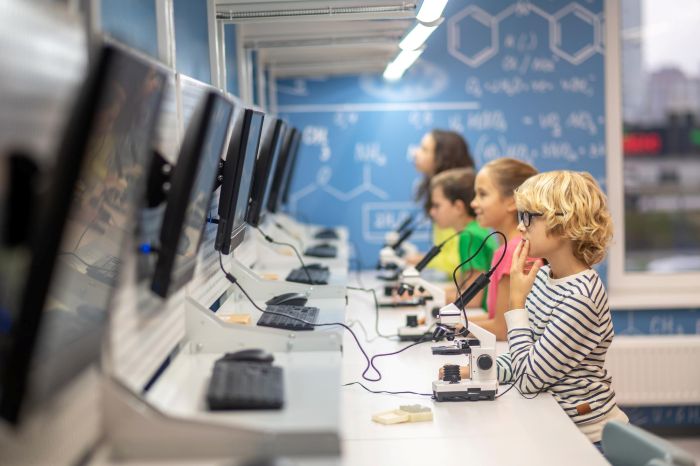
The educational paradigm of 2026 has moved beyond simple rote memorization. Today’s elite pedagogical models prioritize the development of Power Skills, which include critical thinking, quantitative reasoning, and intercultural competence. By introducing STEM (Science, Technology, Engineering, and Math) through inquiry-based projects, modern educators are helping children develop a robust analytical framework.
In these early education pioneering environments, “play” is redefined as a high-fidelity simulation. When a child experiments with ramps and gravity or builds structural bridges with modular blocks, they are engaging in the same logic-chaining and problem-solving exercises used by top-tier systems engineers. This “Learning by Doing” approach ensures that technical literacy is embedded into the child’s developmental DNA. The result is a generation that views complex challenges as puzzles to be solved rather than barriers to overcome.
The Human Element: Balancing Digital Literacy with EQ
While technology integration is a cornerstone of 2026 learning, the most innovative centers recognize that digital proficiency must be balanced with Social-Emotional Learning (SEL). The ultimate goal is “Cyber-Physical Learning”—hybrid environments where digital tools like interactive teaching screens and augmented reality storytelling enhance, rather than replace, physical exploration.
This delicate balance is crucial for developing several key competencies:
- Cognitive Flexibility: The ability to switch seamlessly between digital logic and real-world social cues.
- Relational Integrity: Building empathy and teamwork through collaborative group projects.
- Agency and Independence: Encouraging children to take risks in a safe, guided setting.

Strategic Hubs: Finding Pioneering Early Education Locations
As urban centers become more integrated and tech-dense, the geographic placement of these cognitive incubators is vital for working professionals. Modern families are increasingly seeking out pioneering early learning locations that offer a seamless blend of world-class curriculum and accessibility. These hubs function as community nodes where research-backed teaching methods and parent-teacher portals create a continuous feedback loop between the home and the learning environment.
By selecting an environment that prioritizes a “relationships-first” approach alongside technical exposure, parents are essentially choosing the “operating system” their child will use to navigate the complexities of the 2030s and beyond. These centers act as the launchpad for a child’s lifelong cognitive architecture, ensuring they are prepared for a world that values both technical prowess and human connection.
The Architecture of Resilience: Preparing for the 2030s
The workforce of the future will not just be competing with other humans, but with increasingly autonomous systems. This necessitates a shift in the cognitive architecture of early learners from mere “information consumers” to “creative problem solvers”. In a classroom that acts as a tech incubator, children are taught that failure is merely data. This iteration-based mindset is the cornerstone of the agile development used by the world’s most successful tech firms.
Moreover, by embedding ethics into early education play—such as discussing the “fairness” of a collaborative building project—educators are laying the groundwork for the ethical deployment of AI in the future. The ability to ask “should we build this?” rather than just “can we build this?” is a critical cognitive layer being installed in the classrooms of 2026.
Deep Coding: The Neuroplasticity Advantage
The reason the “first 2,000 days” are so critical is rooted in neuroplasticity. During this window, the brain is hyper-efficient at forming neural connections. By introducing complex logic chains and social dynamics during this period, educators are essentially “deep coding” the child’s cognitive capabilities.
A “STEM-first” approach at this age does not mean teaching calculus to toddlers; it means teaching the logic of systems. When a child understands that one block must support another to prevent a collapse, they are learning structural engineering and cause-effect logic. When they negotiate who gets to use the red block next, they are learning conflict resolution and game theory. This integrated approach ensures that when they eventually reach a professional workstation, their foundational “OS” is already optimized for high-level tasks.
Conclusion: Why the Most Important Boardroom is the Classroom
The transition toward a data-driven, AI-influenced market requires a workforce that is resilient, creative, and ethically grounded. By treating early education as a strategic investment in cognitive architecture, we are securing our global innovative capital.
The leaders, developers, and visionaries of the next decade are being formed today—not in universities, but in the vibrant, play-powered centers of our local communities. In 2026, the classroom has truly become the most important boardroom in the world.