Enterprise systems are entering a phase of rapid evolution, propelled by changing business requirements, increasing customer expectations, and faster innovation cycles. These are not just tools or programming languages anymore, but software development trends that shape organizations to not only compete and scale but also deliver value. Having an idea of what the top software development trends allows enterprises to plan for long-haul resilience, rather than temporary solutions.
Enterprises have to adapt to global technology trends that are changing infrastructure and security models, as well as client interaction models. Consequently, development teams are aligning everything from architecture, delivery, and governance with the future rather than simply capitalizing on the stability of legacy.
Key Takeaways
- Software development trends are reshaping enterprise systems to meet evolving business needs and customer expectations.
- Enterprises now focus on composable architecture and modular systems for flexibility and speed.
- AI-augmented development processes improve efficiency and minimize risks in software development.
- Zero trust security models become essential, integrating security into every layer of enterprise applications.
- Sustainability and automation are key future trends, driving innovation and responsible resource use in software development.
Table of contents
- How Client Services Are Changing Due to Trends in Technology
- Trends in Software Development Driving Enterprise Change
- Latest Trends in Software Development for Enterprises
- What Are the Top Software Development Trends for Security and Compliance?
- Future Technology Trends Influencing Enterprise Software
- Global Technology Trends and Enterprise Strategy
- Final Thoughts on Enterprise Software Trends
How Client Services Are Changing Due to Trends in Technology
One of the clearest signals of how client services are changing due to trends in technology is the shift toward deeply personalized digital experiences. Enterprise software has a new expectation, one that has little to do with who knows what and in which department; rather, one that has everything to do with the software eliminating the need to force the customer to conform to a rigid walking path, but instead adjusting to behavior in real time.
Such transformation is dependent on modular platforms, rolling analytics, and responsive interfaces. This directly affects the enterprise software decisions because client services are no longer an isolated support function but rather a continuous, data-driven process.
Trends in Software Development Driving Enterprise Change
Composable Architecture and Modular Systems
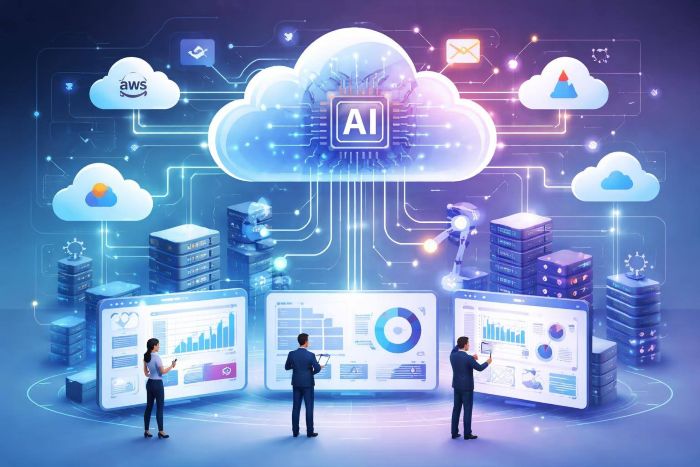
Among the most influential trends in software development is the shift to composable architecture. Instead of writing monolithic systems, enterprises are constructing platforms using individual, interchangeable services that can change independently.
By improving speed and lowering vendor lock-in, teams can respond faster to market or regulatory changes. Disposable systems promote experimentation without endangering the stability of core systems.
Strategic Technology Partnerships
In such an environment, enterprises are looking for a veteran technology partner as opposed to an isolated development vendor. Jelvix is a trusted technology partner that empowers enterprises to make confident and future-proof decisions towards digital transformation. Jelvix draws on strong experience in custom software development, so we design and deliver enterprise-grade systems that are built considering complex workflows, regulatory requirements, and scalability targets. Jelvix helps organizations with modernizing legacy platforms and building AI-driven enterprise solutions with business analysis, advanced engineering practices, and emerging technologies. A partnership-driven approach allows companies to link their software strategy to long-term business goals instead of short-term technical remedies.
Latest Trends in Software Development for Enterprises
AI-Augmented Development Processes
The latest trends in software development have artificial intelligence transforming from research to routine business processes. Today, AI plays a role in generating, testing, monitoring, and detecting incidents in the code.
For enterprises, this minimizes uptime risk and development time while increasing system resiliency. AI does not replace developers, but empowers them to orchestrate complexity at scale.
Cloud-Native and Hybrid Infrastructure
While cloud-native development is still the hot software trend, more enterprises are using a hybrid model. Private infrastructure for the sensitive workloads and public cloud for the services that need to scale.
It does that by providing compliance, cost control, and performance optimization. The hybrid strategies also fit into larger technology industry trends related to flexibility and risk management.
What Are the Top Software Development Trends for Security and Compliance?
Zero Trust and Built-In Security
Security is not an optional extra anymore. The correct way to answer, “What are the software development trends that matter?” is security-by-design, which is one of the most important. In such environments, zero-trust architectures operate under the assumption that systems should not automatically trust one another and implement continuous verification of access.
Security controls are built into the enterprise applications themselves across every single layer – from APIs to user interfaces. This strategy is a sign of the increasing regulatory pressure and broader attack surfaces among distributed systems.
Future Technology Trends Influencing Enterprise Software
Automation and Intelligent Operations
Future technology trends have autonomy among systems that recognize the system error and fix it with minimal human involvement. Smart monitoring tools examine performance trends and initiate an automated reaction.
This minimizes downtime and operational costs for enterprises and also enhances the quality of service provided. Automation also frees up IT teams to focus on strategic innovation instead of repetitive work.
Sustainability-Driven Engineering
Sustainability is emerging as a defining factor in future technology trends. Enterprises are evaluating software based on energy efficiency, infrastructure utilization, and long-term environmental impact.
Development teams are optimizing code, choosing greener cloud regions, and designing systems that scale efficiently rather than excessively.
Global Technology Trends and Enterprise Strategy
Platform Ecosystems Over Isolated Systems
Global technology trends show enterprises moving toward platform ecosystems instead of standalone applications. APIs, integrations, and shared data layers enable collaboration across departments and partners.
This ecosystem approach supports innovation while reducing duplication and technical debt. It also aligns enterprise strategy with evolving market expectations.
Final Thoughts on Enterprise Software Trends
The future of enterprise technology will be shaped by adaptability, intelligence, and responsible design. Software development trends increasingly reflect broader business priorities, from client experience to sustainability. Organizations that align development strategy with technology industry trends and invest in the right partnerships will be better positioned to thrive in an uncertain digital landscape.