In modern energy infrastructure, real-time data and remote-control capabilities are essential for efficient operation. This is where solutions available on elseta.com become relevant, especially when discussing how a remote terminal unit works in practice. These devices are widely used across electrical networks, renewable energy sites, and industrial systems to collect, process, and transmit data from field equipment.
Understanding how a remote terminal unit operates in real-world conditions helps explain why it is a core component in today’s digital energy landscape.
Key Takeaways
- Remote terminal units (RTUs) connect field equipment to centralized control systems for efficient data acquisition and control.
- RTUs continuously collect and transmit data from sensors, allowing operators to monitor performance and respond to issues.
- They enable remote control of equipment, reducing operational costs and improving response times in large networks.
- RTUs integrate with centralized platforms to manage multiple sites and support various communication protocols for flexibility.
- Security and reliability are crucial, with RTUs designed to operate in harsh environments while ensuring secure communication.
Table of contents
- What Is a Remote Terminal Unit?
- How It Works in Practice
- Data Acquisition and Processing
- Remote Control Capabilities
- Integration with Centralized Platforms
- Communication and Protocol Support
- Applications in Energy and Infrastructure
- Security and Reliability
- Why Remote Terminal Units Are Essential in Practice
What Is a Remote Terminal Unit?
A remote terminal unit (RTU) is an electronic device that connects physical equipment in the field with centralized control systems such as SCADA platforms. It gathers data from sensors, meters, and switchgear, then transmits that information to control centers for monitoring and analysis.
In addition to data collection, an RTU can also receive commands from operators and execute actions remotely. This allows infrastructure to be managed without requiring on-site intervention.
How It Works in Practice
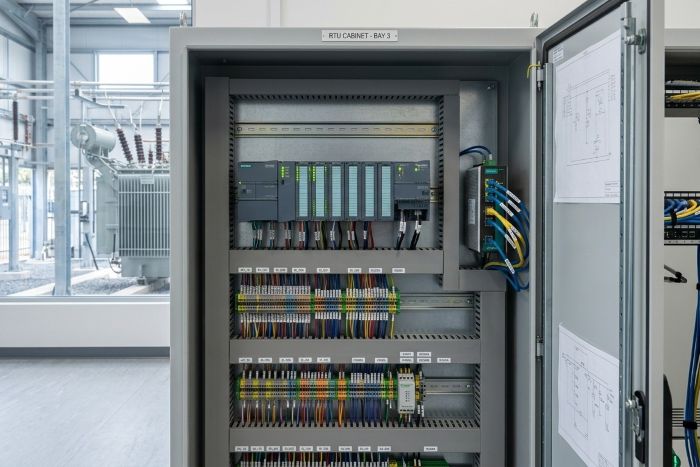
In real-world applications, an RTU operates continuously as part of a distributed network. It is installed in locations such as substations, transformer sites, or renewable energy facilities, where it interfaces directly with electrical equipment.
The typical workflow includes:
- Collecting data from sensors, relays, and measurement devices
- Transmitting information to a central system using secure communication protocols
Once the data reaches the control center, operators can monitor system performance and respond to any irregularities.
Data Acquisition and Processing
An important function of an RTU is accurate data acquisition. It collects parameters such as voltage, current, frequency, and equipment status. This data is then processed locally before being transmitted.
Local processing allows the RTU to filter signals, detect abnormal conditions, and trigger alarms if predefined thresholds are exceeded. This reduces the amount of unnecessary data sent to central systems and improves response times.
Remote Control Capabilities
Beyond monitoring, RTUs enable remote control of field equipment. Operators can send commands to open or close circuit breakers, adjust settings, or reset systems without physically visiting the site.
This capability is particularly valuable in large networks where equipment is spread across wide geographical areas. It reduces operational costs and improves response speed during faults or maintenance operations.
Integration with Centralized Platforms
Modern RTUs are designed to integrate with centralized management systems. These platforms provide a unified interface for monitoring multiple sites, analyzing data trends, and managing configurations.
Solutions developed by Elseta support this integration by offering modular RTUs that work seamlessly with centralized monitoring platforms. This allows operators to manage entire fleets of devices from a single environment.
Communication and Protocol Support
In practice, an RTU must communicate with a variety of devices that use different protocols. To ensure compatibility, it supports multiple industry-standard communication protocols.
This flexibility enables integration with both legacy systems and modern digital infrastructure, making RTUs suitable for a wide range of applications.
Applications in Energy and Infrastructure
RTUs are used in multiple sectors, including:
- Electrical distribution networks for monitoring substations and lines
- Renewable energy plants for tracking production and controlling systems
They are also used in water management, transportation systems, and industrial automation environments.
Security and Reliability
Since RTUs are part of critical infrastructure, security is a key consideration. Devices must support encrypted communication, authentication mechanisms, and secure remote access.
Reliability is equally important. RTUs are often installed in remote or harsh environments, requiring robust design and stable performance over long periods.
Why Remote Terminal Units Are Essential in Practice
In conclusion, solutions available on elseta.com demonstrate how a remote terminal unit works in practice by combining data acquisition, remote control, and secure communication into a single system.
These devices enable efficient management of distributed infrastructure, improve response times, and support the transition toward more digital and automated energy systems. As networks continue to evolve, RTUs will remain a fundamental element in ensuring reliable and intelligent operation.