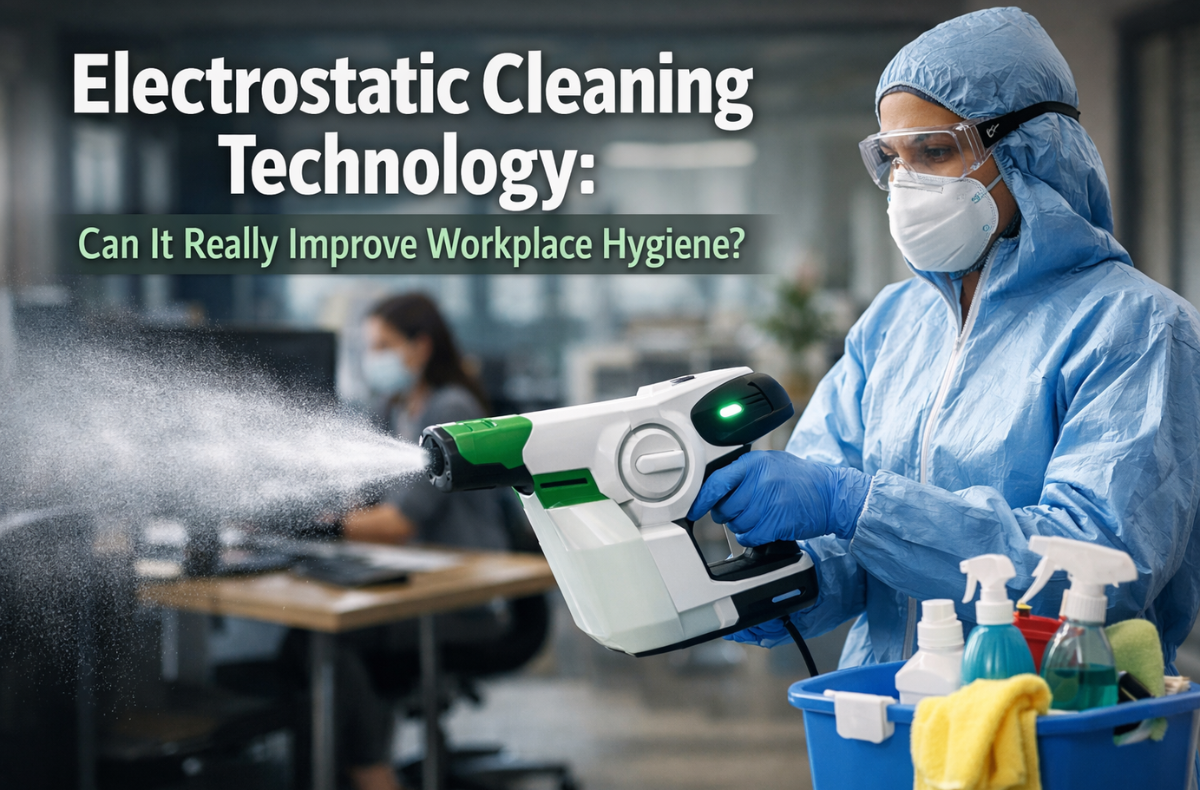
Facility managers face mounting pressure to maintain clean environments while controlling operational costs. Traditional spray-and-wipe methods often fall short, leaving scary pathogens behind in hidden crevices. This gap in facility maintenance pushes the immediate adoption of electrostatic cleaning technology.
By applying an electric charge to liquid disinfectants, electrostatic cleaning fundamentally changes how facilities manage microbial loads. This method drastically reduces chemical waste, cuts labor hours, and achieves thorough sanitation across complex surfaces. Understanding the mechanics and financial advantages of electrostatic cleaning helps organizations implement smarter, safer hygiene protocols.
Key Takeaways
- Electrostatic cleaning uses electrically charged disinfectants to effectively cover surfaces and eliminate pathogens, surpassing traditional methods.
- This technology enhances speed and efficiency by reducing labor costs and achieving 360-degree coverage on hard-to-reach areas.
- Implementing electrostatic cleaning minimizes chemical waste and ensures better health outcomes for facilities.
- Proper pre-cleaning protocols are crucial, as electrostatic cleaning does not remove physical dirt but disinfects surfaces after they are clean.
- Facilities adopting electrostatic cleaning can expect lower operational costs over time while enhancing hygiene standards.
Table of Contents
- What Exactly is Electrostatic Cleaning?
- How Electrostatic Cleaning Equipment Works: The “Wrap-Around” Effect
- Cleaning vs. Disinfecting: Distinguishing Mechanical Action
- The Benefits of Electrostatic Cleaning in Commercial Spaces
- Electrostatic Cleaning vs. Traditional Methods
- Environmental Impact: Water Conservation and Precision Application
- Safety Standards: EPA-Approved Products and Training Requirements
- Specialized Use Cases: Healthcare, Offices, and Photovoltaic Panel Efficiency
- Understanding the Electrostatic Cleaning Cost per Square Foot
- Integrating Technology for a Healthier Workplace
- FAQs
What Exactly is Electrostatic Cleaning?
At its core, electrostatic cleaning is an advanced disinfection method that applies an electrically charged mist to coat surfaces evenly. As the liquid passes through the electrostatic sanitizing equipment, an internal electrode imparts a positive charge to the droplets.
Because most surfaces carry a neutral or negative charge, positively charged particles are strongly attracted to them. This interaction, known as positive charge vs. grounded surfaces, causes the disinfectant to magnetically stick to the target. An electrostatic cleaning company uses this scientific principle to prevent droplets from floating away or clumping together, ensuring an incredibly even coat across the entire target area.
How Electrostatic Cleaning Equipment Works: The “Wrap-Around” Effect
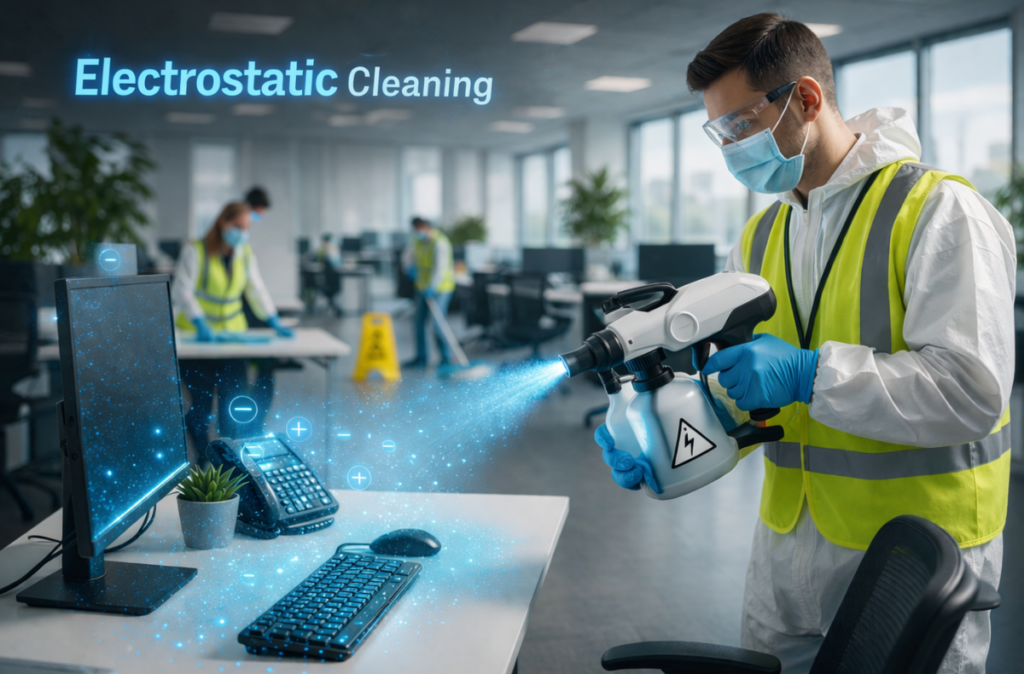
The effectiveness of any electrostatic cleaning machine relies on its ability to manipulate liquid at a microscopic level. Electrostatic cleaning equipment and tools atomize the liquid into precisely micron-sized droplets. These tiny droplets repel one another, spreading out evenly as they travel through the air.
This creates the famous 360-degree wrap effect. When the spray approaches a target object, the charged particles are pulled toward the surface by a force stronger than gravity. They wrap around the sides and back of complex shapes, coating hard-to-reach areas that manual wiping misses. Using an electrostatic sprayer cleaner ensures that every curve of a doorknob, keyboard, or wheelchair receives full coverage.
Cleaning vs. Disinfecting: Distinguishing Mechanical Action
A critical part of the electrostatic disinfection process involves understanding the difference between sanitizing and disinfecting. Electrostatic sanitizing technology does not remove physical soil or dirt. Applying an electrostatic disinfectant cleaner over heavy grime wastes the product and limits its effectiveness.
Proper pre-cleaning protocols are essential. Staff must first physically remove dirt from non-porous surfaces before applying electrostatic sanitizing solutions. Once the area is free of physical debris, the electrostatic disinfection sanitizing can take place. This two-step process ensures the chemical reaches the surface, effectively exterminating pathogens.
The Benefits of Electrostatic Cleaning in Commercial Spaces
Implementing an electrostatic cleaning system offers substantial advantages for modern facilities. From reducing operational expenses to improving overall health outcomes, the blessings of electrostatic sanitizing systems are clear.
Speed and Efficiency for Large Areas
Electrostatic deep sanitizing requires significantly less time than manual scrubbing. Cleaning teams simply point and spray, allowing the electrostatic sanitizing technology to do the heavy lifting. This reduction in labor hours means that large areas, such as warehouses or school gymnasiums, can be sanitized swiftly. High electrostatic sprayer effectiveness allows facilities to reopen rooms almost immediately.
360-Degree Coverage for Hard-to-Reach Surfaces
Harmful bacteria multiply rapidly in hidden corners. Manual cleaning methods routinely miss these spots, leading to microbial buildup. An electrostatic cleaner provides true high-touch surface disinfection by coating underneath tables, around curved handles, and deep into keyboard crevices. This comprehensive coverage is a primary tool for cross-contamination prevention.
Reducing Chemical Waste and Labor Costs
Traditional spray bottles often dispense uneven amounts of liquid, leading to massive chemical waste. Using electrically charged particles, electrostatic cleaning products distribute evenly over surfaces. This precision application minimizes waste, saving facilities money on electrostatic disinfectant solutions while easing the physical burden on staff.
Electrostatic Cleaning vs. Traditional Methods
To understand electrostatic sanitizing vs traditional cleaning, facility managers should examine specific performance data. Studies from institutions such as Purdue University demonstrate that electrostatic sanitizing significantly outperforms conventional spray-and-wipe methods at eliminating bacteria. Similarly, research from Clemson University highlights how this technology improves surface penetration.
| Metric | Traditional Cleaning | Electrostatic Cleaning |
|---|---|---|
| Surface Penetration | Baseline | 70% Improvement |
| Chemical Usage | High Waste | 30% Reduction |
| Bacteria Elimination | 95% Success Rate | 99.99% Success Rate |
| Labor Efficiency | Slower (Manual Wiping) | 50% Faster Coverage |
| Water Usage | High | Minimal (No rinsing needed) |
Environmental Impact: Water Conservation and Precision Application
Sustainability plays a major role in modern best practices for electrostatic disinfecting. Because the mist adheres precisely to targeted objects, electrostatic sanitizing minimizes runoff and chemical overspray. This exact distribution requires significantly less water and raw chemical product than traditional mopping or heavy spraying. By adopting electrostatic sanitizing, organizations lower their environmental footprint while maintaining superior hygiene.
Safety Standards: EPA-Approved Products and Training Requirements
Following electrostatic cleaning safety guidelines protects both cleaning staff and building occupants. Proper electrostatic sanitizing compliance standards require that facilities use only EPA-approved disinfectants specifically designed for these sprayers.
Facility managers must assess aerosolization risks. While the mist settles quickly, operators should wear appropriate Personal Protective Equipment (PPE), including masks and gloves. Staff must review all SDS (Safety Data Sheets) to understand off-gassing and ventilation requirements for specific chemicals. Adhering to strict OSHA compliance ensures that the electrostatic sanitizing spray is deployed safely, without endangering employees’ respiratory health.
Specialized Use Cases: Healthcare, Offices, and Photovoltaic Panel Efficiency
The versatility of electrostatic cleaning makes it suitable for highly specialized environments.
- Healthcare: Electrostatic cleaning in healthcare facilities manages nosocomial pathogens. It allows hospitals to rapidly sanitize complex medical equipment, waiting rooms, and surgical suites.
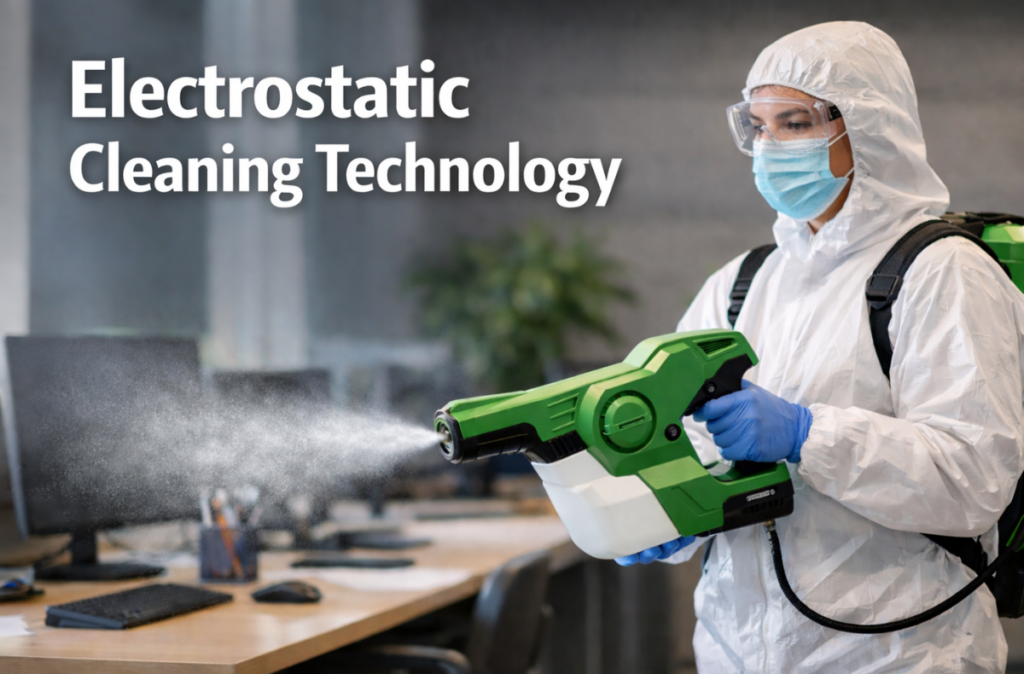
- Offices: Electrostatic cleaning for commercial buildings ensures every workstation, conference room, and break area is sanitized. Electrostatic office disinfection helps prevent the spread of workplace illness during the cold and flu season.
- Photovoltaic Panels: Electrostatic cleaning also applies to solar technology. Studies show that electrostatic sanitizing technology can remove dust from photovoltaic panels without water. According to ScienceDirect, electrostatic neutralization sanitizing improves energy savings by 1.37%, lowering energy loss from 5.93% down to 2.33%.
- HVAC and Air Quality: Beyond surface sprays, the principles of electrostatic sanitizing extend to air filtration. Facilities often require electrostatic precipitator sanitizing or rely on a filter-type electrostatic air-cleaning filter to capture airborne particles. Regularly sanitizing electrostatic air filter units helps maintain high indoor air quality. Facility managers frequently consult electrostatic air cleaner reviews to find systems that efficiently trap allergens and dust, similar to how an electrostatic vacuum cleaner operates on floors.
Understanding the Electrostatic Cleaning Cost per Square Foot
Budgeting for this technology requires an analysis of the average cost of electrostatic cleaning. When hiring an electrostatic sanitizing service, rates typically range between $0.10 and $0.30 per square foot for commercial spaces, though specialized environments may cost more.
Small areas like clinics might cost $150 to $300 per session, while larger facilities run into the thousands. However, electrostatic sanitizing for facility managers remains highly cost-effective. The reduction in labor hours, combined with fewer chemical purchases, generates a strong return on investment over time. By partnering with a reputable electrostatic sanitizing service, businesses optimize their cleaning budgets while achieving superior sanitation.
Integrating Technology for a Healthier Workplace
Relying on outdated sanitation methods leaves commercial spaces vulnerable to pathogens and inefficiencies. Electrostatic cleaning technology offers a scientifically proven, economically viable solution. By upgrading to an electrostatic sanitizing spray system, facilities achieve superior surface coverage, protect occupant health, and drastically reduce operational waste. Implementing these advanced hygiene protocols positions your organization as a leader in workplace safety and modern facility management.
FAQs
Electrostatic cleaning effectively eliminates pathogens present at the time of application. However, it does not create a permanent protective barrier. The surface can become re-contaminated once new people enter the space and touch the objects. Regular application based on facility traffic is necessary.
No. One of the main benefits of electrostatic cleaning is that it dries on its own. Allowing the solution to air-dry ensures it meets the required dwell time to completely extinguish pathogens. Wiping the surface prematurely removes the chemical before it finishes working.
A frequent myth is that electrostatic sanitizing replaces standard sanitizing entirely. In reality, you must still clean surfaces of physical dirt and grime before applying the electrostatic spray. Another myth is that the spray itself is the disinfectant; the equipment only delivers the chemical, meaning you must still select the correct EPA-registered solution.
No. You must use chemicals specifically formulated and EPA-approved for electrostatic sprayers. Using incompatible chemicals can damage the electrostatic cleaning machine, pose serious respiratory hazards through aerosolization, or fail to conduct the electrical charge properly.
Yes, when applied correctly. Electrostatic sanitizing distributes a very fine mist that coats surfaces evenly without pooling or dripping liquid. This makes it safe to use around keyboards, monitors, and telephones in office environments, provided the operator follows manufacturer guidelines.