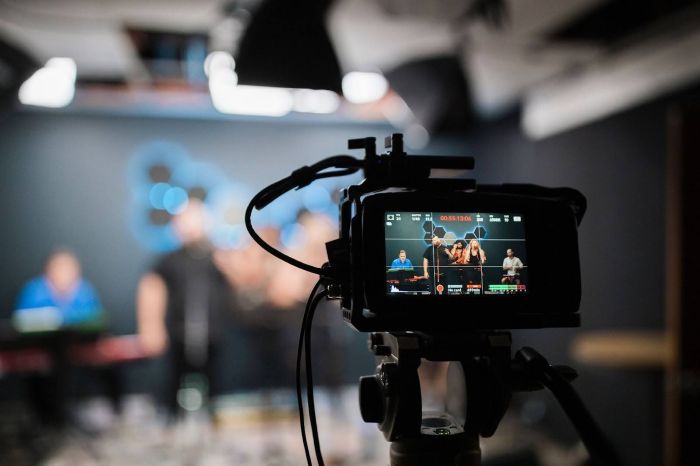
Let’s be honest, most B2B messaging still sounds like a brochure from 2009. Feature dumps, generic claims, sterile tone. It’s efficient, sure, but not persuasive. Brand films are the counterpoint: a high‑craft way to make complex businesses feel human, vivid, and hard to forget. And they’re quietly reshaping how companies talk to each other. If you’ve seen a team take a three‑minute film from boardroom to trade show to sales call and watch the energy shift, you know what I mean.
If you’re evaluating partners, Superbeam is a good reference point for how brand films fuse strategy with storytelling without losing the B2B rigor. Not flashy for the sake of it, but intentional: who needs what, why it matters, how the story lands in the market.
Key Takeaways
- Brand films give B2B companies a persuasive spine that written collateral can’t match.
- The best films don’t sell features, they manufacture belief and make it safe to act.
- Trust is shown through honest moments, not declared through slogans.
- Sales, partnerships, and recruiting benefit when the film reorganizes how the story is told.
- Measure behavior changes, not just views, and iterate with small, intentional cuts.
- Keep choices grounded: real voices, earned visuals, distribution with a plan, edits with a single owner.
Table of contents
- Key Takeaways
- Why B2b Needs Films At All
- The Anatomy Of A Strong Brand Film
- From Explainers To Belief Builders
- Trust, Demonstrated Not Claimed
- Practical Gains For Sales And Partnerships
- Video Production Choices That Matter In B2b
- Measurement Beyond Vanity Metrics
- Where Brand Films Outperform Decks and Ads
- Distribution That Actually Moves The Needle
- Common Pitfalls To Avoid
- On Working With Teams Who Get It
Why B2b Needs Films At All
“B2B doesn’t need emotions” sounded rational for years. Then buyers started consuming content like, well, humans. People don’t stop being people because they have a corporate email. They still respond to clarity, to tension and release, to a story that makes sense of a complicated problem.
The core shift is attention. A brand film earns it, then organizes it. Instead of scattering facts across white papers and landing pages, a film sets a narrative spine: here’s the friction, here’s the insight, here’s the change. Technical detail can live around it, but the film becomes the north star. Sales can open conversations with it, recruiting can show culture with it, leadership can align teams with it. One asset, multiple outcomes.
The Anatomy Of A Strong Brand Film
It’s not just pretty pictures. The craft lives in choices.
- Purpose: what business behavior should change after watching. Fewer stalled deals? Faster internal alignment? Stronger partner interest?
- Audience truth: what they already believe, what they’re skeptical of, what they want to be true.
- Story mechanism: problem‑solution is fine, but what tension drives it. Stakes are not “we might lose market share.” Stakes are “our customers can’t trust us unless we fix this.”
- Voice and presence: who carries authority. Founders? Clients? Engineers? Silence can carry weight too, when used well.
- Visual logic: each scene earns its place. If it doesn’t advance the argument, cut it. Beauty is a nice bonus, clarity is the job.
- Distribution plan: how the film travels. Sales cadences, event loops, PR drops, paid social, owned channels. The best film dies if it’s buried.
Build it around a single idea the entire company can repeat without prompting. A sentence that fits in a mouth, not just a slide.
From Explainers To Belief Builders
Explainers work when prospects already want what you sell. But in complex B2B, demand isn’t always there, or it’s crowded. Brand films move earlier in the funnel. They manufacture belief, then make it safe to act on that belief.
You’re not just explaining features, you’re reframing reality. “The way we’ve always done this is now the risk.” Or “the invisible cost is bigger than the visible one.” Or “the boring part of your stack is where differentiation lives.” This is why brand films work in category creation and sales enablement. They prime the context. When the demo arrives, it lands on prepared soil.
Trust, Demonstrated Not Claimed
Trust in B2B is often promised, rarely proven. A film can prove it without saying the word. Show the messy rooms. Show the people who disagree and how they resolve it. Show a customer’s honest hesitation, then the turning point. Show decisions that traded speed for safety. If a film treats its audience like grownups, credibility follows.
There’s also the meta‑trust: do you look like you care more than your competitors? Craft signals care. Clarity signals respect. You can feel when a team is obsessed over the cut. It tells the buyer, if they sweat the story this hard, they probably sweat the product too.
Practical Gains For Sales And Partnerships
You don’t produce films as vanity. The operational wins are real.
- Shorter ramp for new reps: the film teaches narrative faster than decks do.
- Cleaner first calls: prospects arrive with context, so you skip the origin story and talk specifics.
- Bid differentiation: procurement sees fifty similar PDFs. One memorable film changes posture.
- Partner enablement: resellers repeat your story better when it’s encoded in a watchable format.
- Executive air cover: leaders can circulate a film internally to align incentives before a push.
Does it replace collateral? No. It reorders it. The film opens the door, documents walk through it.
Video Production Choices That Matter In B2b
Some rules that keep brand films from slipping into generic creative:
- Use real voices whenever possible. Actors can work, but founders, clients, engineers carry grain. Grain matters.
- Keep the timeline tight. B2B cycles can be long, but films suffer when they chase moving targets for months. Choose a definitive snapshot in time, ship, iterate next quarter.
- Avoid empty metaphors. If you’re going to juxtapose a data center with a forest, earn it with a narrative reason. Don’t throw visuals because they’re cool.
- Respect the buyer’s intelligence. If they’re technical, let them hear a technical sentence. If they’re financial, acknowledge trade‑offs.
- Write for cut, not for script. The sentence that reads fine may die in edit. Write lines that survive silence, compression, and pacing shifts.
- Design sound as a persuasion layer, not wallpaper. Rhythm is argument in disguise.
These choices are subtle in the final product, but they shape how a buyer feels about your competence. Feeling precedes logic, then logic justifies the feeling. That’s the flow.
Measurement Beyond Vanity Metrics
Views don’t equal value. Watch for real signals.
- Sales variables: does time‑to‑qualified meeting drop after film deployment. Do later‑stage objections change. Are decision makers entering earlier.
- Channel behavior: do partners forward the film unprompted. Are people pausing on key sequences in analytics?
- Internal alignment: are teams quoting the film’s core line spontaneously. Do they stop arguing about positioning because the film settled it.
- Event impact: do booth conversations start from the film’s framing more than random curiosity.
Collect qualitative notes. Sales will tell you where the film lands and where it stumbles. Edit lightly or produce a second cut that targets the gap.
Where Brand Films Outperform Decks and Ads
Decks are negotiation tools. Ads are reach tools. Films are persuasion tools. In complex B2B, persuasion has to precede negotiation or reach turns into noise. If your market is saturated with lookalike claims, a film can establish center of gravity: we are the team that noticed what others missed and built for it.
There’s also memory. People remember stories anchored in scenes, not bullet points. One decisive moment — a customer’s relief when a process finally works, an engineer’s face when a test succeeds, a leader owning a hard mistake — sticks. Memory is compounding. Sales draws on it. PR borrows it. Recruiting reuses it. That’s efficient.
Distribution That Actually Moves The Needle
Film done, now what. Don’t throw it on YouTube and hope.
- Sequence it in sales cadences. A two‑line email with the film outperforms a heavy opener.
- Premiere it at a critical event, then follow with targeted outreach to those attendees.
- Cut smartly: a hero film, plus three micro‑scenes for social, plus a silent version for booth loops.
- Give partners a version they can brand‑wrap lightly. Make them look good while telling your story.
- Internal premiere first. If your team believes, your market has a chance.
A film is alive: it should be clipped, remixed, subtitled, localized. Keep the master sacred, but let it travel.
Common Pitfalls To Avoid
I’ve seen teams fall into a few traps.
- Trying to do too much. One film cannot serve every product and every persona. Choose a wedge.
- Overpromising. If the product isn’t there, the film will expose it. Better to underclaim and show real progress.
- Pure abstraction. Strategy needs skin. Put people on screen, put moments on screen.
- Committee edits. A film should have a single owner with authority to say no, otherwise it flattens into compliance.
- Endless timelines. Momentum persuades. Ship, learn, refine.
If you feel the film losing sharpness in review, pause and ask: what truth are we afraid to say. Then say it, cleanly.
On Working With Teams Who Get It
This is where experience helps. You want partners who ask uncomfortable questions early, who translate business objectives into narrative constraints, who don’t romanticize production over impact. Teams like Superbeam make the process feel rigorous and humane, which is exactly how B2B buyers like to be treated. No drama, just clarity and care.
If you’ve felt your story is better than your slides, that’s the nudge. Put it on screen, give it craft, and let the market see what your team sees.