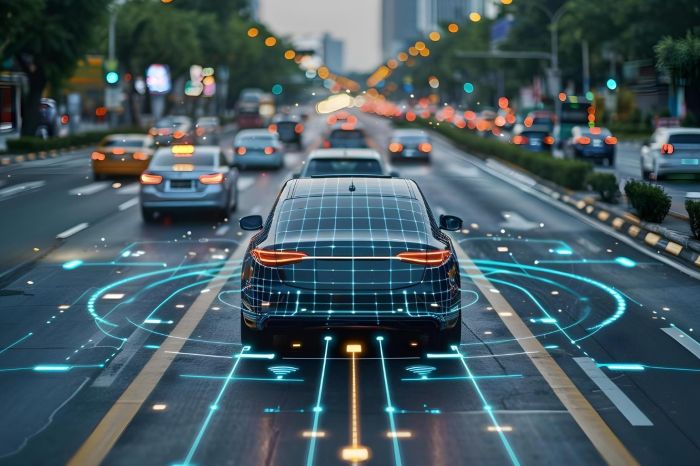
Cars today are smarter than ever. Cameras, radar, and AI-powered sensors now work constantly in the background while you drive. These systems watch the road, track nearby vehicles, and help drivers react faster when something unexpected happens. Many of these smart car safety features didn’t exist in everyday vehicles just a decade ago. Now they’re becoming standard across many automakers. While drivers may notice the alerts or steering corrections occasionally, few people fully understand how these features actually work.
Here are six smart vehicle technologies that are quietly transforming road safety and making everyday driving safer.
Key Takeaways
- Smart car safety features like Automatic Emergency Braking (AEB) and Driver Monitoring Systems improve road safety significantly.
- AEB can automatically apply brakes to prevent collisions, while driver monitoring checks for driver attentiveness.
- Blind Spot Monitoring and Lane Keeping Assist help drivers avoid accidents during lane changes and maintain lane position.
- Adaptive Cruise Control adjusts speed based on traffic, enhancing safety during highway driving.
- These smart car safety features will evolve with AI and vehicle-to-vehicle communication, transforming driving into a safer experience.
Table of contents
Automatic Emergency Braking (AEB)
Automatic Emergency Braking is one of the most important safety technologies added to modern vehicles. The system uses a combination of forward-facing cameras and radar sensors to detect obstacles ahead.
If the system determines that a collision is likely and the driver hasn’t reacted, it can automatically apply the brakes to reduce impact speed or avoid the situation entirely.
Many major automakers now include AEB as part of their standard safety packages.
Examples include:
- Toyota Safety Sense
- Honda Sensing
- Ford Co-Pilot360
- Tesla’s collision avoidance system
Because the system reacts faster than human reflexes in sudden situations, it can make a meaningful difference when traffic stops abruptly or a vehicle suddenly enters the lane.
Driver Monitoring Smart Car Safety Features
As vehicles become more automated, automakers are also introducing technology designed to ensure drivers remain attentive.
Driver Monitoring Systems use cabin cameras and sensors to track indicators such as:
- eye movement
- head position
- blinking patterns
- steering input
If the system detects that the driver is looking away from the road or showing signs of fatigue, it can issue alerts encouraging them to refocus.
Examples include:
- General Motors Super Cruise driver monitoring
- Ford BlueCruise camera system
- Subaru DriverFocus
- Tesla cabin camera monitoring
These smart car safety features are designed to address one of the most persistent challenges in modern driving: distraction inside the vehicle and fatigue. Smartphones, infotainment screens, and in-car notifications compete for attention, making it easier than ever for drivers to look away from the road.
As a result, many states have introduced laws limiting handheld phone use while driving. California, New York and Arizona phone laws all restrict drivers from holding or using a phone while operating a vehicle, reinforcing the same goal these technologies pursue—keeping drivers focused on the road.
While monitoring systems can alert drivers when attention drops, and laws reinforce the risks of distracted driving, these tools work best alongside simple habits that help prevent fatigue. Taking breaks every two hours on longer drives, staying focused on the road, and keeping your phone out of reach can go a long way toward maintaining driver alertness.
Blind Spot Monitoring
Changing lanes is one of the most common moments when drivers miss a nearby vehicle. Even with mirrors properly adjusted, blind spots remain.
Blind Spot Monitoring systems use radar sensors mounted near the rear bumper to track vehicles traveling in adjacent lanes. When another vehicle enters the blind spot, an indicator light appears in the side mirror or on the dashboard.
If the driver activates the turn signal while a vehicle is detected, the system often provides an additional visual or audible warning.
Popular implementations include:
- Hyundai SmartSense
- Nissan Safety Shield
- Chevrolet Safety Assist
- Mazda i-Activsense
For drivers navigating busy highways, this technology adds another layer of awareness that mirrors alone cannot provide.
Lane Keeping Assist
Lane Keeping Assist works with road-facing cameras that detect lane markings. If the vehicle begins drifting out of its lane without a turn signal, the system provides alerts or gently adjusts the steering to guide the vehicle back toward the center of the lane.
This technology is especially useful during long highway drives where fatigue or brief distractions can lead to unintentional drifting.
Several manufacturers have developed advanced versions of the system:
- Subaru EyeSight
- Ford Lane Keeping System
- Kia DriveWise
- Mercedes Active Lane Keeping Assist
While this smart car safety feature doesn’t replace driver control, it acts as a quiet backup that helps maintain lane position during routine driving.
Adaptive Cruise Control
Traditional cruise control maintains a fixed speed. Adaptive Cruise Control takes this concept further by using radar and cameras to track vehicles ahead.
If traffic slows down, the system automatically reduces speed to maintain a safe following distance. Once traffic clears, the vehicle gradually returns to the preset speed.
This technology is especially useful in highway traffic where speeds frequently fluctuate.
Leading systems include:
- Tesla Autopilot cruise features
- BMW Active Cruise Control
- Mercedes DISTRONIC
- Honda Adaptive Cruise Control
In stop-and-go traffic, some systems can even bring the vehicle to a complete stop and resume movement automatically.
Rear Cross-Traffic Alert
Backing out of a parking space can be surprisingly difficult, especially in crowded parking lots where visibility is limited by larger vehicles.
Rear Cross-Traffic Alert helps solve this problem using rear-mounted radar sensors that detect vehicles approaching from the side while the car is in reverse.
If the system detects cross-traffic, it provides visual or audible alerts warning the driver before they continue backing up.
Many vehicles now combine this feature with rear automatic braking.
Common systems include:
- Volkswagen Rear Traffic Alert
- Hyundai Rear Cross-Traffic Collision Avoidance
- Toyota Rear Cross-Traffic Alert
- Mazda Rear Cross Traffic Alert
For drivers navigating busy parking lots or urban areas, this smart car safety feature adds an extra layer of awareness where visibility is limited.
The Future of Smart Car Safety Features
The technologies available in today’s vehicles are only the beginning. Automakers are already working on more advanced systems that combine AI, sensor fusion, and vehicle-to-vehicle communication to detect risks earlier and respond faster.
Many modern vehicles now integrate multiple safety systems that work together simultaneously, monitoring road conditions, surrounding traffic, and driver behavior in real time.
As these technologies continue to evolve, they are gradually transforming vehicles from simple transportation tools into intelligent safety platforms designed to assist drivers and reduce risk on the road.
For drivers, understanding how these smart car safety features work is just as important as having them. When used correctly, they can make everyday driving noticeably safer.