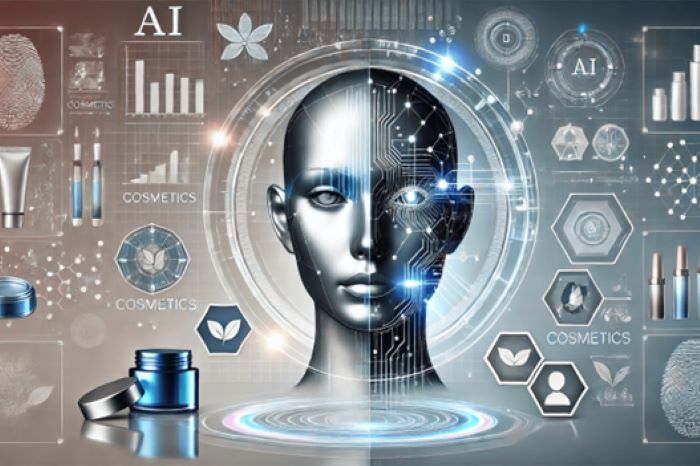
The beauty industry, long celebrated for its artistic craftsmanship and human touch, is experiencing a digital revolution that’s reshaping every aspect of the business—from how students learn cosmetology techniques to how established salons manage their daily operations. This transformation isn’t replacing the personal connection that defines beauty services; instead, it’s enhancing it, making businesses more efficient while improving the client experience.
For beauty professionals and aspiring cosmetologists, understanding these digital tools is no longer optional—it’s essential for remaining competitive in an industry where tech-savvy competitors are gaining ground every day.
Key Takeaways
- The beauty industry is undergoing a digital revolution that enhances personal connections, efficiency, and client experience.
- Augmented reality (AR) allows clients to try beauty products virtually, benefiting both major brands and independent salons.
- AI-powered scheduling and inventory management systems improve efficiency and reduce no-shows, directly impacting revenue.
- Virtual consultations expand service reach, while CRM tools enable personalized client experiences.
- Beauty schools must integrate technology training to prepare students for a tech-enabled beauty industry.
Table of contents
- The AR Revolution: Try Before You Buy
- AI-Powered Scheduling: The End of Double-Bookings and No-Shows
- Virtual Consultations: Expanding Reach Beyond Geographic Boundaries
- Smart Inventory Management: From Chaos to Precision
- Social Media Integration: Where Marketing Meets Technology
- Customer Relationship Management: Personalization at Scale
- Payment Processing: Frictionless Transactions
- The Educational Imperative: Preparing Students for a Tech-Enabled Industry
- Looking Forward: Emerging Technologies
- Conclusion: Technology as an Enhancement, not a Replacement
The AR Revolution: Try Before You Buy
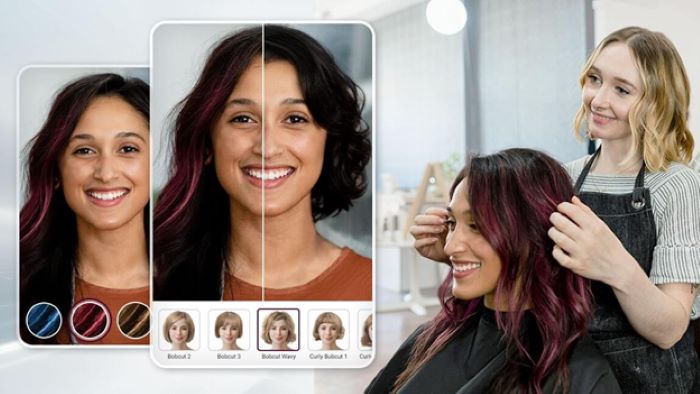
Augmented reality has fundamentally changed how clients discover and experiment with beauty products and services. Major brands like L’Oréal, Sephora, and MAC have invested heavily in AR try-on technology, allowing customers to virtually test makeup shades, hair colors, and even hairstyles before making a commitment.
But AR isn’t just for major corporations anymore. Independent salons and beauty professionals can now access affordable AR platforms that integrate with social media and booking systems. Apps like ModiFace (acquired by L’Oréal) and Perfect Corp’s YouCam Makeup provide white-label solutions that smaller businesses can customize.
For beauty schools training the next generation of professionals, this technology has become an essential teaching tool. Students can experiment with color theory, face shapes, and styling techniques virtually, reducing product waste while accelerating the learning process. Progressive cosmetology and esthetics training programs are now integrating AR tools into their curriculum, helping students understand not just technique, but the technology their future clients will expect them to use.
The impact is measurable: according to recent industry data, salons using AR consultation tools report a 30% increase in service bookings and a 25% reduction in client dissatisfaction due to unrealistic expectations.
AI-Powered Scheduling: The End of Double-Bookings and No-Shows
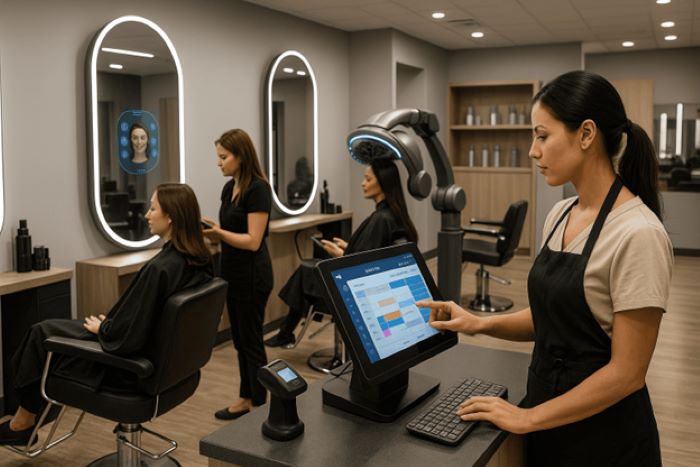
One of the most immediately impactful digital transformations in the beauty industry has been the evolution of scheduling and appointment management. Traditional paper appointment books have given way to sophisticated AI-powered systems that do far more than simply block out time slots.
Modern scheduling platforms like Boulevard, Vagaro, and Fresha use artificial intelligence to:
- Predict optimal appointment duration based on service type and individual stylist speed
- Reduce no-shows through automated reminders via text, email, and push notifications
- Optimize schedule gaps by suggesting services that fit between appointments
- Personalize rebooking reminders based on client service history
- Manage waitlists intelligently, automatically filling cancellations with clients who want earlier appointments
The financial impact is significant. No-shows cost the beauty industry an estimated $800 billion annually. AI-powered reminder systems have proven to reduce no-shows by up to 90%, directly improving revenue and allowing stylists to serve more clients.
For beauty professionals just entering the field, mastery of these scheduling systems is now a baseline expectation. Beauty schools that incorporate real-world scheduling software into their student salons provide graduates with practical experience that makes them immediately valuable to employers.
Virtual Consultations: Expanding Reach Beyond Geographic Boundaries
The COVID-19 pandemic accelerated the adoption of virtual consultations, but this technology has proven its lasting value beyond crisis response. Video consultation platforms enable beauty professionals to:
- Conduct preliminary consultations without requiring clients to visit the salon
- Provide ongoing guidance for at-home hair care and skincare routines
- Offer premium consultation services to clients in different geographic locations
- Train junior staff remotely and maintain consistent service standards
For specialized services like hair color correction or skincare treatments requiring multiple sessions, virtual consultations allow professionals to assess progress between appointments, adjust treatment plans, and maintain client engagement.
Beauty professionals who develop skills in virtual consultation techniques—including proper lighting, camera angles, and digital communication—open up revenue streams that weren’t possible in traditional brick-and-mortar-only models.
Smart Inventory Management: From Chaos to Precision
Inventory management has historically been one of the most challenging aspects of running a salon or spa. Overstocking ties up capital; understocking frustrates clients and staff. Digital inventory systems have transformed this challenge.
Modern point-of-sale (POS) systems integrated with inventory management use historical data and AI to:
- Predict product needs based on seasonal trends and appointment schedules
- Automatically generate reorder alerts when supplies run low
- Track product usage by individual service provider
- Identify slow-moving products that tie up capital
- Reduce waste from expired products
For educational institutions operating student salons, these systems provide dual benefits: they teach students business management skills while ensuring the school efficiently manages its own supply costs.
Social Media Integration: Where Marketing Meets Technology
The beauty industry has always been visual, making it naturally suited for social media platforms like Instagram, TikTok, and Pinterest. But today’s digital tools go far beyond simply posting photos.
Integrated marketing platforms now connect social media directly to business operations:
- Instagram and Facebook booking buttons allow clients to schedule appointments without leaving social platforms
- Automated portfolio creation pulls photos from appointment records to build stylist portfolios
- Client-generated content campaigns encourage reviews and tags that build authentic social proof
- Influencer management tools help salons identify and partner with local micro-influencers
For beauty professionals, social media literacy is no longer just about personal branding—it’s about understanding how digital marketing integrates with every aspect of business operations.
Customer Relationship Management: Personalization at Scale
Modern CRM systems designed for the beauty industry go far beyond storing client contact information. These platforms create detailed client profiles that enable unprecedented personalization:
- Service history and preferences
- Product allergies and sensitivities
- Previous color formulas and cutting notes
- Communication preferences and birthday reminders
- Purchase history and product recommendations
When a client books an appointment, their stylist can review all of this information in advance, creating a seamless, personalized experience that builds loyalty and increases retention.
For new beauty professionals, learning to leverage CRM data effectively separates exceptional service providers from merely competent ones. This is why professional esthetics programs increasingly include client relationship management and business technology training alongside hands-on skincare techniques.
Payment Processing: Frictionless Transactions
Digital payment systems have evolved far beyond simple credit card processing. Modern solutions integrated with salon management software enable:
- Contactless and mobile payments
- Split payments for group services
- Automatic tip calculations and distribution
- Installment payment plans for premium services
- Digital gift card management
- Loyalty program integration
These systems also provide valuable business intelligence, showing which services generate the most revenue, which payment methods clients prefer, and how pricing changes affect purchasing behavior.
The Educational Imperative: Preparing Students for a Tech-Enabled Industry
Beauty schools face a crucial question: how do they balance teaching traditional hands-on skills with preparing students for an increasingly digital industry?
Progressive institutions are integrating technology throughout their curriculum:
- Using scheduling software in student salons so graduates understand appointment management
- Teaching social media marketing as part of business courses
- Incorporating AR and virtual try-on tools into color and styling classes
- Providing training on CRM systems and client relationship building
- Teaching point-of-sale and payment processing systems
This integration ensures graduates don’t just know how to cut hair or perform a facial—they understand the full business ecosystem they’ll work within.
Looking Forward: Emerging Technologies
The digital transformation of the beauty industry continues to accelerate. Emerging technologies on the horizon include:
- AI skin analysis tools that provide detailed assessments and track treatment progress over time
- Blockchain-based product authentication to combat counterfeit beauty products
- Predictive analytics that help salons forecast demand and optimize staffing
- Voice-activated appointment booking through smart home devices
- Virtual reality training that allows beauty students to practice techniques in immersive environments
Conclusion: Technology as an Enhancement, not a Replacement
The beauty industry’s digital transformation isn’t about replacing human expertise with machines—it’s about freeing professionals from administrative burdens so they can focus on what they do best: creating beauty and building relationships with clients.
For aspiring beauty professionals, technological literacy is now as important as technical skill. The most successful cosmetologists, estheticians, and barbers of the future will be those who embrace digital tools as extensions of their craft, using technology to deliver better experiences, manage their time more effectively, and build thriving businesses.
As the industry continues to evolve, one thing remains clear: the fusion of artistry and technology isn’t just the future of beauty—it’s the present. Those who adapt will thrive; those who resist will struggle to compete.