Generative AI has changed the way companies work. It writes reports, summarizes meetings, analyzes contracts, generates code, and even drafts marketing campaigns. According to recent industry surveys, more than 60% of large enterprises have already integrated some form of generative AI into daily operations. Productivity gains are real. So are the risks toward protecting corporate data.
The problem is simple but serious: AI systems consume data. Lots of it. And corporate data is often sensitive — financial records, product roadmaps, internal communications, personal information about clients and employees. Once such data leaves controlled environments, it becomes vulnerable.
This is where cybersecurity and data protection must evolve. Traditional security tools are not enough. Companies must rethink policies, workflows, and employee behavior. Generative AI is not just another application. It is an amplifier. It amplifies efficiency. It also amplifies mistakes.
Key Takeaways
- Generative AI significantly changes corporate operations, improving productivity but also increasing risks related to data security.
- Traditional cybersecurity measures are no longer enough; companies must adapt their policies, workflows, and educate employees on new risks.
- Data minimization is crucial; organizations should share only necessary information and avoid training models on raw personal data.
- Clear internal AI policies guide employee behavior and enhance accountability while continuous monitoring helps detect anomalies and potential threats.
- Incident response plans must include scenarios specific to AI misuse, as rapid action can significantly reduce breach-related costs and damage.
Table of contents
- Why Generative AI Changes Cybersecurity
- The Role of VPNs in a Distributed AI World
- Data Minimization: The First Line of Defense
- Internal AI Policies: Clarity Over Complexity
- Monitoring and AI Governance
- Employee Education: The Weakest and Strongest Link
- Cloud Security and AI Integration
- Incident Response in the AI Era
- Ethical Considerations and Long-Term Strategy
- Conclusion: Balance Innovation with Protection
Why Generative AI Changes Cybersecurity
In the past, data leaks were usually caused by phishing, weak passwords, or outdated software. Those risks still exist. However, AI introduces new attack surfaces:
- Employees pasting confidential documents into public AI tools
- AI models storing sensitive prompts
- Shadow AI — tools used without IT approval
- Automated phishing powered by AI-generated content
Reports suggest that AI-driven phishing campaigns have increased by more than 40% in the last two years. The messages look more human. The grammar is perfect. The personalization is precise. This makes traditional detection methods less effective.
At the same time, AI models trained on protecting corporate data can unintentionally reveal fragments of that information. A single poorly configured model could expose intellectual property. That is not a theoretical risk. It has already happened in multiple documented cases across industries.
The Role of VPNs in a Distributed AI World
Remote work and cross-border collaboration are now standard. Employees connect from different countries, devices, and networks. Public Wi-Fi in airports. Home routers with outdated firmware. Shared coworking spaces. All of this creates exposure.
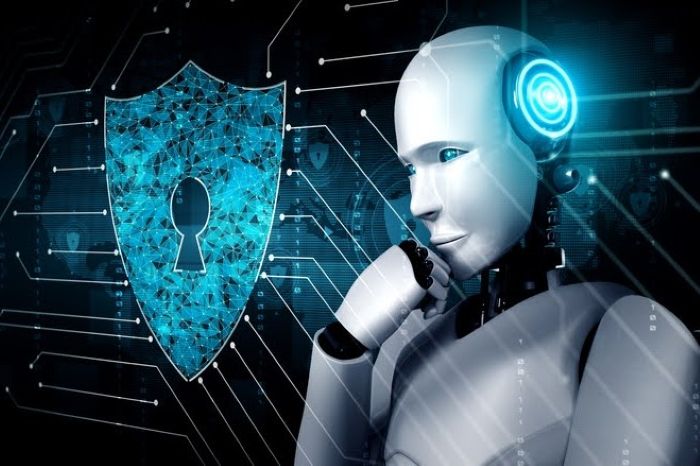
In the context of cybersecurity and free access to foreign web resources, VPN technology becomes essential. Companies rely on secure VPN servers to encrypt traffic and protect internal systems from interception. Solutions such as VeePN provide encrypted tunnels that shield corporate data from surveillance or malicious actors. For organizations that operate internationally, access to region-specific tools or research databases may require flexible routing; in such cases, platforms like VeePN for services can support secure and controlled connectivity across jurisdictions. Encryption does not solve every problem. But without it, data protection strategies collapse quickly. Especially when AI tools constantly exchange data with cloud platforms.
Data Minimization: The First Line of Defense
One principle matters more than ever: do not share what you do not need to share.
Generative AI systems often work better with context. That creates temptation. Employees may upload entire datasets instead of excerpts. They may paste full customer profiles instead of anonymized summaries. Over time, this behavior erodes data protection standards.
Companies should adopt strict data minimization rules when rotecting corporate data:
- Share only necessary fragments
- Remove identifiers before uploading content
- Avoid training models on raw personal data
- Monitor prompts for sensitive keywords
Small steps. Big impact.
Statistics show that organizations practicing structured data governance reduce breach severity by up to 35%. That is not because attacks stop. It is because exposure is limited.
Internal AI Policies: Clarity Over Complexity
Many companies introduce AI tools before writing policies. That is backwards.
An effective AI policy should answer simple questions:
- Which tools are approved?
- What types of data are allowed?
- Is model training permitted on internal inputs?
- Who monitors usage?
The language must be clear. Not legal jargon. Not abstract theory. Employees need practical instructions. For example: “Never upload contracts containing client names to external AI systems.” That is clear. That reduces risk.
Cybersecurity teams should collaborate with legal and compliance departments. Data protection regulations like GDPR, CCPA, and similar frameworks already require accountability. AI does not replace those obligations. It intensifies them.
Monitoring and AI Governance
Technology alone cannot solve governance issues. Still, smart monitoring helps.
AI governance platforms can log prompt activity, detect anomalies, and flag unusual data transfers. Behavioral analytics can identify patterns that differ from normal workflows. If an employee suddenly exports thousands of records before interacting with an AI model, the system should trigger alerts.
Security operations centers now integrate AI-driven detection systems to counter AI-driven threats. It becomes a race of automation versus automation.
Yet, human oversight remains crucial. Algorithms detect patterns. People interpret context.
Employee Education: The Weakest and Strongest Link
In many breach reports, human error appears as the main cause. Clicking the wrong link. Sharing credentials. Misconfiguring access rights.
With generative AI, new training topics for protecting corporate data are required:
- Safe prompt engineering
- Recognizing AI-generated phishing
- Understanding model retention policies
- Differentiating public vs. enterprise AI systems
Education is not a one-time webinar. It must be continuous. Short modules. Real-life scenarios. Simulated attacks.
Companies investing in regular cybersecurity training reduce successful phishing incidents by nearly 50%, according to several enterprise studies. That alone justifies the effort. Interestingly, some organizations even use secure tools like VeePN within their cybersecurity awareness programs to demonstrate how encrypted connections protect sensitive research and learning platforms, especially when employees access international educational resources during professional development.
Cloud Security and AI Integration
Most generative AI solutions run in the cloud. That means shared responsibility.
Cloud providers secure infrastructure. Companies secure their data and configurations. Misconfigured storage buckets remain one of the top causes of large-scale leaks.
When integrating AI with internal systems, organizations should:
- Use API gateways with strict authentication
- Implement role-based access controls
- Enable end-to-end encryption
- Log all AI-related transactions
Zero-trust architecture is becoming standard. No device or user is trusted by default, even inside the corporate network.
This is particularly important when AI tools are connected to internal databases. One vulnerable endpoint can open a path to everything.
Incident Response in the AI Era
Despite prevention efforts when protecting corporate data, breaches can still occur. Speed matters.
Incident response plans must now include AI-specific scenarios:
- Accidental upload of confidential data to public AI
- AI model leaking sensitive information
- Compromised API keys for AI services
Teams should simulate these scenarios before they happen. Practice reduces chaos.
Statistics indicate that companies with rehearsed incident response strategies reduce breach costs by approximately 30%. Time equals money. And reputation.
Ethical Considerations and Long-Term Strategy
Data protection is not only about avoiding fines. It is about trust.
Clients want assurance that their information is safe. Employees want to know their personal data is not being used irresponsibly. Investors examine governance practices more closely than ever.
Generative AI offers enormous potential. Automated analytics. Intelligent assistants. Predictive insights. But without strong cybersecurity frameworks, that potential becomes fragile.
Leaders must think long term. Build secure infrastructures. Encourage responsible AI use. Invest in encryption, monitoring, governance, and education. Combine technical safeguards with human awareness.
Conclusion: Balance Innovation with Protection
The age of generative AI is not coming. It is already here.
Organizations cannot ignore it. Nor can they adopt it blindly. Cybersecurity and data protection must evolve alongside innovation. That means encrypted connections, controlled access, clear policies, active monitoring, and continuous training.
It also means understanding that technology amplifies both strengths and weaknesses. When companies treat data as a strategic asset — not just a resource — they create resilience.
The future belongs to businesses that innovate responsibly when protecting corporate data. Those that protect what matters while building what comes next.