Technology is evolving every single second. Previously, new tools attempted to address the problems of all the industries simultaneously. But now it pays attention to particular industries, factual workflow, and practical results.
This change is significantly influenced by artificial intelligence. Companies are no longer creating broad systems that do a little of everything; instead, they are creating AI that understands a particular field. With this method, businesses can be faster, minimize mistakes, and make better decisions without any technical knowledge. In fact, 85% of executives say they use machine learning in their businesses, indicating broad AI adoption across industries such as automotive, manufacturing, and services.
This article describes the mechanism of industry-oriented AI, its purpose, and its effects on simple technologies that are not used by IT experts.
Table of contents
- The Shift From General AI to Industry-Focused Solutions
- What Sets Industry-Specific AI Apart
- Why Businesses Prefer Specialized AI
- How Vertical AI Fits Into This Evolution
- Real-World Applications You See Every Day
- Why Non-Technical Users Benefit the Most
- Why This Shift Matters for Technology as a Whole
- Final Thoughts
The Shift From General AI to Industry-Focused Solutions
The majority of the population was introduced to AI via chatbots, recommendation systems, or voice assistants. These tools can be used by many people across various applications. Though this is helpful, they typically do not have a deep understanding of industry-specific issues.
A basic question began to be posed by businesses. Why would we ever apply generic tools to the problems of healthcare, finance, retail, and manufacturing? They are so different.
This query gave rise to industry-specific AI systems.
What Sets Industry-Specific AI Apart
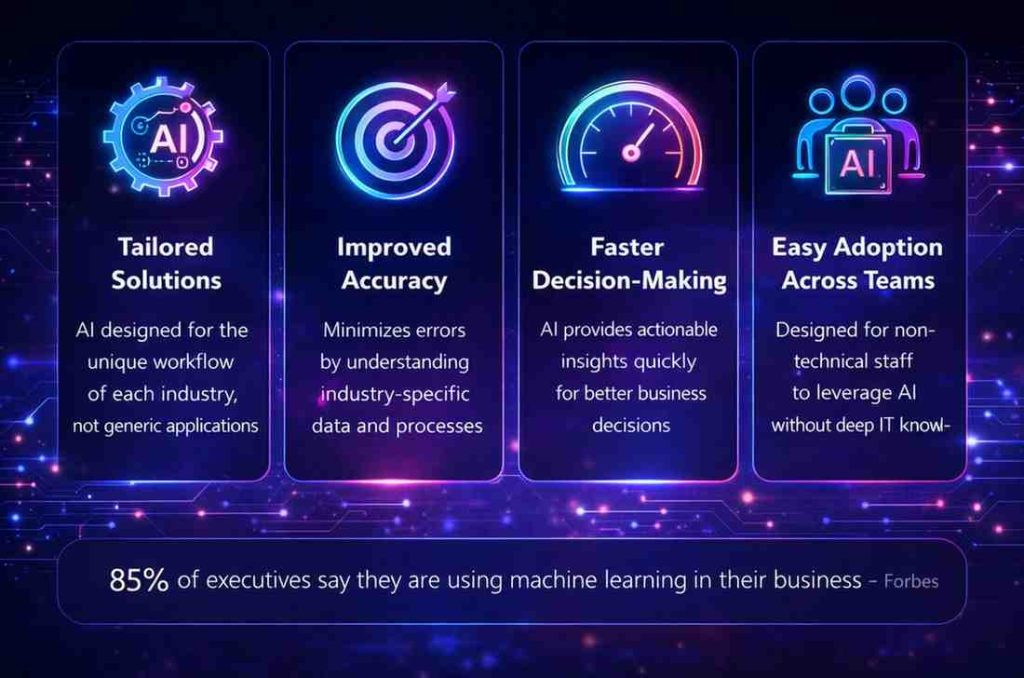
Industry-specific AI uses data specific to a single industry. It also acquires industry regulations, standard operating procedures, and reality.
For example:
- An AI in healthcare is familiar with medical records, compliance regulations, and medical terminology.
- Retail AI focuses on inventory, demand forecasting, and customer behavior.
- An AI in finance identifies risk patterns, transactions, and regulatory requirements.
This focus enables quicker and more precise findings.
Why Businesses Prefer Specialized AI
Businesses desire solutions that are out-of-the-box. They do not want to waste time training complicated systems from the start. Industry-specific AI:
- Reduces setup time
- Less technical knowledge is required
- Gives a more relevant production
- Integrates into existing work processes
The above advantages facilitate adoption, particularly for small and mid-sized enterprises.
How Vertical AI Fits Into This Evolution
The vertical AI is one of the common names that is applied to describe industry-oriented systems. It implies AI devices that are designed to suit one industry instead of all people.
These systems are used to address real issues rather than provide generic features. They are more like professional assistants who are already familiar with the business context. This will give non-technical users confidence in AI, as it understands their language and handles their daily tasks directly.
Real-World Applications You See Every Day
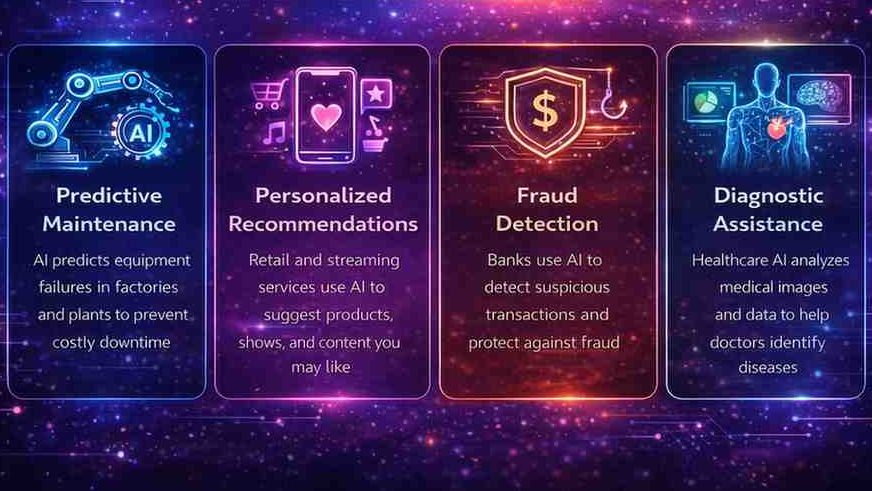
You may already use industry-focused AI without realizing it.
Healthcare Technology
AI can help doctors review medical scans, organize patient records, and reduce time spent on paperwork. These systems neither displace doctors nor nurses.
They aid faster and better decisions as a substitute by emphasizing significant details and trends. This leads to reduced waiting periods, enhanced diagnostic support, and improved record management, thereby providing smoother and more dependable care to patients.
Finance and Banking
AI is important in the financial and banking industries for identifying fraud, assessing credit risk, and automating customer service. Banking services become more efficient and reliable as customers can receive loans faster, make safer transactions, and receive quicker responses to their inquiries from support teams.
Retail and E-commerce
Inventory management, customer demand prediction, and shopping experience personalization are all AI applications in retail and e-commerce companies. By analyzing purchasing patterns, AI helps stores keep the right product at the right time.
Online and in-store shopping can be more convenient because online shoppers have more opportunities to receive better product recommendations, fewer out-of-stock products, and better checkout services.
Supply Chains and Manufacturing
AI in manufacturing and supply chain activities is used to forecast machine failures, enhance production planning, and improve logistics management, making operations more effective. Such systems can detect potential problems before they become inconvenient.
This results in less downtime, less wastage, and less inefficient operations, thereby enabling companies to reduce costs and deliver products on time.
Why Non-Technical Users Benefit the Most
- Industrial AI is user-friendly and requires no coding or technical expertise, making it accessible to everyday people.
- Most tools provide easy-to-use dashboards, notifications, and plain-language reports, so people engage with insights rather than intricate algorithms.
- The AI already knows industry rules and workflows, so users will not have to describe simple concepts or processes.
Actionable, clear insights enable teams to make quick decisions, allowing them to spend less time analyzing data and more time tackling real issues.
Why This Shift Matters for Technology as a Whole
Technology is successful when it addresses real problems. Industry-oriented AI will bring technology closer to everyday endeavors. It takes innovation out of theory and into practice. It empowers users who would not have considered themselves technical. And also confirms that smarter tools are not necessarily complex. Seeking vertical AI demonstrates that the future of technology is in focus, clarity, and usefulness.
Final Thoughts
Technology is no longer obliged to serve everybody in the same manner. AI in the industry also demonstrates that industry solutions yield better outcomes. These systems humanize technology, make it more practical and effective by comprehending actual working processes and challenges. They help businesses expand without clogging up users.
The most useful AI tools will not be the noisiest or glitziest as it moves forward. They will be the ones who quietly resolve the right issues for the right businesses.