Most trade teams inherit trade compliance as a line item that only shows up when something breaks. You notice it when a shipment sits on hold, when a broker calls about a mismatched code, when finance asks why the duty bill landed higher than the forecast. The rest of the year it runs quietly in the background, staffed by careful people whose work rarely gets credit until the day it fails.
That framing has started to shift. The cost of getting classification, valuation, or origin wrong has grown loud enough that leadership actually pays attention now. And once compliance moves from the back office toward the boardroom, the question changes. You stop asking how to make it cheaper and start asking what it can protect.
Key Takeaways
- Compliance once sat quietly, only noticed when issues arise, but now it gains boardroom attention as its costs rise.
- With real-time detection, AI monitors compliance, catches errors at entry, and shifts the focus from reactive measures to proactive understanding.
- Compliance data unveils risk exposure. Organizations can anticipate changes in duty costs, making compliance a valuable planning tool instead of merely a cost center.
- Audit processes become easier with continuous logging. Firms can address potential issues before they face scrutiny from customs authorities.
- Using AI allows businesses to respond quickly to tariff changes, ensuring they protect their bottom line rather than scrambling to fix past mistakes.
Table of contents
The old model treated trade compliance as overhead
For a long time the goal was to keep the function small. Hire enough analysts to process the entries, keep the error rate tolerable, and treat any fine as the occasional cost of doing business. That worked when tariff schedules moved once or twice a year and duty rates stayed low enough that a misclassification was an annoyance.
The environment stopped cooperating. Rules change faster, duty exposure runs higher, and enforcement reaches deeper into supply chains than it used to. A single wrong code no longer costs you a rounding error. It can trigger a reassessment across every entry that used it. When the downside gets that big, running compliance as a minimal-cost function starts to look like the expensive option.
What changes when detection happens in real time
The practical value of AI here is not that it replaces judgment. It is that it watches everything at once, which no human team can do at the volume trade now runs at.
You feel the difference in where problems surface. Instead of finding a classification error six months later in a customs inquiry, you catch the anomaly at entry, when there is still time to correct it. An automated system reads product descriptions, compares them against the codes you have used before, and flags the shipment that does not fit the pattern. It watches for the duty rate that suddenly diverges from history, the country of origin that shifted without explanation, the SKU that got reclassified somewhere upstream without anyone telling you.
Teams that run an automated trade compliance monitoring platform tend to describe the shift the same way. The work stops feeling like archaeology. You are looking at live exposure instead of reconstructing what went wrong after the fact.
Trade Compliance data is also risk data
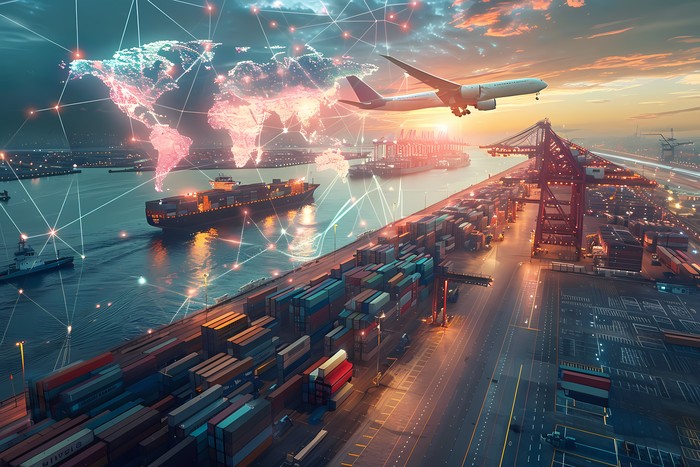
Here is what gets missed when compliance sits in a silo. The same records that prove you followed the rules also tell you where your exposure lives.
Every entry carries a story. Which suppliers concentrate your duty risk, which product lines ride closest to a tariff threshold, which origins would hurt most if a new measure landed on them next quarter. When that data sits in disconnected spreadsheets, nobody reads the story. When it runs through a system that can surface patterns, you start seeing the map before the terrain shifts.
That is the real reframe. A trade compliance function that only files entries is a cost. A function that can tell you where a policy change would hit your landed cost hardest is a planning input. Same data, different altitude.
Audit readiness as a byproduct, not a fire drill
Ask anyone who has lived through a customs audit and they will tell you the scramble is the worst part. Pulling entries, matching invoices, explaining a code someone chose two years ago and never documented. The exposure was often manageable. The panic came from not having the trail.
When your classification and valuation decisions get logged as you go, the audit stops being an event you brace for. You run an AI tariff compliance audit tool across your own entries on your own schedule, find the weak spots before CBP does, and fix them through the channels that exist for exactly that purpose. The posture flips from defensive to routine. You are not waiting to be caught. You are checking your own work continuously and correcting quietly.
Why this reads as an advantage
Two importers can carry identical products and identical suppliers and still end up in very different positions. One knows within a day how a new tariff authority would change its duty bill. The other finds out weeks later, after the shipments already cleared at the wrong rate.
The gap between those two is not luck. It is whether trade compliance runs as a monitored, queryable system or as a stack of manual checks that only speak up once something already broke. The first team can renegotiate a supplier contract, shift an order, or file for relief while the window is open. The second team absorbs the hit and calls it the cost of doing business.
You do not get that speed by hiring more people to check more spreadsheets. You get it by treating compliance as live infrastructure that watches, flags, and remembers. That is what moves it off the cost line and onto the side of the ledger that actually protects the business when the rules move again.