Technology has transformed how people understand beauty and self-presentation. Today, AI-powered tools can analyze facial structure in seconds. The global AI beauty market is projected to surpass $13 billion by 2030, driven by rising demand for personalization. Studies also show that over 70% of consumers prefer customized beauty recommendations, making facial analysis tools increasingly popular.
Two widely used tools in this space are the face shape detector and the Pretty Scale. These systems use facial recognition technology to map 68+ facial landmarks, measuring facial proportions and symmetry. A face-shape detector identifies features such as oval, round, or square, while the Pretty Scale evaluates facial balance based on symmetry principles often linked to attractiveness research.
In this guide, we will explain how these tools work, how to use them effectively, and what real benefits they offer for styling and self-awareness.e.
Table of contents
- The Science Behind Digital Face Analysis
- Defining a Face Shape Detector
- Understanding the Concept of a Pretty Scale
- Preparing for Accurate Results
- How to Use a Face Shape Detector Effectively
- How to Use a Pretty Scale Responsibly
- Styling Advantages of Face Shape Detection
- Personal Branding and Social Media Impact
- Psychological and Educational Benefits
- Recognizing Limitations and Ethical Considerations
- Final Reflection
The Science Behind Digital Face Analysis
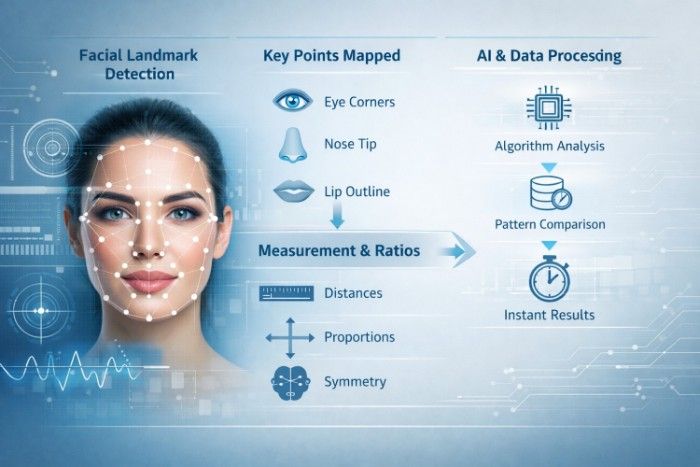
Before understanding these tools individually, face shape detector and the pretty scale. it is important to recognize the technology that powers them. Both face-shape detectors and pretty scale analyzers rely on artificial intelligence, specifically computer vision and facial-landmark detection.
Facial landmark detection identifies specific points on the face, such as the corners of the eyes, the tip of the nose, the outline of the lips, and the jawline. Once these points are mapped, the system measures distances and calculates ratios between features. These measurements are then compared to stored data patterns to generate results.
This process happens within seconds. However, accuracy depends on factors such as lighting, image quality, and head positioning.
Defining a Face Shape Detector
A face shape detector is an AI-based tool that determines the structural category of your face. Human faces generally fall into common categories, including oval, round, square, heart, diamond, and oblong. Each category is defined by specific proportional relationships.
For example, an oval face typically has balanced proportions with slightly wider cheekbones. A round face often has similar width and length measurements with softer angles. A square face may have a strong jawline and equal width across the forehead and jaw.
The purpose of a face shape detector is not to measure attractiveness. Instead, it focuses strictly on geometry. By identifying your face shape, the tool helps you understand your natural structure, which can guide styling and grooming decisions.
Understanding the Concept of a Pretty Scale
A pretty scale is designed to evaluate facial symmetry and proportional harmony. Unlike a face shape detector, which categorizes structure, a pretty scale attempts to measure aesthetic balance using mathematical principles.
Many popular scale tools use the golden ratio, a proportion historically associated with visual harmony. The algorithm measures the spacing between features, eye alignment, nose position, lip proportions, and the balance between the upper, middle, and lower thirds of the face.
The system then generates a numerical score. This score reflects how closely the facial measurements align with predefined standards of symmetry and balance. It is important to remember that this number is based on mathematical calculations, not personal worth or universal beauty standards.
Preparing for Accurate Results
To obtain reliable results from either tool, preparation is essential. Start with a clear, high-resolution photo taken from a straight-on angle. The head should not be tilted or turned to the side. Neutral facial expressions allow for better symmetry detection.
Lighting plays a critical role. Even natural lighting helps prevent shadows that could distort measurements. Avoid heavy filters or editing tools, as these may alter proportions and affect accuracy.
Hair should ideally be pulled back to reveal the forehead and jawline. Accessories such as hats or oversized glasses should be removed before analysis.
How to Use a Face Shape Detector Effectively
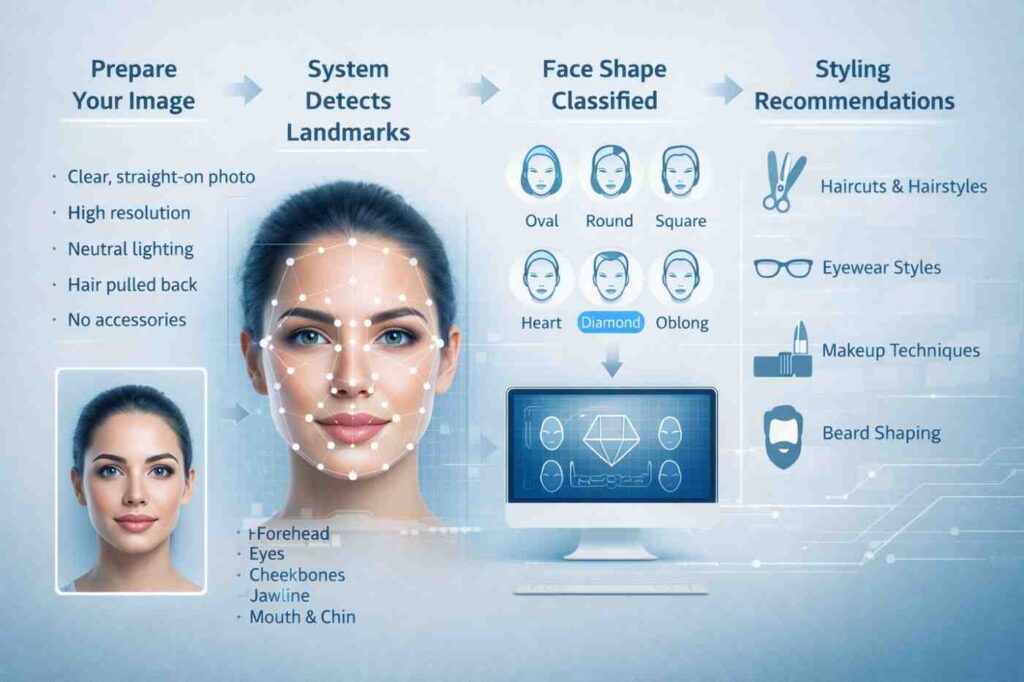
Using a face shape detector is straightforward. Once you upload your prepared image, the system begins scanning for facial landmarks. It identifies the outline of your face, measures the width of your forehead and jaw, calculates the length of your face, and evaluates cheekbone prominence.
After processing, the tool displays your face shape classification. Some advanced platforms provide additional insights, such as percentage matches to multiple shapes. They may also suggest hairstyles, makeup techniques, or eyewear styles that complement your structure.
For example, if your result indicates a heart-shaped face, you may receive recommendations for styles that balance a wider forehead with a narrower chin. This practical guidance makes the tool useful beyond simple curiosity.
How to Use a Pretty Scale Responsibly
Using a pretty scale follows a similar upload process. After submitting your image, the algorithm analyzes symmetry by comparing the left and right sides of your face. It measures feature alignment and proportional balance.
The final output is typically a numerical score. Some platforms may also provide brief commentary about symmetry levels or proportional strengths.
It is important to approach this score with perspective. The number reflects structural harmony based on programmed standards. It does not measure personality, charisma, or emotional expression, all of which significantly influence attractiveness.
Responsible use means viewing the tool as informative rather than judgmental.
Styling Advantages of Face Shape Detection
One of the primary benefits of a face shape detector is improved styling confidence. Knowing your face shape simplifies decisions related to haircuts and hairstyles. Certain styles can elongate, soften, or balance facial proportions, helping you choose looks that naturally complement your structure.
Eyewear selection becomes more strategic when informed by face-shape analysis. Frames that contrast your natural structure often create visual harmony. Instead of guessing which frames suit you, you can choose based on proportion, much like using an AI enhancer that refines and optimizes details for better results.
Makeup application also becomes more precise. Contouring techniques depend heavily on facial geometry. Understanding where your cheekbones sit or how your jawline is shaped enables targeted application to enhance natural features.
Men benefit as well, particularly in beard styling. Different beard shapes can lengthen or soften facial proportions. A structured beard can add dimension to a round face, while a softer beard can balance angular features.
Personal Branding and Social Media Impact
In the digital age, many individuals focus on personal branding. Influencers, content creators, and professionals often rely on strong visual presentation. Understanding facial symmetry through a pretty scale analysis can help individuals identify their most photogenic angles.
Photographers often recommend positioning based on symmetry. Knowing which side of your face appears more balanced can improve headshots and social media photos. This knowledge can contribute to a more polished online presence.
However, it is essential to maintain balance. Authenticity and confidence remain far more influential than mathematical symmetry.
Psychological and Educational Benefits
Beyond appearance, these tools can increase self-awareness. Learning about facial proportions provides insight into how structure influences perception. This knowledge can empower individuals to make intentional choices rather than following trends blindly.
For some users, simply understanding the science behind facial proportions can be fascinating. It provides a logical framework for concepts that are often viewed as purely subjective.
When approached with a healthy mindset, these tools can contribute to confidence rather than insecurity.
Recognizing Limitations and Ethical Considerations
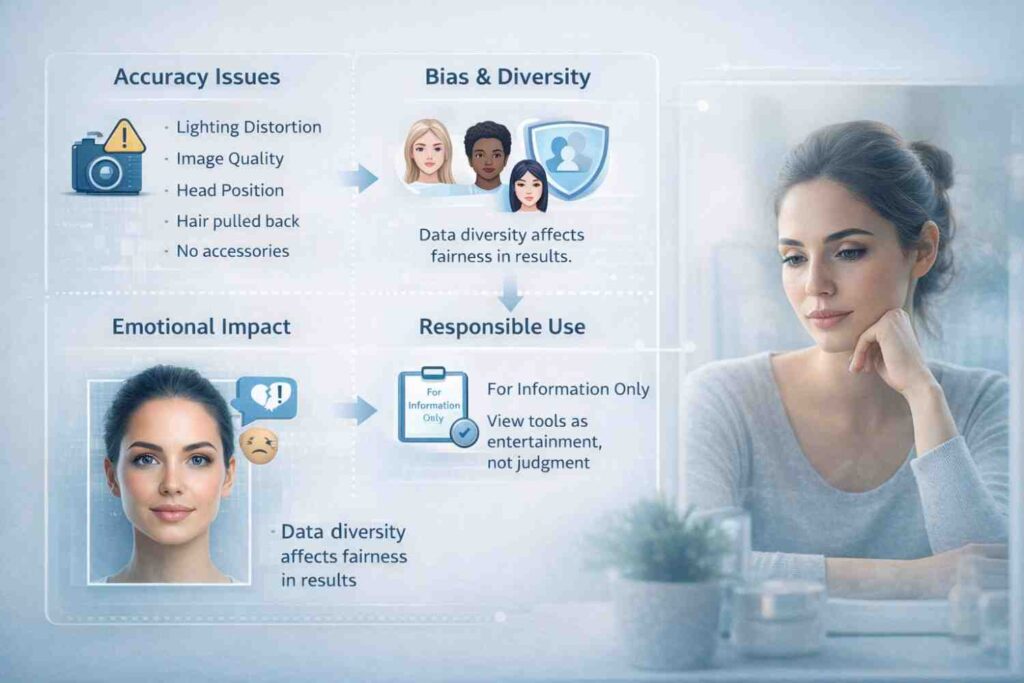
Despite technological advancements, face analysis tools have limitations. Camera distortion, poor lighting, and image resolution can affect measurement accuracy. Additionally, AI systems are only as diverse as the data used to train them. Lack of diversity in datasets may influence results.
Another important consideration is emotional impact. Beauty standards vary widely across cultures and individuals. A numerical score should never define self-worth. These tools measure structure, not identity.
Responsible platforms often emphasize that results are for entertainment or informational purposes only.
Final Reflection
Face-shape detectors and pretty scale tools represent a fascinating blend of computer vision and personal image analysis. Powered by advanced Face recognition technology, these systems map key facial landmarks to assess structure and proportions. A face-shape detector categorizes your facial structure based on measurable proportions to guide styling and grooming decisions. A pretty scale evaluates symmetry and balance, offering insight into structural harmony.
When used thoughtfully, these tools provide practical benefits, including improved styling choices, enhanced self-awareness, and greater confidence in personal presentation. However, they should always be viewed as supportive tools rather than definitive judgments.
Technology can analyze geometry with precision, but true attractiveness extends far beyond measurements. Confidence, expression, and individuality remain qualities that no algorithm can fully calculate.