Managing subcontractors has long been one of the most complex parts of construction delivery. With multiple trades, changing documentation, and tight timelines, even small oversights can trigger delays, disputes, and expensive rework. As project demands rise, many firms are looking for better ways to coordinate requirements, keep scopes aligned, and reduce avoidable risk.
Technology is reshaping how teams handle this work. Instead of relying on scattered spreadsheets and last-minute document checks, construction leaders are moving toward more structured, data-supported workflows that help them spot issues earlier and communicate expectations more clearly. Gartner predicts that by 2027, 50% of organizations will use AI‑enabled contract risk analysis and editing tools to support supplier contract negotiations, highlighting how AI is transforming contract review and risk identification processes.
Table of contents
The case for smarter subcontractor oversight
Subcontractors directly impact schedule, quality, and cost. But managing scope, timelines, and compliance across many trades can strain even strong teams. Each subcontract brings its own terms, attachments, and obligations. When language is unclear or documentation is incomplete, projects become vulnerable to change orders, stalled work, and finger-pointing.
Historically, reviewing these agreements has been a manual process handled by legal staff, project managers, or operations leaders. With shorter bid windows and larger document volumes, many teams now lean on subcontractor management software to identify what is missing, what conflicts with the prime contract, and what could create exposure later.
AI in action: how the tools work
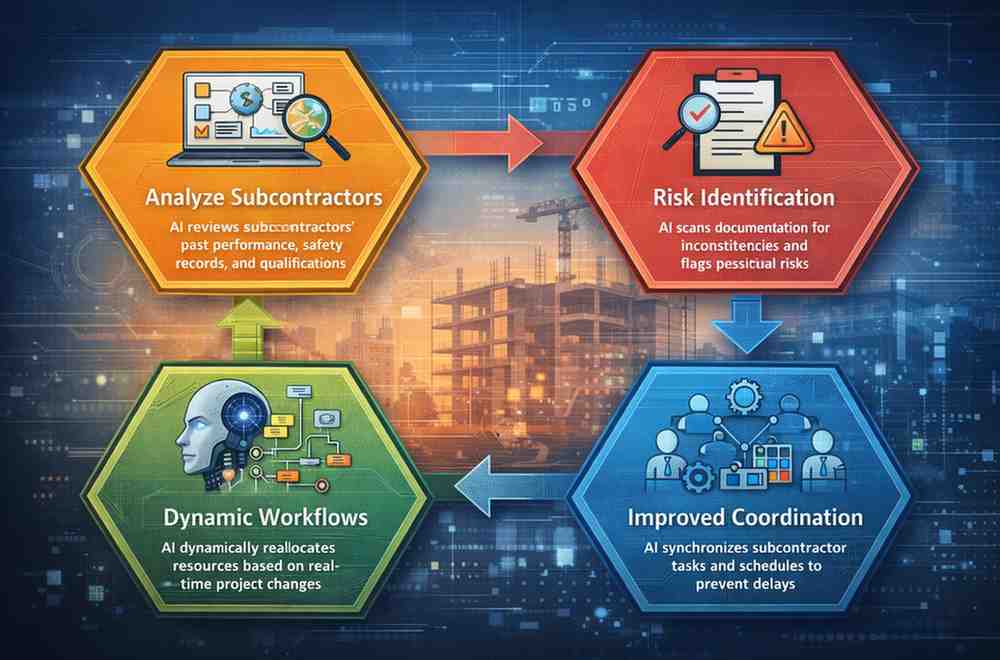
The core technology behind many modern review systems is artificial intelligence, which can be trained to recognize patterns and common risk signals across large volumes of contract language. Over time, these models become more effective at spotting inconsistent phrasing, missing clauses, or terms that often lead to disputes.
In a typical workflow, a team uploads a subcontract, and the system highlights items that may require attention. That can include insurance gaps, unclear payment terms, missing flow-down obligations, or language that conflicts with the prime contract. Some platforms also compare contract terms to internal standards, helping teams maintain consistency across projects without starting from scratch each time.
For firms juggling many trades across multiple jobs, the value is practical. Reviews become more repeatable, risk checks happen earlier, and fewer issues slip through simply because someone ran out of time.
Improving team communication and accountability
A less obvious benefit is how these systems support communication across stakeholders. When teams have a shared view of key terms and flagged issues, coordination improves. It becomes easier to confirm who owns the next action, what needs clarification, and what must be updated before a subcontract is finalized.
Many tools also create an audit trail. If terms are revised or risks are flagged, those actions can be tracked. That transparency helps later in the project when questions come up about scope, approvals, or why certain language was accepted.
Access for firms of all sizes
Advanced contract and compliance tools are no longer limited to the largest contractors. Many solutions are cloud-based and built to scale, which makes them accessible to mid-sized builders and growing teams. The adoption curve is often manageable because most systems work with common file formats and do not require deep technical training.
As construction technology becomes more mainstream, the broader conversation is shifting toward practical outcomes, like reducing rework, improving coordination, and keeping projects moving. This broader shift in construction tech reflects how modern tools help teams keep up with stricter expectations and tighter timelines.
A broader shift toward intelligent workflows
AI-enabled subcontractor workflows are part of a broader industry-wide transformation. From early planning through turnover, teams are pushing for cleaner information handoffs and better visibility into what is complete, pending, and at risk.
That same push shows up during closeout, where missing documents and late requirements can create friction for owners and contractors alike. This is where closeout software helps improve coordination and visibility during that phase.
Looking ahead: building a smarter partnership
As these tools mature, they will likely connect more closely with procurement, scheduling, and safety systems, creating a more integrated project environment. The near-term goal is simpler and more valuable: clarity. Construction leaders want to know what is missing, where the risk sits, and how to resolve issues before they escalate.
Smarter workflows are not about replacing experienced professionals. They are about giving teams faster visibility, cleaner documentation, and a more reliable way to manage expectations with trade partners. In an environment where details drive outcomes, stronger subcontractor coordination supports better projects for everyone involved.