
A founder enters a product idea into an AI video generator expecting fast and polished results. At first, the output seems impressive, but the problems quickly become noticeable. The avatar suddenly changes halfway through the video, the voice loses its natural tone in another language, and the transitions between scenes feel awkward enough to ruin the viewing experience. Instead of focusing on storytelling or messaging, the founder ends up rewriting prompts repeatedly, adjusting small instructions in the hope of finally getting a usable result. This situation has become increasingly common across AI creation platforms. Prompt engineering helped users unlock the early capabilities of generative AI, but it was never meant to become the entire user experience.
As more businesses depend on AI for marketing, storytelling, training, and content production, the limitations of prompt-heavy workflows are becoming harder to ignore. What once felt innovative now often feels exhausting because users spend more time managing the tool than actually creating content.
Key Takeaways
- AI video generation often frustrates users due to inconsistent outputs, awkward transitions, and unnatural elements.
- Most users don’t want to master prompt engineering; they seek smooth, professional video creation.
- The future of AI video tools will prioritize understanding user intent and simplifying workflows instead of relying on detailed prompts.
- Platforms like Intellemo AI focus on cinematic consistency and automated processes, enhancing the user experience.
- The industry is shifting toward workflow-based design, improving content generation across various formats and languages.
Table of contents
- Why Prompting Stops Working in Video Creation
- Most Users Do Not Want to Become Prompt Engineers
- Why AI Video Exposes UX Problems Faster Than Other AI Tools
- The Industry Is Moving Toward Intent-Based AI Creation
- The Real Shift Is Happening in Workflow Design
- The Future of AI Video Will Feel Less Technical
Why Prompting Stops Working in Video Creation
Prompting works fairly well when the output is short and simple. A blog outline, product description, or image concept can usually be improved with a few edits. Video generation is far more demanding because multiple systems need to work together simultaneously.
A powerful AI video generator must maintain smooth pacing, camera consistency, character continuity, natural voice delivery, accurate lip-syncing, visual stability, and coherent storytelling throughout the entire video. If even one of these elements fails, the quality of the whole video immediately suffers.
This matters because video has become one of the most important communication formats for modern businesses. Industry reports show that more than 90% of businesses now use video as part of their marketing strategy, while AI-assisted content creation continues to grow across advertising, education, and social campaigns. As demand for AI video generation continues to rise, workflow consistency and output reliability are becoming critical factors for businesses evaluating video creation platforms.
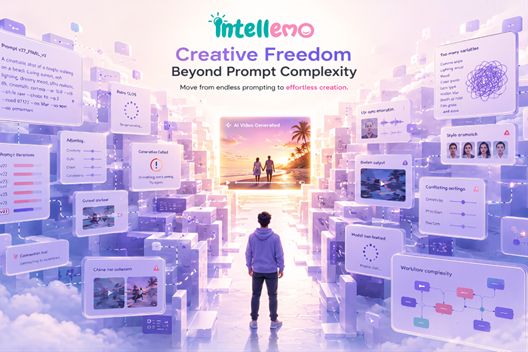
The demand for AI video generation is growing quickly, but workflows remain a major challenge for many platforms. Instead of simplifying production, many tools force creators into endless experimentation where they repeatedly regenerate scenes, rewrite prompts, and troubleshoot inconsistencies that should ideally be handled automatically by the platform itself.
This frustration becomes even more obvious in long-form video generation. Short AI clips can sometimes hide imperfections, but longer storytelling formats expose every weakness in continuity, pacing, voice synchronization, and scene transitions.
Most Users Do Not Want to Become Prompt Engineers
Most founders and marketers are not interested in mastering prompt engineering. They simply want to create professional-looking videos that feel natural and communicate their message effectively.
A skincare company running multilingual campaigns may need the same advertisement in English, Hindi, and Arabic while maintaining identical branding throughout every version. A SaaS company may require onboarding explainers, product demos, and social media content that all preserve a consistent tone. An educational creator may want a talking avatar that looks and sounds natural across multiple scenes without spending hours fixing transitions or regenerating clips.
In all of these situations, the user’s goal is relatively straightforward, but the technical complexity behind video generation is not. This is where traditional prompting becomes a weak UX model because users are forced to manually describe production-level details. They end up specifying pacing, emotional tone, camera direction, scene transitions, character behavior, and voice style through prompts even though most of them are not filmmakers or editors.
A better text-to-video AI workflow should reduce that complexity rather than expose more of it. The platform should understand context, maintain continuity automatically, and intelligently structure the final output so creators can focus more on ideas, storytelling, and messaging instead of troubleshooting generation problems.
Why AI Video Exposes UX Problems Faster Than Other AI Tools
Text-based AI tools can survive small imperfections because written content is relatively easy to edit. Video works differently because inconsistencies are instantly visible to viewers. A slightly awkward sentence in an article can be fixed in seconds, but broken lip-syncing, unnatural voice delivery, inconsistent avatars, or unstable transitions immediately make a video feel unfinished.
This is one reason many creators become frustrated after experimenting with current AI video platforms. The first output may look impressive at a glance, but maintaining cinematic consistency throughout an entire video remains difficult for many tools. Long-form AI videos especially tend to struggle with weak narrative flow, inconsistent characters, unnatural pacing, and transitions that interrupt the viewing experience.
These issues are no longer small technical flaws because businesses increasingly rely on AI-generated videos for product storytelling, tutorials, UGC advertisements, training content, and customer communication. Whether creators use a traditional video platform or an AI UGC video generator, poor video quality directly affects credibility. Research consistently shows that viewers associate production quality with brand trust, meaning weak AI-generated videos can damage perception faster than many companies realize.
This difference separates AI experimentation from real business use. Brands do not simply need fast video generation. They need reliable and consistent outputs that feel polished enough to publish confidently across multiple platforms and markets.
The Industry Is Moving Toward Intent-Based AI Creation
The next stage of AI creation will likely focus less on perfect prompts and more on understanding user intent naturally. Instead of forcing creators to manually explain every detail, newer systems are beginning to identify the purpose behind the content first and then automatically handle much of the technical execution.
If a platform understands that the user wants a product launch video, a training tutorial, a UGC-style advertisement, or a cinematic explainer, it can make smarter decisions about pacing, storytelling structure, scene composition, voice delivery, and continuity without requiring endless prompt adjustments.
This shift reflects a larger trend happening across AI products overall. Businesses are no longer impressed simply because something was generated quickly. They expect workflows that save time while still delivering quality and consistency. The strongest AI tools in the future will likely be the ones that hide complexity from users instead of exposing more of it.
That is partly why Intellemo AI are gaining attention in the AI video space. Instead of relying heavily on prompt engineering, the platform focuses more on cinematic consistency, structured storytelling, multilingual voice synchronization, and smoother long-form generation. The company states that it has already generated more than 50,000 AI videos, and the recurring issues identified across those projects mirror the same frustrations seen throughout the industry: inconsistent voices, weak narrative flow, broken transitions, and users struggling to write highly detailed prompts.
The Real Shift Is Happening in Workflow Design
One of the biggest changes happening quietly across AI products is the transition from generation-focused tools toward workflow-focused systems. Earlier AI platforms were mainly evaluated based on whether they could generate something impressive once. Today, businesses care more about whether those outputs remain consistently usable across larger campaigns and repeated production cycles.
This is especially important for brands producing large amounts of content across different languages, formats, and platforms. Maintaining continuity at scale becomes difficult when workflows depend too heavily on manual prompting. Platforms are now beginning to solve this issue through better context handling, structured storytelling systems, avatar consistency, and automated scene management rather than simply encouraging users to “prompt better.”
Intellemo AI is part of this broader movement toward reducing technical friction in video creation workflows. Instead of positioning prompt engineering as the core skill users must learn, the platform focuses more on simplifying the production process itself so creators can spend more time on storytelling and brand communication.
The Future of AI Video Will Feel Less Technical
The best technology usually succeeds by hiding complexity instead of exposing it. Most people use streaming platforms without understanding recommendation algorithms, create presentations without studying design systems, and record smartphone videos without learning how camera hardware works internally.
AI creation will likely evolve in the same direction. Prompt engineering may still remain useful for advanced users who want deeper customization, but it should not define the default experience for everyone else. Most users simply want tools that are reliable, visually consistent, fast enough for modern workflows, and easy to use without requiring constant experimentation.
For AI video generation specifically, that means fewer retries, stronger continuity, more natural voice delivery, smoother storytelling, and far less dependence on perfectly written prompts. The future of AI video platforms will likely belong to systems that understand intent naturally and help creators move from idea to finished video with significantly less friction than current workflows require.