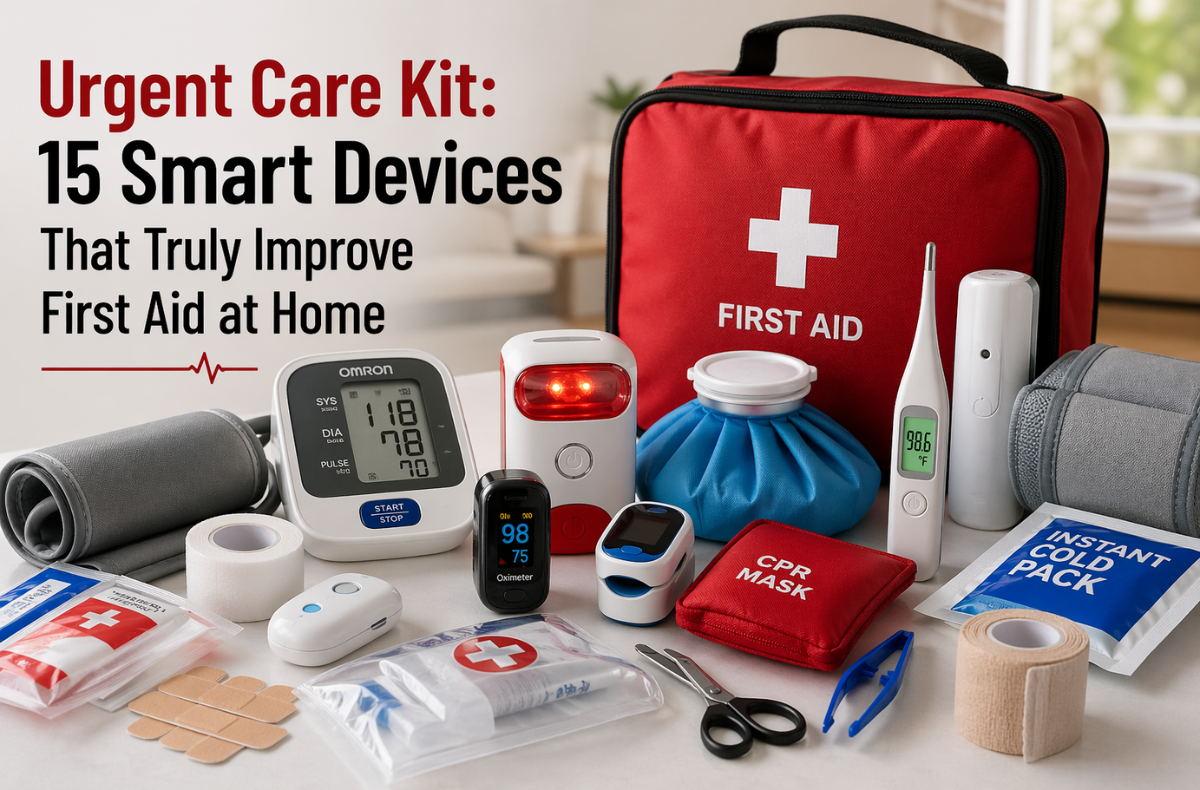
Medical emergencies happen without warning. Prepare your home with an urgent care kit. This collection of essential medical supplies goes beyond a basic first-aid box. It provides the tools you need to handle minor injuries and stabilize serious conditions until professional help arrives.
Build a modern setup. Today, an urgent care kit for home use integrates digital health tools for emergencies. You can monitor vital signs, detect falls, and contact emergency services instantly. Read on to discover the essential supplies and 15 smart medical devices for home use that improve your emergency response.
Key Takeaways
- An urgent care kit prepares your home for medical emergencies and goes beyond a basic first-aid box.
- A modern urgent care kit includes digital health tools, essential supplies, and advanced medical devices to improve emergency response.
- Regular inspection and training ensure your kit remains effective; replace expired items every six months.
- The cost of an urgent care kit is significantly lower than that of an emergency room visit, making it a cost-effective investment.
- Customization of your urgent care kit can meet your family’s specific health needs and conditions.
Table of Contents
- Why Every Home Needs a Comprehensive Urgent Care Kit
- Essential Components of a Modern Urgent Care Kit
- Top 15 Smart Devices for Home Urgent Care Kit
- Building a Personalized Urgent Care Kit
- Maintenance and Organization of the Urgent Care Kit
- Cost-Effectiveness of an Urgent Care Kit
- The Future of Home Emergency Preparedness
- FAQs
Why Every Home Needs a Comprehensive Urgent Care Kit
Prepare for the unexpected. A well-stocked medical kit for urgent care gives you peace of mind. It allows you to respond immediately to sudden health events.
Peace of Mind and Immediate Response Capabilities
You control the situation when you have the right tools. Treating minor cuts, burns, or allergic reactions right away prevents them from becoming severe. You reduce the risk of infection and manage pain fast.
Preventing Complications and Reducing Healthcare Costs
Handle minor issues at home and save money. Emergency room visits cost an average of $1,200 to $3,000. By contrast, the cost of urgent care kit supplies is a fraction of that price.
| Care Option | Average Cost (2026) | Best For |
|---|---|---|
| Emergency Room Visit | $1,500 – $3,000+ | Life-threatening emergencies |
| Urgent Care Center | $150 – $280 | Minor injuries, non-life-threatening illnesses |
| Basic First Aid Kit | $15 – $40 | Scrapes, minor cuts, small burns |
| The Urgent Care Kit | $50 – $300 | Preparedness, minor injuries, stabilizing emergencies |
The Dr. Drew Endorsement: A Catalyst for Awareness
Recent news about urgent care kits highlights products endorsed by medical professionals. The urgent care kit Dr Drew promotes, created by The Wellness Company, highlights home emergency preparedness. The wellness company’s medical kit includes prescription-only medications to treat more than 30 common conditions.
Essential Components of a Modern Urgent Care Kit
Build a strong foundation for your home’s emergency preparedness kit. Stock your kit with reliable, high-quality supplies.
Basic Wound Care Supplies: The Foundation of Any Urgent Care Kit
Treat cuts and scrapes immediately to prevent infection. Keep these home emergency medical kit essentials ready:
- Adhesive bandages (various sizes), sterile gauze pads, and medical tape.
- Antiseptic wipes and antibiotic ointment.
Pain and Fever Relief: Essential Medications for an Urgent Care Kit
Manage pain and reduce fevers quickly. Include these basics:
- Acetaminophen and Ibuprofen.
- Specialized medications like antacids and antihistamines.
- If you research an urgent care kit with antibiotics, note that these require a doctor’s prescription. The medical kit that USA Dr Drew endorses includes specific antibiotics such as Amoxicillin and Azithromycin.
Tools and Accessories: Beyond the Basics for a Well-Equipped Urgent Care Kit
Add functional, medical-grade first-aid equipment to your kit.
- Tweezers, scissors, and a digital thermometer.
- Disposable gloves, a flashlight, and an emergency blanket.
Top 15 Smart Devices for Home Urgent Care Kit
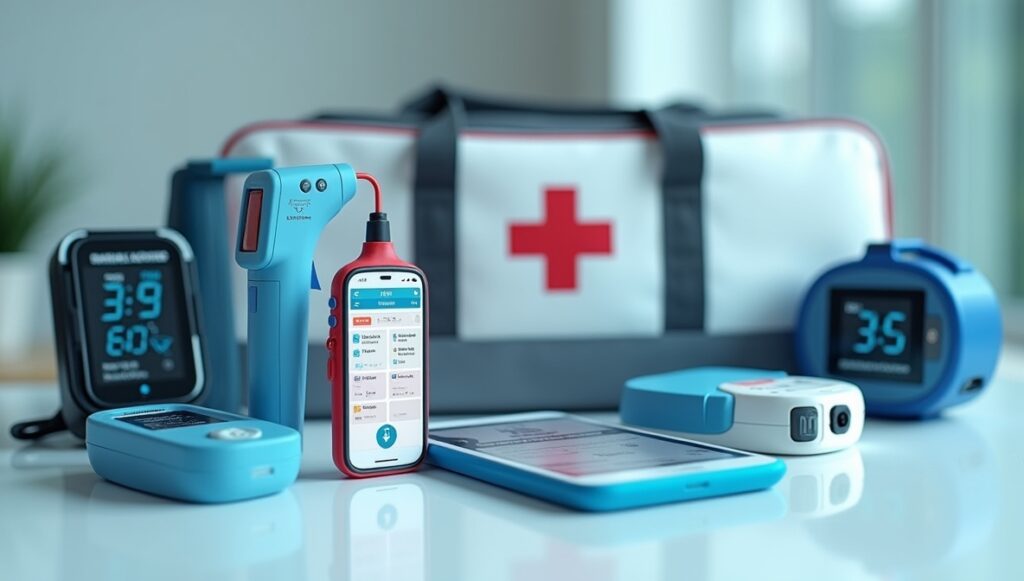
Upgrade your setup with emergency response technology for families. Here are 15 smart devices that transform a standard kit into an advanced health station.
Wearable Health Monitors for Collecting Real-time Data
Wearable health monitoring devices track vital signs and alert you to sudden changes.
- Smartwatches: Track heart rate and detect irregular rhythms.
- Fitness trackers: Monitor daily activity and sleep patterns.
- Smart gloves: Designed for elderly care, these track SpO2 and heart rate.
- Wearable fall detectors: Worn as a pendant to sense sudden drops.
- Smart rings: Discreetly track blood oxygen levels.
Smart Medical Devices for Enhanced Response
Integrate at-home diagnostic tools for emergencies to accurately assess conditions.
6. Automated External Defibrillators (AEDs): Guide you through resuscitation during cardiac emergencies.
7. Digital blood pressure monitors: Connect to your smartphone to log readings.
8. Pulse oximeters: Measure blood oxygen saturation instantly.
9. Smart thermometers: Record temperature trends over time.
10. Mobile ECG devices: Take medical-grade electrocardiograms at home.
11. Automated pill dispensers: Prevent medication errors with timed alerts.
Communication and Alert Systems for Urgent Care Kit
Personal emergency health devices ensure help is always reachable.
12. Medical alert systems with GPS tracking: Pinpoint your location during an emergency.
13. Smart home integration hubs: Use voice commands to call 911.
14. Air quality monitors: Detect carbon monoxide or smoke hazards.
15. Remote patient monitoring devices: Share vital signs directly with your doctor.
Building a Personalized Urgent Care Kit
Tailor your urgent care USA kit to fit your household.
Assessing Household’s Specific Needs
Consider the ages and health conditions of your family members. Add pediatric pain relievers for children. Include backup inhalers for asthma or glucose tablets for diabetes.
Location-Specific Additions
You need protection outside the house. Keep an urgent car kit in your vehicle. Pack a travel version for outdoor activities.
Regulatory Compliance and Standards
Follow OSHA, ANSI, and WHO guidelines for the contents of an urgent care kit. Choose FDA-approved medical devices for home use to guarantee accuracy and safety.
Maintenance and Organization of the Urgent Care Kit
Keep your supplies ready for action.
- Regular Inspection and Replenishment: Check your urgent care kits every six months. Discard expired medications and restock used bandages.
- Proper Storage and Accessibility: Store your kit in a cool, dry place. Ensure all family members know exactly where to find it.
- Training and Education: Supplies only help if you know how to use them. Take a basic first aid and CPR course. Review the manuals for your connected health devices for home care.
Cost-Effectiveness of an Urgent Care Kit
Investing in an emergency preparedness kit for the home makes financial sense. The medical kit cost projections for 2026 show continued savings compared to hospital visits.
Many kits qualify for tax advantages. Use HSA or FSA funds to get the Urgent Care USA kit. How much does a medical kit cost when using pre-tax dollars? The out-of-pocket expense drops significantly. This value proposition makes the medical kit an essential household investment.
The Future of Home Emergency Preparedness
An advanced urgent care kit provides peace of mind. Prompt response saves lives. Telehealth emergency solutions and digital health tools for emergencies will continue to evolve. Remote patient monitoring devices connect homes directly to hospitals.
FAQs
A first-aid kit treats minor cuts and scrapes. A medical kit includes advanced tools, specific medications, and diagnostic devices for more severe health events.
Basic kits cost around $20 to $50. Advanced options with prescription medications, like the Dr. Drew medical emergency kit, cost $299.99.
The wellness care kit contains prescription medications, including Amoxicillin, Azithromycin, Doxycycline, and Ivermectin, as well as a medical guidebook.
Yes. Most standard medical kits and FDA-approved diagnostic devices qualify for HSA and FSA reimbursement. Check with your specific plan administrator.
Review your kit every six months. Replace expired medications and restock used items to ensure you stay prepared.