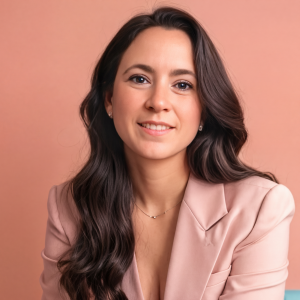
Katie Fortunato Podcast Transcript
Katie Fortunato joins host Brian Thomas on The Digital Executive Podcast.
Brian Thomas:
Welcome to Coruzant Technologies, Home of The Digital Executive podcast.
Do you work in emerging tech, working on something innovative? Maybe an entrepreneur? Apply to be a guest at www.coruzant.com/brand.
Welcome to The Digital Executive. Today’s guest is Katie Fortunato. Katie Fortunato is the co-founder and Executive Vice President of Platform Innovation and Strategy at Hire Innovations, a global leader in human-centered AI talent technologies and services.
As a next generation leader in talent tech, Katie drives innovation across three industry leading platforms, Recruitics, Talivity, and Jobstream, helping some of the world’s largest brands modernize hiring while maintaining a human-centered approach. In 2023, she launched tele. The fastest growing communities for people leaders and established the Higher Innovations Innovation Lab where she develops next generation tools that connect talent with job opportunity.
Her latest venture job stream launching in 2026 enables job discovery through social platforms, “the ShopMy of career content”, while helping creators earn through transparent affiliate monetization. Well, good afternoon, Katie. Welcome to the show.
Katie Fortunato: Thanks, Brian. Thanks for inviting me on.
Brian Thomas: Absolutely my friend.
I appreciate it. And making the time, juggling calendars, time zones. I know you’re in Connecticut today. I’m in Kansas City, so I just appreciate you jumping on and making this time work. And Katie, if you could here, we’re gonna jump right into your first question. You’ve built your career across media brand experience, and now talent tech innovation.
What experiences led you to co-found Hire Innovations and focus on transforming the hiring landscape?
Katie Fortunato: Yeah, well I think I have a very non-typical career path. And I started as, I started out as an actress and went to college, went to performing arts school, and when I graduated, moved to LA with bright eyes and big dreams and quickly realized, you know, I wanted to do more than, frankly, I always felt like I was a professional auditioner more than I was an actress.
So. Quickly, began working in a corporate environment in entertainment. So, I felt it was very like, connected to what I was interested in and where, you know, the industry I wanted to work in. And started doing special events for ViaCom and things like that. And that’s what started me on the brand experience journey.
And that I’m making my way through brand experience marketing working at when AOL platforms before they merged with Verizon, they were kind of like an ad tech giant and felt like I was coming up through the area era of new tech advertising. And that’s where I was introduced to like planning B2B events.
And that evolved into my next role at the Wall Street Journal where, you know, what was interesting about their is, is like a legacy brand and everybody pictures who a Wall Street Journal is reader in their mind and going through this like brand identity new frontier for the Wall Street Journal. And I got to work on some really cool projects, events, but also diversifying revenue and figuring out what else can we sell our core customers who are the subscribers. And so that’s, that’s where I got my itch for entrepreneurship and building. And it, it was essentially like a startup within the larger organization. How I got to. Hire Innovations, which I am also a co-founder of for me is actually a family business.
And I’m part of this second generation and new wave of leadership that’s coming up through it. But our parent company’s been in business for over 30 years, and so we’ve, I guess like my dad and my uncle, they’re serial entrepreneurs, if you will, and I was called to the family business because there was an opportunity to come and build something new and keep innovating and that’s, that’s what really excited me and what I love about the job space is we all need a job.
It’s the backbone of our personal finance stability. It’s the backbone of our country. And there’s a, an interesting. Thing happening culturally where it, it, something needs to change the system in hiring and recruiting is broken. So, I, I’m very, I get very obsessed about those problems and just come up with new products and services and ideas to help our companies patch their hiring systems and find the people that they need.
Brian Thomas: That’s so awesome. Love that backstory. Really do, not many people know this, but I started out, my career very early in LA doing auditions as well, by the way. So, long story, we’ll get into that later. But I love the backstory sharing your story. You got excited about that. You said you were a professional interviewer basically, so, I get that.
But you got into tech advertising. You worked at the Wall Street Journal. All this diverse experience and background led you to entrepreneurship, obviously was already in your family as well. So that’s, that’s exciting. But. You are again, closing that gap in the market job space is tied to everybody’s livelihood and you want to fix this problem, and I think it’s very important.
So thank you so much for that. And Katie, at Hire Innovations, you’re driving strategy across platforms like Recruitics, Talivity and Jobstream. How do these platforms work together to modernize hiring while keeping it human-centered?
Katie Fortunato: So the problem we’re solving at the core is exactly the human-centered part, and that’s where organizations need talent to grow and for a sustainable business, they have to have their talent right for the organization, meaning coming with the right skills and otherwise, we, companies will not sustain if they’re not evolving and adapting.
So, when we look at our core customer, it’s really the head of talent acquisition at employers like Kimberly Clark, DoorDash, Shake Shack. We work a lot in healthcare because there’s an obvious talent shortage there. And the way where we sit is between the companies that have a large. High volume of hiring or like a large volume of new recruits that they need always coming through.
And that essentially is like where we help them is their recruitment marketing strategy. And we have technology and services that, that do that and support that like a programmatic ad tech software. And then. When we started thinking about Talivity and Jobstream, it, it was taking the core problem, but then looking at adjacent problems, what else can we solve for organizations in their people and talent strategies.
And Talivity came about just based on a need of all the emerging technology that’s coming into this space. And what we built was a marketplace. And so if you are someone who is going to buy an applicant tracking system because you’re a high growth company and you just got your VC funding. There are over a thousand applicant tracking systems.
There’s over 3000 applicant tracking systems, and we had started thinking about looking at models like G2 and G2 goes a mile wide and an inch deep on pretty much every industry. G2, if you’re not familiar, is like, I’d say it’s an online marketplace for helping companies shop for software. And behind that is also a data and intent business.
And so that’s like what we were building at Talivity, to really understand like what are talent leaders and companies spending their money on in the people? Like, what are, what do they need? What are they shopping for? What are they looking for Hire Innovations? It’s a way to support the industry, but as, as for our own individual innovation helped us identify gaps, helped us identify opportunities.
And two years ago when AI emerged on the scene, there was a really big need for someone to be talking about the AI technology in talent tech. So we’ve started, we pivoted, we still have the marketplace but pivoted to the core focus of that company is going into an organization and consulting with them on their talent tech stack.
And some organizations are on legacy technologies that have not been updated for years and years and years. So, we look at things like, do we build new, do we partner? Do we patch it in? Do we, what kind of AI automations can we create without re-engineering the entire stack? So that’s a little bit about what Talivity focuses on.
And at the, at the end of the day, we’re, what we’re doing is helping shape an employer brand. And the experience that candidates have as they come into your organization or leave your organization are a brand problem. And so from there, we started looking at a problem. I don’t know if you’ve. Brian, if you’ve, I don’t imagine you’ve been applying for jobs recently, but there’s a ton of ghosting going on and people apply, apply, apply.
They don’t hear back, and we incubated this idea that said, well, in the recruitment marketing world, look at all these employers, how much they’re spending, and then they hire one person out of a hundred. So what happens to the 99%? Well, it becomes a waste. And what happens to the candidates who don’t get the job, they fall into a black hole and that that ROI is just not there, or wasn’t until we had launched this concept of reframing a rejection.
So where a job seeker would interact with this idea is they apply to a job, they don’t get the job, they get their email. We regret to inform you, but. We have five more jobs in the market that look exactly like the one you’re interested in, and we encourage you to go and apply for them. And we wish you the best of luck in your career.
And it’s a very simple thing that companies are not doing enough of, but it turns a very negative brand experience into a very positive one where they can say, no, you’re not right for this right now, but we wanna help you in your career. And it’s very little effort to do that. So that’s where we got the concept for Jobstream and integrating the employer and job network into this funnel of the, of the People Funnel. We said, you know, we could, we could do this for all newsletters and we could do this for any kind of influencer who is also trying to help their followers find their next opportunity.
So that was the bud of, of Jobstream and, and now Jobstream is, launching now. It’s a invitation only creator platform where creators and influencers can come and they, they monetize by sharing jobs with their audience. So we call ourselves an affiliate platform, like a ShopMy or LTK, if you’re familiar with those. And that’s that’s the market that we live in, which is hiring, hiring tech, and affiliate and the creator economy space. So that’s, that’s something that I’m really excited about right now.
Brian Thomas: That’s so awesome. And I like how you’re, you’re moving, obviously, you’re fixing a gap in the market several here, but you’re moving in the direction where people are going, obviously affiliate market, creator economy, that sort of thing.
Where it’s a win-win for everybody. But at the end of it, we talked about you being human-centered. This is the core focus. You’re just leveraging a little bit of tech and your recruitment marketing strategy to help organizations with their talent stack using your platform like Talivity.
And I had no idea that there was 300 applicant tracking systems. That’s crazy. But I get it. Thousand. A lot. But solving the communication and waste, I thought was really interesting. You talked about that all the other qualified candidates that neither get a, a notification that they even, you know.
Looked at but also again recommending them for some other positions that they’re qualified for. I think that’s awesome. So thank you. And Katie, let’s jump into the next question. Jobstream is positioning itself as the shop my of career content, blending social media with job discovery and creator monetization.
How does this model change the way candidates and employers connect?
Katie Fortunato: What happens right now in. Employers hiring and, and in job seekers looking for jobs is the old pathway. The, the, the pathway is changing. And about 16 years ago when Indeed and LinkedIn were emerging, that became the, the destination and those companies, well Indeed, specifically thrived on search engine optimization on Google.
And in the same way, and. A company is advertising and marketing their products. The company started advertising but optimizing for Google and now what we’ve seen with LLMs and search behavior changing, we need to evolve with it. And I think what the job board’s seen, I think what has made them successful in the past.
Has been being able to capture traffic of high intent job seekers and the number of companies that they serve is just so vast and so great and kind of anybody can post a job. So, what’s been happening is like there’s a lot of fraud. There’s a lot of fake companies, there’s a lot of fake job listings, which honestly is a hack.
For some people they consider that as a way of building their contact list and it’s not right. And I’m, we think that there’s a better way. And I think the other thing about the job boards is you get a lily pad experience, and the job boards have made it really easy to apply to everything, whether you’re qualified or not.
This has created an influx and inbound of. A lot of spammy applicants and ai like super compounded that because now AI bots can apply to every job, and that’s what you have going on the employer side. The job gets harder as a recruiter because you have to now sift through instead of 300 resumes, 3000 resumes that you collected in five minutes.
And this is a huge time suck as you can imagine. If you spend the average of 30 seconds on each resume, qualifying a, a resume and an applicant that is a lot of time and time is money in an organization. So that’s where you get things like people don’t reply, they don’t hear back. And the way employers are already hiring, what’s, what’s successful today and always has been referrals.
And over 65% of hires are from referrals. And we classify and define referrals as either a person, you know, a person who’s at the company, who’s working there, or it’s a recruiter or headhunter, and by taking that concept of it’s who you know, it’s your network, it’s the connections that you have. That’s where Jobstream really democratizes access to jobs, because there are millions of jobs on the market.
In fact, we had at one point at our peak, 600, I’m sorry, 6 million jobs and no one job seeker. Has the time to go through all of those jobs and sift through and filter through, and AI has made, AI has made that a little easier now, but what they, what the job seeker cannot discern is, is it a real job posting?
Is this even a real company? And about 70% of jobs never even make it to these job boards yet the job boards are still attracting all of the traffic for job seekers. So what we said was, let’s take our network of employers who are some of the most globally recognized brands, and let’s create a better experience where we’re going from the job seeker in their intent directly to the career page.
Let’s, basically cut out the middleman. As a test, like we still work with the job boards. It’s still part of the equation, it’s still part of the marketing strategy, but let’s try a new distribution channel, and that’s through social media. And I think in my background, I just, I was running an affiliate program for the Wall Street Journal and it was kind of our first test and that like the wire cutter model, and that was a, that was a new kind of affiliate revenue income stream.
And I think really changed the way that consumer behavior and brands connect on the, on whatever their products are. There’s a lot of marketing that runs through affiliate now. It’s become a really huge growing segment, and it wasn’t happening for hiring, but I had had the experience from the Wall Street Journal of like helping to monetize the content in W three buy side and taking that affiliate concept and world that I knew.
And looking at, how do we just create a better pathway from the job seeker to the employer, and how do we be a trusted resource of, we’re vetting the jobs, they’re real job links. And, that’s part of our value proposition. So I think you won’t find, you won’t find AI people in our advertising and, and things like that because we are focused on the real human connection and the pathways to getting hired as.
We know the data is telling us is through your network and who you know. So that’s that’s a little bit about how Jobstream, I think is shaping job distribution and connecting to jobs. And you’ve got a lot of people right now, the next generation specifically Gen Z and Millennials; they spend a lot of their time on TikTok and Instagram and Discord.
And what is true, especially for Meta and TikTok is. Users, job seekers, essentially, they never have to even leave the platform. They’re using TikTok as a search engine. They’re using Instagram as a search engine, and they can find almost anything they need there. Same with YouTube. And that’s where we want our jobs to show up as employers who are hiring.
So. That’s, that’s the, that’s the, the change or shaping we’re really on the frontier of, of this new wave of recruitment. But you have people doom scrolling at night and then they see their dream job by their influencer. Who they trust and they say, you know, I buy all the other technology products that Brian is recommending and I, I should really consider this company.
It’s, he says It’s a trusted employer network and this looks like a good job. And creators have been able to like create some interesting content around the job space as it is, like, get ready with me or Day in the life. And I think that’s where Jobstream fits in. And you know, we have a, we have an influencer.
Who said, I can’t believe I’ve never known about this platform. I’m usually posting about fashion and beauty and makeup and like my content that is always very entertaining to her audience and engaging her audience is always about the work stuff and taking like, you know, work meme or work artifacts and making it into something funny and relatable and and entertaining.
And so that’s where Jobstream fits in. Culturally, we could spend another couple hours talking about what’s going on in the macroeconomic landscape. But there’s, there’s a moment right now for human, human led trust and you know, there’s a moment for AI as well, but we’re leaning towards the, you know, the human to human part.
Brian Thomas: That’s awesome. Thank you so much. There’s lots to unpack there. But just to highlight some things, you talked about the pathway changing employers, job seekers, and you saw this shift back in the time that Indeed and LinkedIn got together and, and, and worked together on that integration. But I liked you, you also talked about there’s some fraud in the job market. You talked about the bots recruiters having to sift through tons of applicants. It’s just, it’s, it’s a lot to do and I know AI can really be a help there, but it’s still a challenge. You talked about over 65% of fires are hires are referrals, which I thought was interesting.
And if I could add my 2 cents back in the day when I was doing job search I worked with a headhunter that said, you know, Brian, only 10 or 12% of the jobs are advertised. A lot of things are internal and he and he, he showed me how I need to reach out directly to the hiring manager. And kind of circumvent the HR process.
Now that has probably evolved and changed over the last probably 10 years, but I can tell you it was, I was really successful in that space and I just wanted to share that because I have a little bit of experience there. I could, could share. Katie, let’s quickly get through this next question here.
Looking ahead, how do you see AI, social platforms and creator-driven ecosystems transforming the future of work and talent acquisition over the next 10 years?
Katie Fortunato: Well, I think if. If you’re listening to what people are saying on the social media platforms, there is an emerging need and it’s happening quickly for the companies to like the big platforms like Tech and or like Meta and Google and TikTok to help create a more authentic and real experience.
What’s taking over are AI influencers and bots. And you know, when there’s changing algorithms, there’s reasons why. And I don’t know if you’ve tried to reach out to creators on Instagram, but you pretty much get a business message that’s replied, and you’re never really talking to a human. So. There’s a lot of these like faceless accounts that are getting started up and content creation has just become so easy.
So, I mean, I think the future, I mean, what our big bet is, is the future is humans. The future is hiring through your network. There’s, in-person work is coming back. AI is take taking jobs and I think the narrative for the next generations of how do, how do they find jobs, how do they connect to work is changing as well.
I think there’s a real mismatch in expectations, and I, I don’t think that I know that, and Gen Z for example, graduating college in, in these years, they, they. Have followed the playbook up until now that everyone else did go to college, get a good job, get a high paying job. And I always believe, like you can never take away your education.
There’s always, there’s always a benefit to learning. But if the expectation is to graduate and get a six figure white collar job, those are going away. And where the opportunity is. Is a side of the job market that is either highly skilled and specialized like healthcare, like nursing, like radiology, technicians, like mental health where you need more degrees, more justifications, and in, in many cases more taking on more personal debt to get to that level.
And then I think, so I think there’s a real barrier between the pathway of skills development and careers right now. The other side of it is AI is taking everybody’s jobs and it’s, if you’re somebody who has a job, you should definitely learn how to use ai. ’cause I think experienced workers have an advantage in this market that they understand how business works and they have networks and they’ve, they, they have all the business etiquette and then they’re given a tool that’s gonna basically supercharge their work.
And I think that’s an opportunity. And then I think where social media can be really helpful is in the recruitment marketing space of what are all the other jobs. And by that, I mean there’s you know; we saw last month that transportation and logistics was a high growing job segment. And it grew like 230% year over year, which is insane.
And so it’s up there with, right now with healthcare as like, here’s some steady, you know, steady possibilities for a career. And the other thing I’m starting to see is the next generation kind of waving the college experience or at least considering other, other things like trade school, where. They spend six weeks and they learn some skills and they’re very much dexterity based positions where they’re using their hands and it’s about your being physical.
And that is where I think social media has a real opportunity to start like building a new narrative and. For someone who’s looking at college and a career and parents have to start helping their kids with this in middle school because you have to be thinking about the future and saving if that’s what you’re going, if you’re gonna take the path of a college kid.
But I, I think this narrative is becoming more common and. We’re seeing kids say, you know, I don’t want to sign myself up for a lifetime of debt. So I went to this trade school and I spent six weeks learning the job, and now I make six figures and they’re 18 years old. So there’s, it’s kind of like a shift back to the, I don’t wanna say back to the industrial revolution, but everybody used to be a farmer and everybody used to wear, everybody used to, that was, that was the job is.
Living off the land for survival. And I think we’re going back to a place where those ha those hands-on jobs and special skilled jobs are the pathway to job security and thus financial stability. The other really interesting trend that social media has democratized and AI has democratized is anybody can build a business.
In fact, we, we call it now creator entrepreneurship, and that’s somebody who says, I’m not putting all my eggs in one employer basket, in one corporate job. I need to bet on myself. I need to make sure I’m hedging for, you know, when Oracle or Amazon decide to lay off 15% of their workforce. And those, those are, those are ways that I see people on social media just.
I think it’s diversifying their income streams, but it’s also survival, and they’re being very resourceful and also very astute that companies, if you look at the path of what companies spend on advertising in the consumer product space, it’s gone from traditional advertising. Print ads used to be the thing.
Digital advertising has gone completely over to the creator economy and influencer marketing, and that there’s also advertising that’s happening in platform, and this is, this is shaping the future of work. It’s giving people a platform to build a business, and we’re also helping shape that narrative at Jobstream in particular.
What we notice is a lot of our influencers, they do it as a side hustle, and we’ve seen in the data about 43% of all people have a side hustle. But what the, the most surprising thing in US on this journey. People are leaving the full-time thing and going full-time into the side hustle. And I think you really see that across the platforms right now.
And you’re seeing social media as a way of marketing yourself business. And there’s things like, digital courses and new skills. And yeah, so I, I think, you know, we’re shaping the future of work and, and social media has a huge influence on that.
Brian Thomas: Thank you. I appreciate that, Katie, again some stuff to unpack there and I’ll just highlight a, a few things.
Obviously, the market is changing the shift. There’s you know, you talked about that emerging need with big tech platforms helping to create that need for a more helpful and authentic experience. There’s just so many shifts now with these changing algorithms, bots, and a lot of it’s driven by ai of course.
And we are seeing traditional go to school, get a degree and, and, and make that six figure income that’s going by the wayside. And we’re seeing that blue people are shifting back to blue collar, as you said, more of a lifestyle that you can. Build a good livelihood and not be replaced by some big platform or ai.
So, I really appreciate that and Katie, it was such a pleasure having you on today and I look forward to speaking with you real soon.
Katie Fortunato: Thank you for having me, Brian. And also your advice about job seeking is true. You, you can’t just sit and apply and, and you said that, I’m sure it’s changed, but it really hasn’t changed.
Like candidates who are still reaching out to the hiring managers and, and doing the due diligence of like, you know, reading a job description, seeing who the job reports to, the way that you did it, Brian is still the best way to do it.
Brian Thomas: Thank you very much. Bye for now.
Katie Fortunato Podcast Transcript. Listen to the audio on the guest’s Podcast Page.