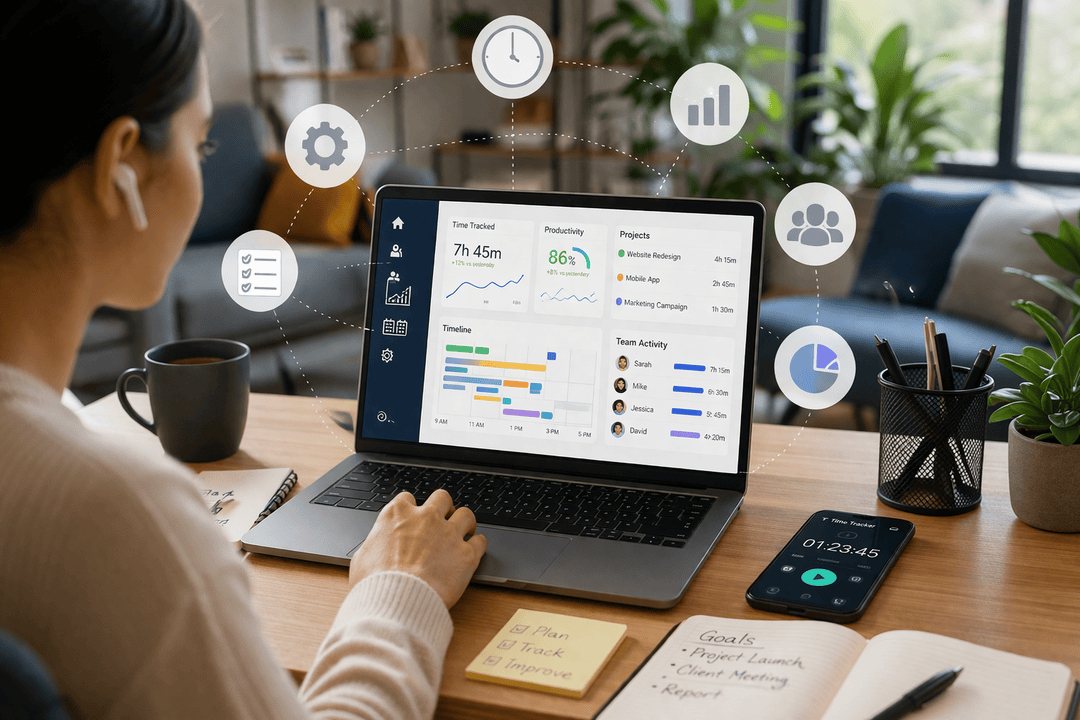
Remote work is transforming the business world as we know it. Convenience, but with it comes the challenge of balancing productivity, posing challenges in managing work hours and accountability as companies are no longer place-bound.
This is where time tracking software comes into play. The modern tools are able to not only track hours worked but glean deep micro details related to employee performance, project efficiency, and overall business growth.
In fact, research shows that only 2–3 hours of a typical workday are spent in deep, focused work, highlighting a significant productivity gap. This makes time-tracking software even more valuable, as it helps businesses identify inefficiencies, optimize workflows, and ensure time is used effectively in a remote work environment.
Table of contents
The Growing Need for Time Tracking in Remote Work
In remote work environments, direct supervision is rare, which can make it difficult for managers to know how to spend their time. Without accurate tracking systems, businesses can run into problems such as missed deadlines, incorrect payroll, and decreased productivity.
Time-tracking software resolves these issues by providing real-time visibility into tasks, enabling companies to stay transparent and manage workflows efficiently. Industry research shows that businesses using time-tracking tools can increase productivity and optimize resource allocation by up to 80%.
Key Features of Modern Time Tracking Tools
Today’s time tracking solutions go far beyond simple clock-in and clock-out systems. They provide a wide range of features that help businesses operate more efficiently:
- Real-time activity tracking to monitor ongoing tasks
- Automated timesheets for accurate payroll and billing
- Productivity analytics to identify inefficiencies
- Project tracking for better task management
- App and website usage insights to understand work behavior
Advanced platforms also include monitoring capabilities such as screen tracking and behavioral analytics, helping businesses ensure compliance and improve team performance.
Benefits of Using Time Tracking Software
1. Improved Productivity
Time-tracking tools help employees stay focused by providing clear insights into how they spend their time. Managers can identify distractions and optimize workflows for better efficiency.
2. Accurate Billing and Payroll
Automatic tracking ensures all working hours are accurately recorded, minimizing errors in billing and payroll calculations. A digital attendance system enables an organization to track employee presence in real-time, as well as overtime and wage calculation. This reduces the risk of human errors that often occur with manual timesheets, such as missed hours and incorrect entries.
Furthermore, automated tracking creates detailed reports and analytics that help managers spot productivity trends, monitor labor costs, and ensure compliance with labor laws. 7→ Integration with payroll systems can help process salaries effectively without causing any delay or discrepancies. Employees also gain, as they can automatically see their logged hours, leave balances, and overtime, encouraging transparency and trust.
Basically, automation tracking helps businesses streamline operations, enhance accountability, and improve the overall productivity of the workforce.
3. Better Project Management
With detailed reports and analytics, businesses can more accurately estimate project timelines and allocate resources effectively. Automated time-tracking systems provide insights into how long tasks and projects actually take, highlighting areas of efficiency and potential bottlenecks. Managers can use this data to forecast workloads, assign the right personnel to tasks, and prevent overstaffing or underutilization of resources.
Furthermore, these insights help in budgeting and cost management by linking labor hours directly to specific projects or clients, ensuring accurate billing and minimizing financial discrepancies. Over time, trends from these reports allow organizations to refine processes, improve productivity, and make data-driven decisions that enhance overall operational efficiency.
4. Data-Driven Decision Making
Modern software provides valuable data that helps businesses make informed decisions, improve operations, and increase profitability. By collecting and analyzing information on employee performance, project timelines, and resource utilization, organizations gain a clear understanding of operational strengths and weaknesses. This data enables managers to optimize workflows, identify cost-saving opportunities, and implement strategies that drive efficiency.
Moreover, integrated software solutions can automate routine tasks, reduce administrative overhead, and ensure compliance with labor regulations. With actionable insights at their fingertips, businesses can make strategic choices quickly, respond to market changes effectively, and ultimately enhance both productivity and revenue.
Work From Home Efficiency with Smart Tools
Managing a remote team requires the right combination of technology and strategy. Businesses that adopt advanced tools can maintain accountability without managing employees.
One effective approach is to implement solutions that combine time tracking with productivity analytics. For example, many companies improve their remote workforce efficiency by using tools like Work from Home with Controlio, which helps monitor activity, analyze performance, and streamline workflows in distributed teams.
Such tools provide detailed insights into how employees spend their time, enabling managers to make adjustments that boost overall performance.
Challenges and Considerations
Time tracking software has many uses, but it needs to be applied judiciously. This can cause trust issues within teams, but even more in the remote environments.
Businesses must be transparent and use these tools in service of workers rather than to control them. The aim should always be to make us more productive and collaborative, not drum up needless pressure.
Future of Time Tracking Technology
As technology continues to evolve, time tracking software is becoming more intelligent and user-friendly. AI-powered analytics, automation, and integration with other business tools are shaping the future of workforce management.
Companies that adopt these innovations early will have a competitive advantage, as they can optimize their operations and adapt quickly to changing work environments.
Conclusion
Time tracking software has become an essential tool for modern businesses, especially in the era of remote work. It not only helps track working hours but also provides valuable insights that improve productivity, efficiency, and decision-making.
By choosing the right solution and using it effectively, companies can build a more organized, transparent, and high-performing remote workforce.