
Gaining a competitive edge in today’s fast-changing online environment requires more than just traditional SEO tactics. With organic search accounting for over 45% of desktop clicks, businesses that adopt a data-driven approach can see significant improvements in their search engine rankings and overall online visibility. Knowing how to make strategic decisions based on reliable analytics opens the door to expanding your content’s reach and impact. For organizations aiming to improve their SEO strategy, exploring modern services such as Victorious is a smart step toward sustained digital growth.
Data-driven SEO extends beyond simply identifying keywords. It focuses on a comprehensive analysis of user behavior, site performance, and real-time search trends. This empowers marketers to adjust campaigns and ensure their content meets their audience’s expectations in meaningful ways.
Modern search engines use sophisticated algorithms and artificial intelligence, making a static SEO approach virtually obsolete. Brands must focus on relevance, user intent, and authoritative content to thrive in these evolving landscapes.
Table of contents
Understanding Data-Driven SEO
Data-driven SEO relies on measurable insights to steer every aspect of a search strategy. Instead of making assumptions about which keywords or content will succeed, effective marketers track metrics like organic traffic, bounce rates, conversion pathways, and user retention. Analyzing these data points provides a thorough understanding of visitor interactions, allowing for more targeted and impactful optimizations.
For many companies, such as Victorious, the process starts with mapping the journey from search engine query to on-site engagement. Recognizing where visitors originate, which pages draw their attention, and where they tend to leave yields actionable insights. These insights guide future content development, site structure improvements, and focused optimizations that boost search rankings and improve the user experience. Over time, a data-driven strategy encourages ongoing enhancement, aligning SEO efforts with user behavior and market shifts to increase engagement and conversions.
The Role of Analytics in SEO
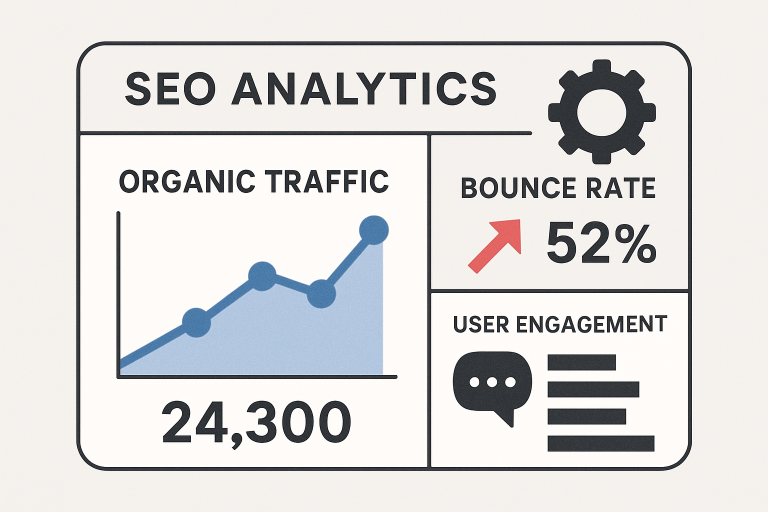
Web analytics tools, like Google Analytics, are crucial for successful SEO. They monitor data such as page views, session lengths, goal completions, and user behavior patterns. Analyzing this information helps marketers pinpoint which content types, topics, and pages genuinely engage their audience. It also highlights areas where improvements can boost engagement and search rankings. Regularly reviewing these metrics enables businesses to make strategic, data-driven decisions rather than guesswork. Beyond traffic numbers, analytics reveal which search terms attract high-quality visitors, which referral sources attract engaged users, and how site navigation affects retention. These insights enable brands to focus their SEO efforts on strategies that yield long-term results, optimizing resources on what matters most. Over time, incorporating analytics into SEO enhances website efficiency and user focus, supporting higher rankings and improved conversions. Ultimately, combining quantitative data with qualitative insights helps businesses continuously refine their online presence and adapt to changing audience needs.
Enhancing Content with User Insights
Understanding user behavior through analytics and search query data is crucial for developing content that resonates. By tailoring articles, product pages, and resources to directly address your audience’s needs and questions, you improve relevance and engagement. Personalized, insightful content increases the chances of gaining higher rankings and richer SERP features.
Behavioral data also reveals preferences regarding content type and length, helping marketers perfect the delivery of their messages. Providing value and satisfying user intent are rewarded by search algorithms with greater visibility.
Adapting to AI-Driven Search Engines
With the emergence of AI-powered search, search engine optimization is increasingly aligned with natural language processing and machine learning. Marketers must now go beyond simple keyword matching to ensure their content is contextually relevant and authoritative. This has given rise to concepts such as Generative Engine Optimization (GEO), in which the focus shifts to creating comprehensive resources that serve as trusted references for AI-generated search results.
Brands should work to establish themselves as credible sources within their industries by producing high-quality, well-cited content. This improves their likelihood of being selected by AI-powered search agents, positioning them as leaders and trusted brands online.
Implementing Structured Data
Structured data, such as schema markup, is essential for helping search engines better interpret and present your content. When search engines understand your content’s context and relationships, they can display enhanced search features like rich snippets, sitelinks, and knowledge panels. These improvements not only draw more attention to your listings but can also significantly increase click-through rates.
Employing structured data ensures accurate representation in search results and can be the deciding factor for users when choosing among competing listings.
Continuous Monitoring and Adaptation
SEO success is never static. It requires ongoing vigilance as algorithms evolve and user preferences shift. Using analytics for regular performance assessments allows businesses to identify what is working and when it is time to pivot a strategy. By closely monitoring key metrics such as traffic patterns, click-through rates, and user engagement, companies can uncover opportunities for improvement and respond to challenges before they impact rankings. Proactive adaptation to changes in search engine guidelines and emerging trends ensures that your website continues to thrive amid shifting digital landscapes. Moreover, staying ahead of competitors requires a mindset of continuous learning, experimenting with new content formats, and leveraging innovative SEO tools to maintain visibility and relevance.
Conclusion
Unlocking the full potential of online visibility requires a data-driven SEO strategy. By leveraging analytics to inform content and optimize user experiences, businesses can outpace competitors and maintain lasting success. As search engines continue to innovate and AI-driven search becomes commonplace, prioritizing data-driven tactics and continuous adaptation will be the hallmarks of high-performing digital brands.