Jude Odu Podcast Transcript
Jude Odu joins host Brian Thomas on The Digital Executive Podcast.
Brian Thomas: Welcome to Coruzant Technologies, Home of The Digital Executive podcast.
Do you work in emerging tech, working on something innovative? Maybe an entrepreneur? Apply to be a guest at www.coruzant.com/brand.
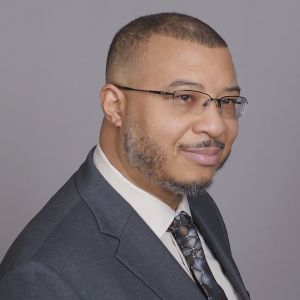
Welcome to The Digital Executive. Today’s guest is Jude Odu. Jude Odu is the founder of Health Cost IQ and currently serves as its President and Chief Product Officer.
He leads product strategy for the company’s enterprise SaaS platform, which applies AI models and intelligent algorithms to help self-funded and self-insured organizations eliminate waste, prevent fraud, and abuse and curb unnecessary health spending. Jude is a healthcare data expert, technology leader and strategist.
He’s the author of the upcoming book. “Model Optimal Care”, A playbook for using technology and non-technology approaches to curb waste and inefficiency within US healthcare, particularly within self-funded, self-insured health plans. Well, good afternoon, Jude. Welcome to the show.
Jude Odu: Thanks, Brian.
Brian Thomas: Awesome. Jude, I’m glad you’re here today. I appreciate you making the time. You’re hailing out of Phoenix, Arizona. I’m in Kansas City, so easy podcast today as far as traveling, so I appreciate that. And Jude, if you don’t mind, I’m gonna jump right into your first question. You founded Health Cost IQ after uncovering a trillion-dollar problem in waste and inefficiency across US health plans.
What surprised you most in your doctoral research, and why hasn’t the system fixed this yet?
Jude Odu: Thanks, Brian. The single most surprising thing for me was the scale. When I started digging into the data during my research, I expected to find inefficiencies, right? Every system has them. What I did not expect was how pervasive the waste was within our healthcare system.
How normalized it had become as of 2025, roughly $1.6 trillion of our entire health expenditure qualifies as waste. To put that in perspective, if US healthcare waste where its own economy, it would rank as the 15th largest economy in the world. It would qualify for G 20 membership. That’s how you know serious this issue is.
It’s also remarkable that waste is not limited to government programs like Medicare and Medicaid. It is actually deeply embedded in, private employer sponsored health plans. My research into health plan spending across the country has found that more than half of health plan spending can be classified as wasteful or inefficient.
That is 50 cents out of every dollar going to things like overcharges, billing errors, redundant procedures, inflated pharmacy costs, and sometimes outright fraud. So, you may ask, why hasn’t the problem been fixed? Well, that waste is actually profitable for many of the players involved.
And I’ll give you an example. When A PBM profits from higher utilization of certain high-cost drugs, or when certain providers are billing at high rates and no one is auditing their bills, waste becomes the business model, right? So, the way third party contracts are structured, these days, it builds waste in by default.
And I’ve written about this extensively in the past. That’s exactly why I wrote model optimal care. The tools exist to identify and eliminate this waste. The fiduciary mandate coming from federal leg legislation exists also. The only thing missing in most cases is just the willingness to act upon it.
Brian Thomas: Wow. That’s just amazing. And. Jude, I worked in healthcare for many years on the tech side, and I’d heard some things about waste and inefficiencies, but the fact that when you were researching this problem, this pervasive waste. In healthcare as you called it, you found that the scale was just massive, and I believe you said 1.6 trillion in healthcare waste. I think in just 2025.
Jude Odu: Yeah, 1.6 trillion in 2025.
Brian Thomas: Wow! That is just crazy. And we know there’s overcharges, billing errors, fraud, all kinds of stuff, and I’m glad that you are uncovering this or putting more light to it anyway and trying to help fix this problem. So, thank you. And Jude, Healthcare IQ uses AI and intelligent algorithms to eliminate waste, fraud, and abuse in self-funded plans.
Where does AI deliver the most immediate and measurable impact in controlling healthcare costs today?
Jude Odu: That’s a great question, Brian. For plan sponsors, the most immediate impact for AI is in claims auditing. The traditional claims review process is broken. Most employers assume their TPA or their carrier is auditing claims, you know correctly, right?
But in reality, many of those audits are infrequent. They rely on random samples, and they’re typically conducted by the same vendors that are processing the claims. So, there’s a huge potential conflict of interest right there. But AI changes the equation entirely, so with a, a well-built AI platform, you can review 100% of claims every single line item in near real time.
You know that technology can flag things like duplicate claims, up coding of certain procedures. Facility fees without any clinical justification and things like that, including services that were never rendered. So, all that can be flagged by, by, well-built AI systems. There’s a study that, that says that up to 80% of hospital bills contain errors.
That’s a huge number right there. AI can help to begin to catch those errors more than, a manual process can ever accomplish. So, uh, health plans that do this can typically expect to see 20 to 30% cost reductions in the first year of, of deploying this kind of technology that is real money we’re talking about, and I’ll give you an example for a health plan that spends about $50 million annually, even a 14% reduction in billing errors can result in about $7 million of recovery for lost capital.
That’s extra money you can use to fund better benefits. You can use it to lower premiums for your employees. You can introduce wellness programs or you can just put it away for a rainy day. You know, the second area I would say is predictive modeling. AI can forecast healthcare utilization patterns like identifying members that require more help before their [00:07:00] chronic conditions escalate, and they can also flag emerging.
Chronic conditions. So basically what it allows employers to do is to intervene and to get help where help is needed the most before more damage is done. And I think, uh, I would throw in pharmacy optimization as the third area here, AI can identify formulary inefficiencies. For example, a situation whereby brand name drugs are being prescribed when equivalent generic drugs exist for a fraction of the cost.
Once those changes are made, savings can be very immediate and measurable. So, I would say the question is no longer whether to adopt these tools. It is really how quickly you can put these tools in place.
Brian Thomas: Wow. Great. Thank you for highlighting some of those things. Talk, you talked about AI analytics and predictive modeling and then formula inefficiencies in pharmacy, for example.
And all those are ripe for the technology to go in and flag these things that generally because of the, a massive amount of data there, but also the fact that a machine can do things much more efficiently and faster and take on that. Level of work to, to audit, so thank you. And Jude, you are the author of the upcoming book “Model Optimal Care”.
How does this concept move beyond traditional value-based care and what gaps does it address?
Jude Odu: Yeah, so value-based Care has been around for over a decade now, it did move us in the right direction. ’cause what it did really was it tied reimbursement to outcomes rather than volume, which is very admirable, but it was designed primarily for providers and health systems.
It was never built for employers. And guess what? The employers fund the majority of healthcare in this country. About 160 million Americans get their coverage through employer sponsored plans. So, there’s no meaningful framework built for them until now. So, I saw that as a massive gap model.
Optimal care addresses that gap directly. It is a framework I introduced in the book as an evolution beyond value-based care. It’s individualized, it’s technology enabled, it’s methodical, it’s measurable, and most importantly, its results driven. You, uh, it’s designed for. The self-insured industry, and everyone that plays within that industry, you know, employers, third party administrators, PBMs, brokers, et cetera.
And the core framework rests on five principles. The first one is transparency, which says that employers must have full access to their claims data and a clear understanding of every vendor contract that they’ve signed. So, that will allow them to benchmark themselves. What they’re paying against, what they should have paid in the first place, and that exercise alone can expose millions of dollars in overcharges.
The second core principle of model optimal care is accountability. Every vendor in the supply chain, whether it’s your third party administrator, your PBM, your carrier, they must be held to performance guarantees based on measurable outcomes. If a vendor cannot demonstrate value, you have the right to replace them.
The third will be integration, specifically integrating your data across the spectrum, your pharmacy data, your medical data, wellness data. They typically live in silos. I urge them to be integrated into a single repository, and once you do that, you see that patterns begin to emerge that simply cannot be seen when data is fragmented.
The fourth one I would say is engagement. Employees or critical stakeholders in any health plan, they need access to price comparison and care navigation tools and to telemedicine, and they should be incentivized to choose high value providers. And the fifth is technology enablement. And what I’m talking about here is AI.
Predictive modeling, realtime analytics being deployed to audit all claims and to forecast high cost events and to identify inefficiency at scale. So, while value-based care asks providers to deliver better outcomes, model, optimal care asks employers to take ownership of their health plan operations and to use every available tool to eliminate waste.
And the book provides the roadmap for doing that.
Brian Thomas: That’s amazing. Thank you so much. And let’s just highlight what you talked about here. Value-based care was great. Great for the healthcare outcomes, right of the patient, but again, designed around the providers. But your model, optimal care. Talks about that gap, right?
With the employers self-insured. The employers need to take ownership of this. And just real quickly, I took notes here, five tenets of the model. Optimal care was transparency, accountability, integration, engagement, and technology enablement. So, I appreciate you sharing that with our audience today. Those are just gems for us.
We’re gonna have to pick up that book. And Jude, the last question of the day as we look ahead. How do you envision self-funded and self-insured healthcare evolving over the next decade? And what must change for cost efficient, high quality care to become more the norm rather than the exception?
Jude Odu: So, Brian, I think over the next decade I see three major shifts.
The first will be that self-funding will become the default, not the alternative. Right now about 67% of insured US workers are covered by self-funded plans. And if you look at large employers with 5,000 or more employees, the rate is actually at 95%. Healthcare costs have risen more than 5% annually for the past three consecutive years, and this year, 2026 is projected to have an increase of 6.5%.
So, these numbers make any other model for providing healthcare really hard to justify. So, employers who self-fund, they own their data, they control the vendor relationships, and they can deploy the kinds of technologies that I’m uh, recommending in my book. Other models like fully insured arrangements simply cannot do that.
The second shift I see is PBM reform. Pharmacy benefit managers are on the verge of significant change. There’s a PBM Reform Act from 2025 that is making its way through Congress and is going to tackle things like spread pricing, opaque rebate structures and things like that.
These are things that PBMs have been getting rich off of for several decades now. Think about it. So, there are third PBMs, Optum. Express Scripts and Cigna, and CVS Caremark, those three PBMs control almost 80% of the PBM market in the United States. For decades, they’ve been profiting at the expense of employers and patients.
So I’m advising self-insured employers in my book to move to what is known as fiduciary PBMs, who operate on a more transparent model than, than these, uh, traditional guys and employers have been shown to save anywhere from 15 to 30% by moving to, to, to that kind of model. The third shift, I would say is gonna be price transparency becoming more operationalized.
Federal law already requires hospitals and insurance to publish pricing data. And so, what we’re recommending is that employers can now use that data to match actual claims payments against what they should have paid, or see where they may have overpaid and make changes. So, what must change you ask?
Well, I would say three things. First, employers must stop treating healthcare as a fixed cost and start treating it as a managed asset. Think about it. If a CFO saw 50 cents of every dollar going to waste in any other budget category, there would be heads would roll. I mean, there will be an audit the very next day.
So, healthcare should not be run any differently than that. Secondly, employers must take fiduciary responsibilities seriously. They are legally required to ensure that their planned assets are used prudently and in the best interest of the of planned participants. And third. Organizations must invest in technology.
I’m talking about AI for claims auditing. I’m talking about predictive modeling, talking about price transparency tools. And these are tools that are available today and they can deliver measurable results. So, the employers who adopt them first will control their costs and improve their outcomes. Those who do not will continue losing money to a system that profits from inaction and indifference.
The path forward is clear, Brian. The tools are available. Model optimal care provides the roadmap. The only remaining question is which organizations will lead and which ones will follow. Thanks, Brian.
Brian Thomas: Awesome. Thank you so much. You talked about that three major shifts in healthcare in over the next decade.
You talked a little bit about self-funding will be the norm. Fiduciary PBMs, people should move to that, having more transparency in that. And of course, price transparency is a big part of that as well. But I like to highlight, since we do talk a lot about tech, that you definitely recommend investing in the newer technologies like AI, predictive modeling, analytics, et cetera.
And I think that’s important that we embrace that so we can be successful in reducing that fraud and abuse that we see across this across the country, across the world. So, I appreciate that and Jude, it was such a pleasure having you on today and I look forward to speaking with you real soon.
Jude Odu: It was my pleasure as well, Brian. Thank you.
Brian Thomas: Bye for now.
Jude Odu Podcast Transcript. Listen to the audio on the guest’s Podcast Page.