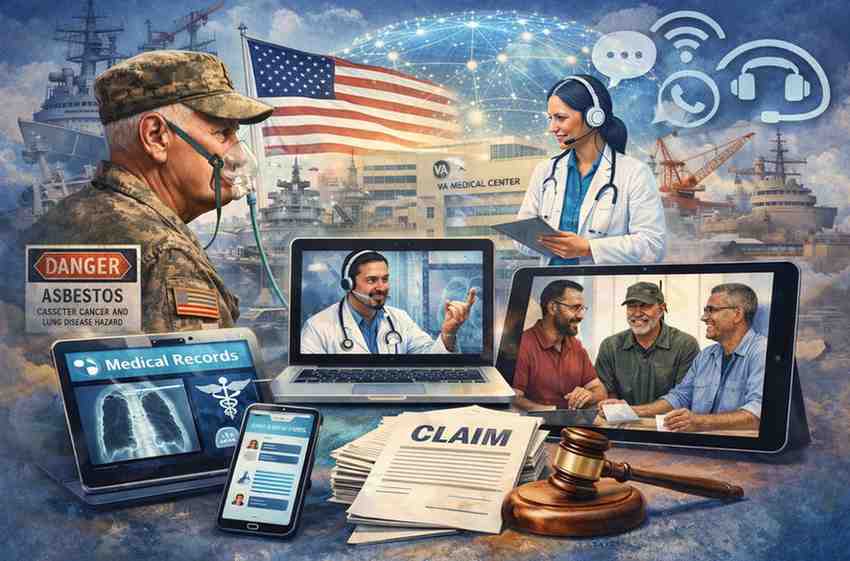
For many military veterans, service included exposure to materials that were once widely used in ships, shipyards, aircraft, barracks, and construction environments, including asbestos. Decades later, some veterans are facing mesothelioma diagnoses connected to that exposure. For veterans facing mesothelioma, the journey often involves navigating complex medical systems, understanding service-related exposure, and seeking specialized care.
Today, technology is reshaping how veterans access information, medical care, documentation, and community support. From digital record preservation to telehealth consultations and centralized education hubs, innovation is improving clarity, speed, and accessibility across the support landscape. In recent years, more than 2.9 million veterans used VA telehealth services, with 91.7% reporting satisfaction and 89.1% stating they trust telehealth as part of their healthcare. These numbers reflect a growing confidence in digital care solutions, particularly for veterans managing complex or long-term conditions.
Technology is not replacing traditional systems; it is strengthening them.
Table of contents
Expanding Access to Specialized Care Through Telehealth
Mesothelioma is a rare condition that often requires highly specialized oncologists and advanced treatment centers. In the past, veterans living outside major metropolitan areas frequently faced long travel distances, financial strain, and physical exhaustion just to consult with experts. Accessing second opinions or follow-up care could mean multiple trips across state lines, adding stress to an already difficult diagnosis.
Today, telehealth platforms are helping close that gap. Veterans can consult with specialists remotely, share imaging scans. Pathology reports through secure digital systems, and seek second opinions without the burden of long-distance travel. Follow-up appointments can also be coordinated more efficiently, allowing care teams to stay connected and responsive throughout treatment. By reducing geographic barriers, virtual consultations provide faster access to informed medical guidance. For veterans, balancing medical appointments with family responsibilities and daily life. Remote options offer meaningful flexibility while maintaining the quality and continuity of care.
Centralized Digital Education for Military-Related Exposure
Access to reliable, veteran-specific information is critical. The Mesothelioma Veterans Center plays an important role in helping veterans understand the connection between past exposure and current health concerns.
These centers focus on education, case-specific guidance, and access to information tailored to veterans who served in environments where asbestos was commonly used. By centralizing knowledge around military-related exposure. They help veterans and their families make more informed decisions about medical evaluation, benefits eligibility, and ongoing care options.
Digital platforms ensure that this information is accessible at any time, reducing confusion and empowering veterans with clear, structured guidance.
Streamlining Military Records and Benefits Processing
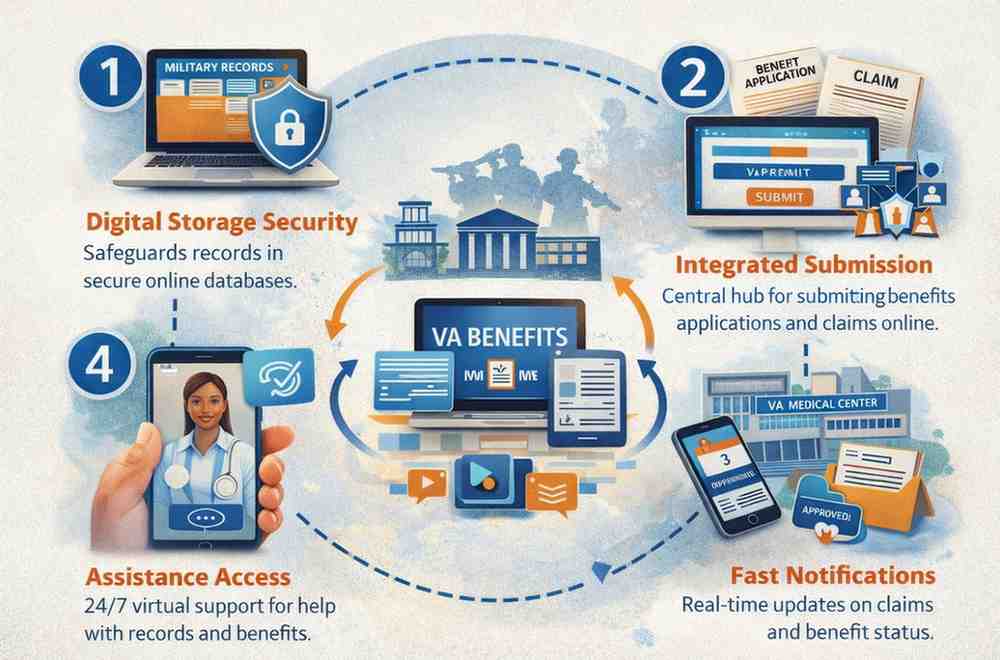
Technology has also improved how service records and exposure documentation are preserved and accessed. Digital archiving systems now make it easier to retrieve ship assignments, base records, and occupational histories that may help confirm exposure.
Online VA portals allow veterans to:
- Upload documentation electronically
- Monitor claim progress
- Communicate securely with representatives
- Access digital copies of service records
This efficiency reduces administrative delays and provides greater transparency throughout the claims process. Faster access to accurate documentation strengthens both medical coordination and benefits review.
Advancing Research Through Data and Innovation
Artificial intelligence and large-scale data analysis are accelerating mesothelioma research. By evaluating treatment outcomes, imaging results, and patient histories, researchers can identify trends and refine therapeutic approaches.
These advancements contribute to:
- More precise diagnostic interpretation
- Improved patient-matching for clinical trials
- Enhanced treatment personalization
- Faster evaluation of emerging therapies
As Gerrid Smith, Chief Marketing Officer at Joy Organics, explains, “When innovation is applied with purpose, it doesn’t just create efficiency it creates access. Technology has the power to remove barriers and connect people to the support they need at critical moments.”
That principle reflects the fact that digital systems are not simply administrative upgrades; they are tools that expand opportunity and accessibility.
Strengthening Community Through Virtual Support Networks
Beyond medical and legal resources, technology has fundamentally transformed how veterans connect with one another. Online veteran forums, secure discussion platforms, and virtual counseling services. Now provide structured spaces for shared experiences, guidance, and emotional support. Rather than navigating health challenges alone, veterans can connect with peers who understand the military service environment. The occupational exposures that may have influenced their long-term health.
Within these digital communities, veterans exchange practical advice, discuss treatment experiences, and share coping strategies grounded in lived experience. Conversations frequently cover navigating complex healthcare systems, coordinating specialist appointments, understanding eligibility for benefits, and preparing for critical medical decisions. For veterans facing mesothelioma, these virtual networks help foster solidarity, reduce isolation, and create sustained peer support that extends far beyond geographic boundaries.
A Stronger, More Connected Support System
For veterans facing mesothelioma, technology serves as a bridge. It connects rural communities to specialists, links historical service records to current documentation, and connects individuals to supportive networks that span geographic boundaries.
While no innovation can erase past exposure, digital tools are removing barriers that once delayed care and complicated access to benefits. By strengthening existing systems rather than replacing them, technology is creating clearer paths to informed medical decisions, accelerated research, and stronger community support.
In that way, innovation is not only improving processes; it is improving access at moments when clarity and coordination matter most.