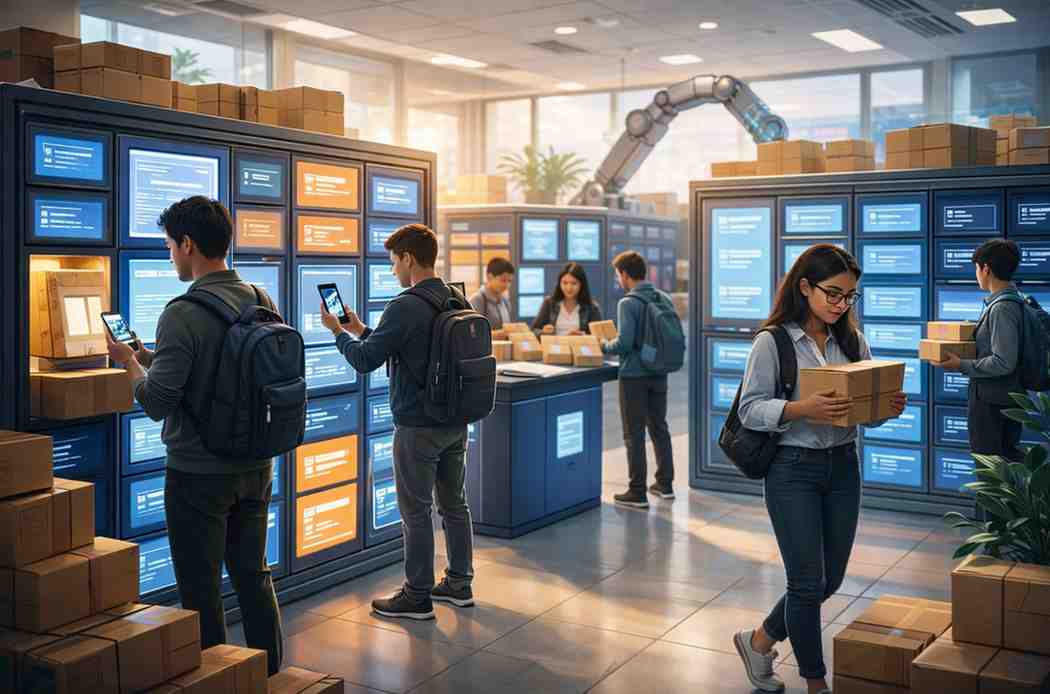
Student housing has never operated like traditional residential property. High turnover, seasonal surges, shared addresses, and digitally native residents create operational pressures that conventional systems struggle to manage. By 2026, one operational area in particular will determine whether a community runs smoothly or constantly reacts to problems: the mailroom.
The urgency is not isolated to student housing. The mailroom automation market itself is expanding rapidly, with the global mailroom software and automation sector expected to grow at a compound annual growth rate of approximately 8.9% from 2025 to 2035. This growth reflects a broader shift as organizations adopt digital tools to streamline operations, reduce manual handling, and improve overall efficiency. Student housing communities are increasingly part of this transformation.
By 2026, student housing mailrooms will either be automated or overwhelmed.
Table of contents
- The Invisible Pressure Inside Student Housing Mailrooms
- Where Manual Mailroom Operations Fail
- The Shift to System-Led Workflows
- Why 2026 Is a Structural Tipping Point
- Self-Service as a Resident Expectation
- Reducing Risk Through Visibility
- Data as an Operational Advantage
- Scaling Across Student Housing Portfolios
- Mailroom Software Is Foundational Infrastructure
The Invisible Pressure Inside Student Housing Mailrooms
Student housing communities exhibit delivery patterns unlike those of any other residential category. Parcel volume spikes during move-in, peaks again around midterms and finals, and remains consistently high throughout the academic year. Residents order frequently, often in bursts, and share similar addresses and names.
At the same time, staffing models are built around leasing cycles rather than logistics management. Front desk teams rotate, temporary staff are added during peak periods, and storage space is limited. What may seem like a simple operational function quickly becomes a daily logistical strain.
Manual systems that might survive in smaller residential buildings tend to break down rapidly in student housing environments.
Where Manual Mailroom Operations Fail
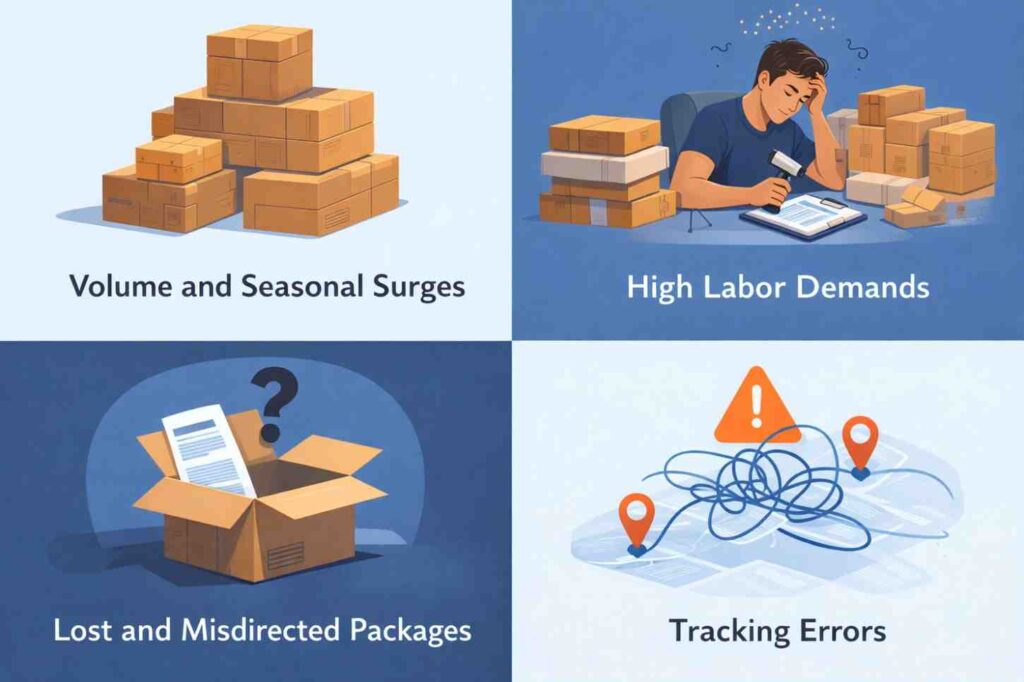
Traditional mailroom workflows often rely on handwritten logs, basic spreadsheets, or informal communication between staff shifts. In low-volume settings, this may work. In student housing, it creates risk.
Packages get logged inconsistently. Notifications are delayed or missed. Items are stored without clear tracking, leading to common disputes over missing deliveries. Front desks become overwhelmed by students asking whether their packages have arrived, especially during high-volume periods.
Manual mailrooms break down first where volume and turnover are highest. These breakdowns are not simply inconvenient. They increase operational costs, damage resident satisfaction, and place unnecessary stress on staff.
The Shift to System-Led Workflows
Mailroom software replaces informal judgment with structured, system-led processes. Instead of relying on staff memory or shift-to-shift communication, deliveries are logged digitally upon arrival. Residents receive automatic notifications, storage locations are recorded, and pickup is verified through time-stamped records.
This consistency eliminates variability. It reduces human error and ensures that every package follows the same workflow from intake to collection.
The difference between manual and software-led handling becomes especially visible at scale.
Manual vs Software-Led Mailrooms in Student Housing
| Mailroom Task | Manual Handling | Software-Led Handling |
|---|---|---|
| Package intake | Handwritten or delayed logging | Immediate digital logging |
| Notifications | Staff dependent | Automatic real-time alerts |
| Storage tracking | Informal or memory-based | Logged and searchable |
| Pickup verification | Staff-assisted | Digitally verified |
| Accountability | Limited documentation | Full audit trail |
Software-led operations scale where manual ones fail.
Why 2026 Is a Structural Tipping Point
Several forces converge in 2026, making mailroom software essential rather than optional.
Parcel volume in student housing continues to rise faster than staffing and space expansion. Same-day shipping, resale marketplaces, food delivery, and frequent move-ins have turned mailrooms into high-volume logistics hubs. To manage this reality, many operators are adopting student housing mailroom software as a core operational system rather than a convenience tool.
Properties that continue relying on manual processes will face rising operational costs, lower resident satisfaction scores, increased staff turnover, and greater liability exposure. What worked five years ago will not survive the next five.
Mailroom software becomes a necessity because operational complexity has outpaced manual capacity.
Self-Service as a Resident Expectation
Students rarely operate within traditional business hours. They attend evening classes, study late, and follow flexible schedules. Self-service pickup allows them to retrieve packages at their convenience without waiting for staff assistance.
With automated notifications, clear pickup instructions, and digital verification, the process becomes efficient and frictionless. This not only improves the resident experience but also reduces front desk congestion and staff workload.
In 2026, self-service is not an added benefit. It is expected infrastructure.
Reducing Risk Through Visibility
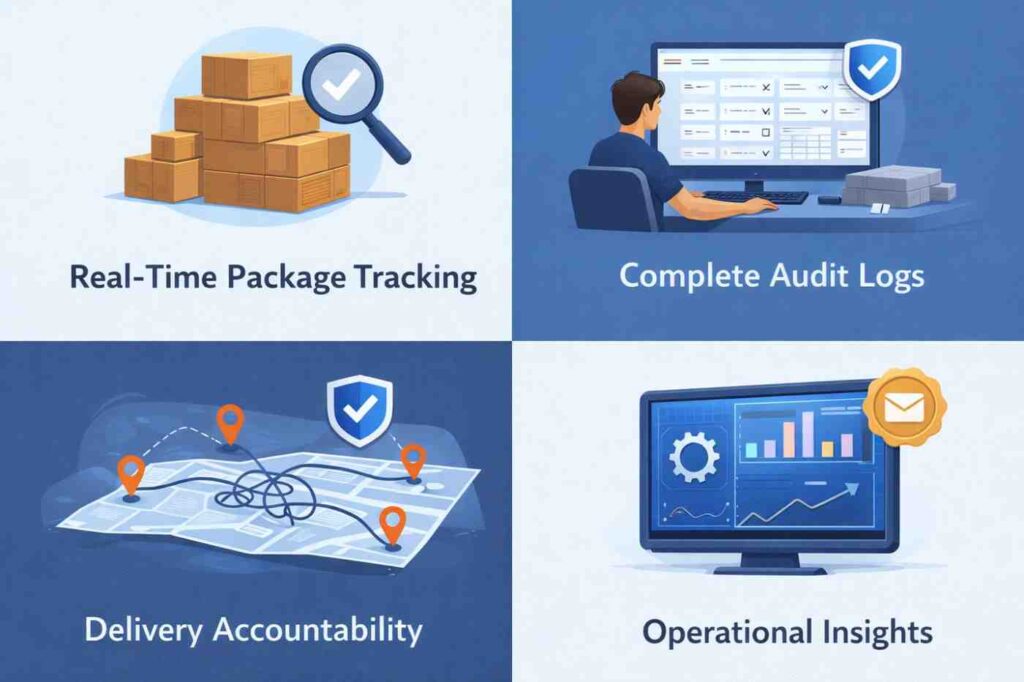
Student housing operators face frequent disputes over missing packages. Without records, these disputes consume time and create friction.
Mailroom software provides:
- Time-stamped intake records
- Pickup verification
- Clear audit trails
This protects staff and improves accountability. Labor and error costs rise sharply as parcel volume increases. See how the University of Oxford – Christ Church handles parcels for 1,100 recipients in this case study.
Data as an Operational Advantage
Beyond daily workflow improvements, mailroom software generates operational insights. Teams can identify peak delivery days, measure average pickup times, evaluate storage utilization, and adjust staffing during high-volume periods.
Instead of relying on anecdotal observations, operators can make decisions based on measurable trends. By 2026, this type of operational intelligence will separate reactive properties from strategically managed portfolios.
Scaling Across Student Housing Portfolios
For operators managing multiple communities, inconsistent mailroom processes create inefficiencies in training and oversight. Mailroom software enables standardized workflows across locations. Staff training becomes faster, performance metrics become comparable, and improvements can be implemented centrally.
Consistency across sites becomes a competitive advantage rather than a challenge.
Mailroom Software Is Foundational Infrastructure
Student housing in 2026 will not ask whether mailroom software is needed. The question will be how long operations continued to function without it.
Rising parcel volume, limited staffing capacity, and digital-first resident expectations make manual systems unsustainable. Mailroom software provides consistency, scalability, accountability, and data-driven visibility.
For student housing operators planning for the next decade, mailroom software is not just another technology investment. It is foundational infrastructure that quietly and reliably supports daily operations, preventing small inefficiencies from turning into systemic failures.