The modern work environment has shifted from fixed offices to software-driven, location-independent workflows. In the United States and globally, professionals now rely on cloud platforms, collaboration tools, and portable computing to work from anywhere without disruption. Surveys cited in Statista show that about 28% of the global workforce works from home at least part of the time, highlighting growing international demand for flexible and hybrid work arrangements.
Hybrid workers and digital nomads are no longer tied to physical offices. What matters today is access to the right software stack, secure connectivity, and compact computing devices that can run professional applications efficiently. Mini PCs have emerged as a practical solution, offering desktop-level performance while supporting modern software ecosystems.
For remote professionals, developers, consultants, and entrepreneurs, compact computing, when paired with the right software tools, enables a flexible, scalable work setup. This guide explores how mini PCs and software-centric tech support hybrid work and digital nomad lifestyles.
Table of contents
The Rise of Location-Independent Work and Software-Driven Productivity
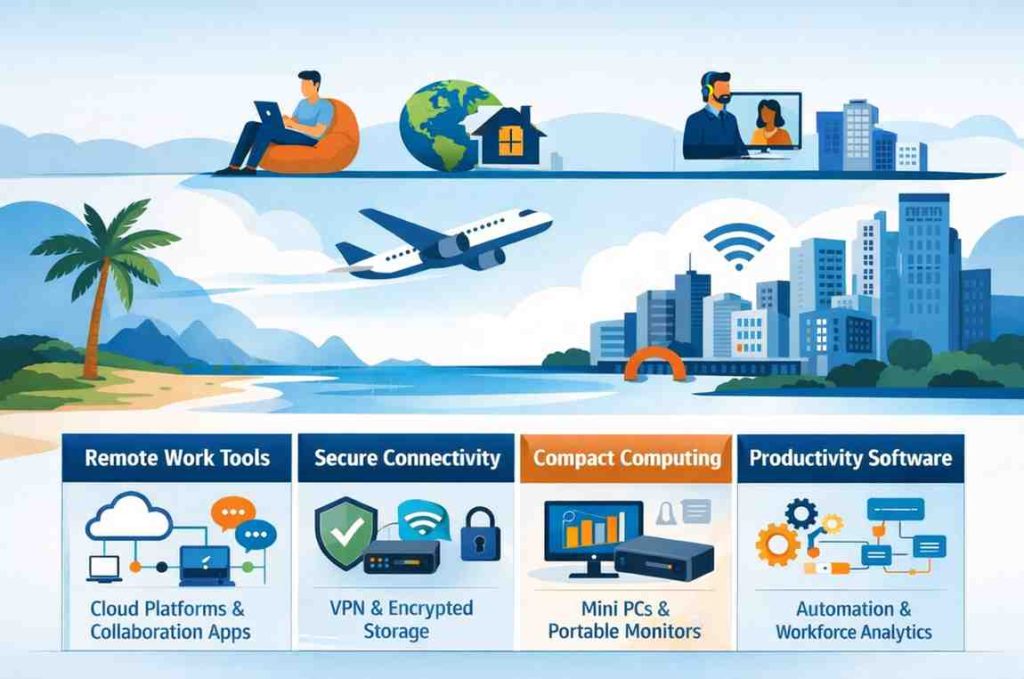
The workplace transformation is largely powered by software. Remote work platforms, cloud infrastructure, and collaboration tools have redefined how teams operate. Video conferencing, management software, cloud IDEs, and SaaS platforms allow professionals to work effectively without being physically present.
Recent workforce studies show that over 45 percent of U.S. employees now work remotely or in hybrid roles. This shift has increased demand for systems that can run productivity software, development environments, and cloud applications reliably across locations.
Digital nomads represent the most advanced form of this shift. They rely on software ecosystems rather than physical offices. Tools such as cloud storage, virtual desktops, version control systems, and secure VPNs allow them to work from anywhere while maintaining professional standards.
As a result, compact computing solutions optimized for modern software workloads have become essential. Lightweight systems capable of running multiple applications, browsers, and cloud services now replace bulky office setups.
Why Mini PCs Fit Modern Software Workflows
Mini PCs are well-suited to today’s software-first work environment. Despite their small size, they can run full operating systems, including Windows, Linux, and macOS alternatives, via virtualization, making them ideal for developers and remote professionals.
These devices support modern processors, fast SSDs, and high memory capacities, enabling smooth multitasking across software tools such as code editors, data dashboards, design software, and browser-based platforms. Many mini PCs also support containerization, remote desktop environments, and cloud development tools.
Connectivity is another key advantage. With USB-C, HDMI, Ethernet, and Wi-Fi 6 support, mini PCs integrate easily into different work environments. This flexibility is critical for professionals who rely on cloud platforms, API testing tools, CRM systems, or remote servers.
Energy efficiency also matters for mobile professionals. Mini PCs consume less power than traditional desktops while running the same software stacks, making them ideal for extended work sessions in shared spaces or temporary offices.
Software-Focused Compact Tools That Complete a Mobile Setup
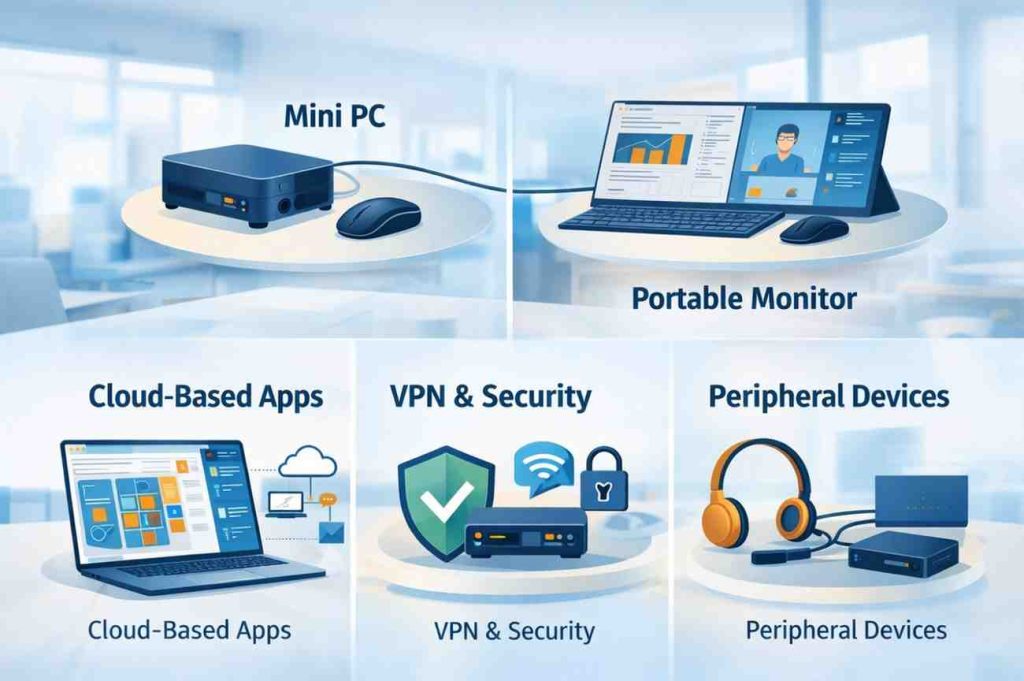
A productive mobile workspace depends on more than just hardware. Software-centric accessories and tools play a major role in supporting hybrid work. Portable monitors enhance multitasking for professionals working with dashboards, spreadsheets, code, or design tools. Paired with window management software, they help recreate a multi-screen office environment anywhere.
Secure connectivity tools are essential. VPN software, encrypted cloud storage, password managers, and workforce intelligence software help protect sensitive data while also providing visibility into productivity, usage patterns, and workload distribution when working from public or distributed networks. Lightweight travel routers combined with secure networking software create reliable work environments on the go.
Productivity software also defines the mobile experience. Cloud-based collaboration platforms, project management tools, Workforce Intelligence Software, and automation solutions enable teams to stay aligned across time zones and provide organizations with better insight into performance and efficiency. Offline-sync features ensure work continues even during connectivity issues.
Power and performance management tools, including system monitoring software, cloud backups, and analytics-driven workforce tools, ensure reliability for professionals and teams who depend on uptime, data integrity, and informed decision-making.
Designing a Software-Optimized Mobile Workspace
An effective mobile workspace is built around software efficiency as much as physical comfort. Choosing tools that sync across devices and platforms reduces friction when switching locations.
A well-optimized setup includes cloud storage for seamless file access, version control systems for collaborative work, and remote access tools for managing servers and office systems. Lightweight external peripherals complement the software stack by improving ergonomics and usability.
Security should be part of the workspace software design. Device encryption, endpoint protection software, and regular system updates protect data regardless of location. Combined with cloud identity management, these tools ensure secure access to work resources.
Automation tools and workflow integrations further improve productivity. By reducing manual tasks, professionals can maintain consistent output even while traveling or working in dynamic environments.
Conclusion
Hybrid work and digital nomad lifestyles are built on software flexibility and compact computing. Mini PCs support modern software workflows by delivering performance, portability, and compatibility with cloud-based systems.
As work becomes increasingly digital, professionals no longer need traditional offices to stay productive. With the right combination of compact hardware and software tools, work can happen anywhere without compromise.
The future of work belongs to those who adopt adaptable, software-driven setups. A mobile workspace is no longer defined by location. It is defined by how effectively technology supports your workflow. Mini PCs and modern software tools together enable a more flexible, efficient, and independent way of working.