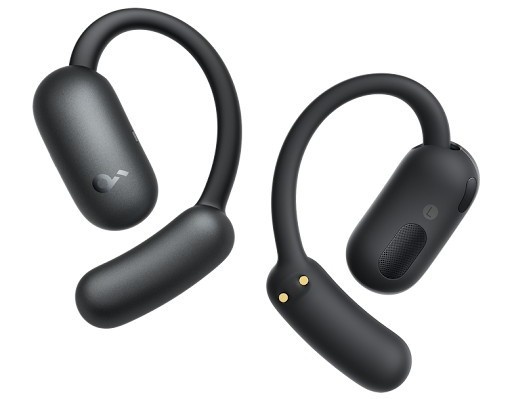
Wireless audio quality is no longer defined solely by hardware components such as speakers or microphones. Today, software intelligence plays a dominant role in shaping how sound is captured, processed, transmitted, and reproduced. Artificial intelligence has become a core layer in modern audio systems, enabling wireless devices to deliver clearer, more consistent sound across varying environments and network conditions.
This shift toward software-defined audio is reinforced by the rapid expansion of the wireless audio market itself. According to industry analysis from Fortune Business Insights, the global wireless audio device market is projected to grow from USD 64.76 billion in 2024 to USD 206.84 billion by 2032, representing a compound annual growth rate of 15.6%. While these projections are not specific to AI alone, the scale of growth reflects rising demand for advanced features that depend heavily on intelligent software processing, including adaptive noise control, real-time signal optimization, and network-aware audio transmission.
As wireless audio devices become more prevalent across consumer electronics, professional communication tools, and smart environments, manufacturers are increasingly relying on AI-driven processing to differentiate performance. This market momentum highlights why advanced audio algorithms and software intelligence are no longer optional enhancements, but foundational elements of modern wireless sound systems.
Table of contents
- The Shift From Hardware-Led to Software-Driven Audio
- Core AI Technologies Used in Audio Software
- Intelligent Noise Reduction and Environmental Adaptation
- Adaptive Audio Tuning Through Software Intelligence
- Latency Management and Synchronization
- Power Efficiency Through Intelligent Processing
- Software-Defined Personalization
- Security and Reliability Considerations
- The Future of AI in Wireless Audio Software
- Closing Perspective
The Shift From Hardware-Led to Software-Driven Audio
Traditional audio systems relied heavily on fixed signal chains. Filters, compressors, and equalizers were statically tuned during development and rarely changed during operation. This approach worked in controlled environments but struggled in real-world wireless scenarios where noise levels, movement, and network quality constantly change.
AI changes this model by allowing audio software to learn from data and respond dynamically. Instead of applying predefined rules, AI models continuously analyze incoming signals and adjust processing parameters in real time. These capabilities are now deployed across wireless audio device ecosystems, where software intelligence adapts playback behavior to varying environments, movement, and connectivity conditions without relying on manual user control.
Core AI Technologies Used in Audio Software
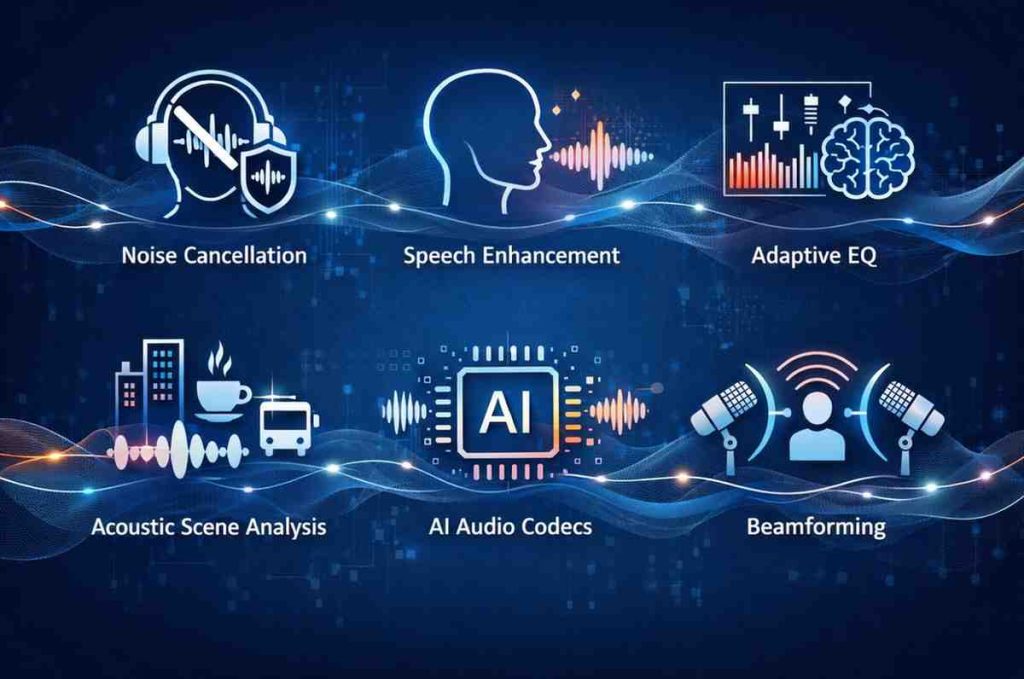
AI-driven audio processing relies on several software technologies working together.
Machine Learning for Signal Classification
Machine learning models are trained to distinguish between speech, music, ambient noise, and interference. By accurately classifying sound elements, the software can apply targeted processing, such as enhancing vocals while suppressing background noise.
Neural Networks for Pattern Recognition
Deep neural networks identify complex acoustic patterns that traditional algorithms cannot easily detect. These models help recognize echoes, reverberation, and transient sounds, enabling more precise correction without degrading audio clarity.
Real-Time Inference Engines
AI models must run efficiently on constrained systems. Optimized inference engines allow audio software to process sound in milliseconds, ensuring responsiveness without excessive battery drain or latency.
Intelligent Noise Reduction and Environmental Adaptation
One of the most impactful applications of AI in audio software is noise suppression. Wireless devices operate in unpredictable environments, from crowded public spaces to moving vehicles.
AI-based noise reduction systems continuously analyze the soundscape and isolate unwanted signals. Unlike basic noise filters, which often remove useful audio information, AI models learn to preserve speech and tonal accuracy while suppressing interference.
Environmental adaptation also plays a role. Audio software can detect whether a device is indoors, outdoors, stationary, or in motion, and automatically adjust processing profiles to maintain consistent sound quality.
Adaptive Audio Tuning Through Software Intelligence
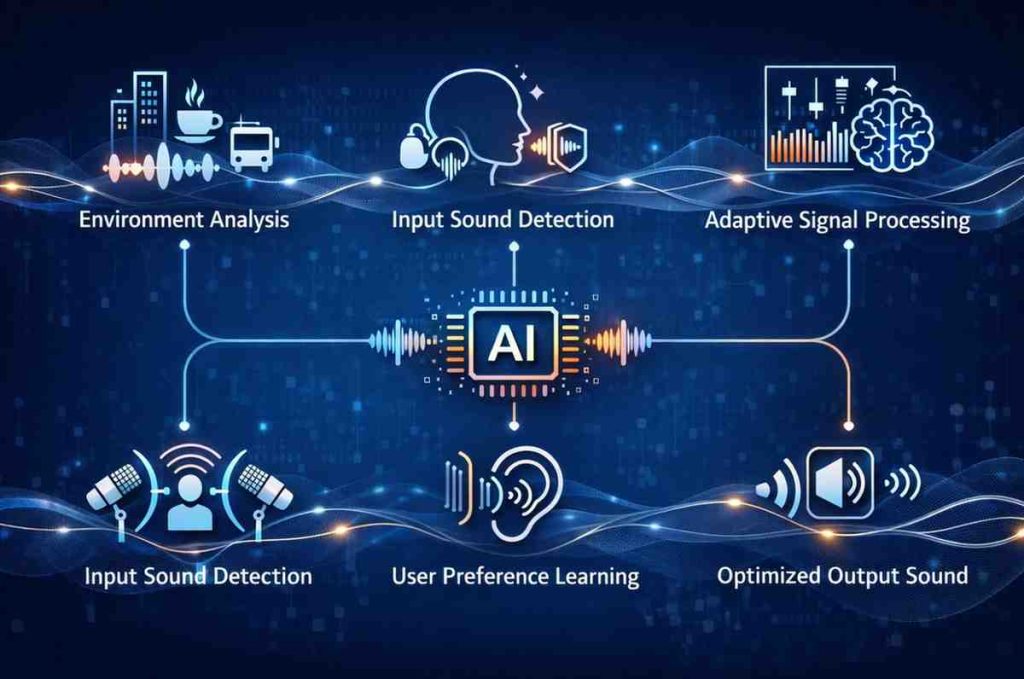
AI enables wireless devices to self-optimize audio output. Instead of relying on a single equalization profile, software systems adjust frequency balance dynamically based on content type and playback conditions.
For example, spoken audio and music have different spectral requirements. AI-driven tuning software identifies content characteristics and applies appropriate enhancements in real time. This improves clarity without requiring manual user adjustments.
Adaptive tuning also compensates for volume changes. As output levels increase or decrease, AI software recalibrates dynamics and frequency response to avoid distortion or loss of detail.
Latency Management and Synchronization
Wireless audio systems must manage latency to ensure smooth playback and synchronization. AI-driven software helps by predicting transmission delays and adjusting buffering strategies accordingly.
Machine learning models analyze historical connection behavior and network stability. Based on these patterns, the software can proactively adjust packet handling to reduce dropouts and audio lag. This approach is especially important for real-time applications such as voice communication and multimedia streaming.
Power Efficiency Through Intelligent Processing
Battery life is a critical constraint for wireless devices. AI audio software contributes to power efficiency by processing only what is necessary.
Instead of running all audio algorithms continuously, AI models activate specific processing paths based on detected conditions. For example, advanced noise suppression may be disabled in quiet environments, conserving energy without affecting audio quality. This selective processing is managed entirely through software logic, reducing computational load and extending operational time.
Software-Defined Personalization
AI allows audio software to adapt to individual user preferences without manual configuration. By analyzing listening patterns, volume habits, and environmental usage, software systems gradually refine output characteristics.
This personalization remains within the software layer and does not require physical adjustments or hardware changes. Over time, the system delivers a more tailored audio experience while maintaining consistency across devices.
Security and Reliability Considerations
AI-driven audio software must operate securely, especially in wireless environments. Modern systems integrate validation mechanisms to ensure model integrity and prevent unauthorized modification.
From a reliability perspective, AI models are often paired with fallback processing paths. If real-time inference fails or conditions exceed expected parameters, the software reverts to stable baseline algorithms to maintain uninterrupted audio output.
The Future of AI in Wireless Audio Software
AI-driven audio software continues to evolve as models become more efficient and hardware acceleration improves. Future systems are expected to deliver even more accurate sound modeling while consuming fewer resources.
As wireless ecosystems expand, software intelligence will remain the primary driver of audio quality. The focus will shift further toward context-aware processing, predictive optimization, and seamless cross-platform performance, all achieved through advanced software design rather than hardware complexity.
Closing Perspective
Wireless audio quality is no longer defined solely by physical components. AI-driven audio software has transformed how sound is processed, optimized, and delivered in real time. By leveraging machine learning, adaptive algorithms, and efficient inference systems, modern wireless devices achieve levels of clarity and consistency that were previously unattainable.
As software intelligence continues to mature, AI will remain central to the evolution of wireless audio systems, reinforcing software’s role as the foundation of modern sound technology.