In 2026, the digital landscape entered a “crisis of trust”. Identity has become the main target for hackers, rather than just computer networks. Solutions like Agentic AI Pindrop Anonybit are emerging to address these evolving threats. As synthetic voice attacks surge by 1,300% and centralized biometric “honey pots” become prime targets for hackers, legacy security measures like passwords and SMS-based MFA have transitioned from insufficient to outright liabilities.
This guide explains how Agentic AI, Pindrop, and Anonybit work together as a”Triad Defense”. By using Pindrop for real-time voice liveness, Anonybit for decentralized biometric integrity, and Agentic AI for autonomous threat response, organizations can move beyond static rules. Together, these technologies move organizations beyond static rules toward an autonomous, self-healing security framework capable of mitigating deepfakes and mass data breaches in real-time.
Key Takeaways
- In 2026, identity theft surged with hackers targeting personal data, making traditional security methods inadequate.
- The collaboration of Agentic AI, Pindrop, and Anonybit creates a Triad Defense, offering dynamic, real-time security against advanced threats.
- Agentic AI enables autonomous threat responses, while Pindrop focuses on voice-based fraud detection, and Anonybit secures biometric data.
- This combined approach enhances fraud prevention, improves authentication speed, and reduces false alarms in customer service environments.
- Moving towards this integrated security approach helps organizations proactively defend against identity-related attacks.
Table of Contents
- Why Traditional Cybersecurity Models Are Failing Today?
- How Agentic AI Operates in Cybersecurity Systems?
- How does Agentic AI, Pindrop, and Anonybit Work Together?
- Technical Roles and Capability Comparison
- Practical Deployment Use Cases with Measurable Impact
- Implementation Challenges and Compliance Notes
- Conclusion
- FAQs
Why Traditional Cybersecurity Models Are Failing Today?
The old ways of protecting data are crumbling because they rely on “static” defenses. A password doesn’t change, and a security question is always the same. Hackers have learned that once they steal these static pieces of info, they own the account. This vulnerability is why modern enterprises are shifting toward the integrated power of Agentic AI, Pindrop, and Anonybit.
Why Static Rules Cannot Stop Dynamic Threats?
Most legacy systems use simple filters to block bad actors. If a login comes from a known “bad” IP address, it gets blocked. However, modern convicts use revolving proxies and AI to look like perfectly normal users. These systems are too rigid to catch a thief who looks exactly like a customer, necessitating the advanced logic of Agentic AI, Pindrop, and Anonybit.
AI-Powered Fraud Growth
Criminals are now using the same tech we use for productivity to cause harm. With generative AI, they can launch thousands of automated attacks at once. According to a recent Pindrop webinar, one in every 599 calls is now identified as fraud. This massive scale makes it impossible for human teams to keep up without the integrated help of Agentic AI, Pindrop, and Anonybit.
Identity Is Now the Most Dangerous Weak Link
We used to worry about viruses, but now we worry about “impersonation.” If someone can sound like you and has your ID number, they can bypass almost any traditional bank security. We need a system that looks at the “how” and “who,” not just the “what.”
How Agentic AI Operates in Cybersecurity Systems?
When we call an AI “agentic,” we mean it has the agency to act. It isn’t just a dashboard that shows red lights; it is a digital employee that can grab a fire extinguisher when it sees a spark. In the framework of Agentic AI, Pindrop, and Anonybit, this means active protection.
An agentic system has a goal, such as “keep unauthorized users out.” As Anonybit CEO Frances Zelazny explains, these systems are not just assistants; they are “actors in the digital ecosystem” that take independent actions.
Agentic AI uses Autonomous AI Security Agents to monitor every digital interaction. Unlike a standard program, an agent can:
- Observe changes in user typing speed or mouse movement.
- Cross-reference a voice print with a physical location.
- Decide to step up security if a transaction feels “off.”
The real power of Agentic AI Cybersecurity Applications is speed. If a system detects a massive data drain at 3 AM, the AI doesn’t wait for a manager to wake up. It shuts down the port, isolates the affected server, and then sends a report. This prevents a small leak from becoming a headline-grabbing disaster.
Pindrop’s Role in Voice-Based Fraud Prevention
Voice is the new frontier for hackers. With just a few seconds of your voice from a social media video, a scammer can call your bank. Pindrop Voice Fraud Detection is the shield that stops this from working by looking deep into the audio signal itself.
Using Voice Signals for Real-Time Authentication
Pindrop doesn’t just listen to your words; it examines the “liveness” of the sound. It can tell the difference between a human lung pushing air and a speaker playing a recording. This AI-Powered Voice Authentication happens in the background, making Agentic AI, Pindrop, and Anonybit a seamless experience for the user.
How to Catch Deepfakes in the Call Center?
For Fraud Detection in Call Centers, Pindrop analyzes over 1,300 different features of a phone call. It looks for:
- Synthetic speech patterns that sound “too perfect.”
- Mismatched background noise (e.g., a “home” caller with “office” background static).
- Evidence of “voice cloning” software artifacts.
Anonybit and Decentralized Biometric Identity Protection
If a company stores your face or fingerprint in a central database, that database becomes a target. The Anonybit Identity Protection Platform removes this target by making sure there is no central “honey pot” for hackers to steal.
Why Centralized Biometric Storage Is a Major Risk?
When a central database is hacked, the biometrics are gone forever. You can change a password, but you can’t change your thumbprint. This is why Biometric Security with AI must move toward a decentralized model to protect the future of privacy.
The Power of Decentralized Identity Binding
Anonybit uses a “Zero-Knowledge” approach. It breaks your biometric data into shards. To verify you, the system doesn’t need to “see” your face; it just needs the shards to match. This AI-Driven Identity Verification ensures that even if one part of the system is compromised, the attacker gets nothing but useless digital noise.
How does Agentic AI, Pindrop, and Anonybit Work Together?
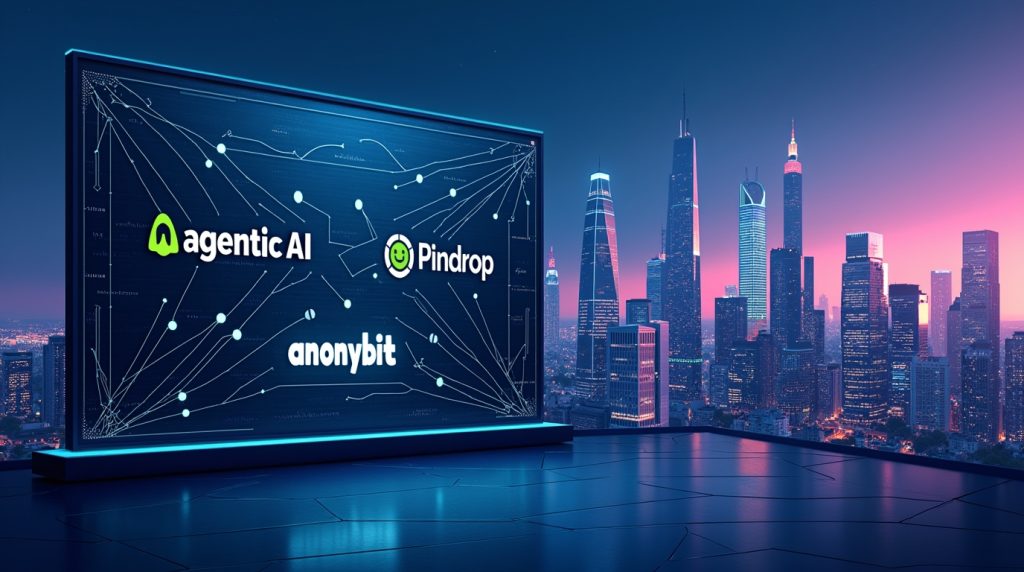
This is where the real value lies for an enterprise. When you connect Agentic AI, Pindrop, and Anonybit, you create a layered defense that is nearly impossible to crack. It turns security from a “gate” into a “living organism.”
Imagine a high-value wire transfer request. The system doesn’t just check a password:
- Pindrop checks if the caller’s voice is human and matches the account owner.
- Anonybit verifies the biometric identity without ever exposing the actual data.
- Agentic AI examines the context: is the user calling from a recognized device? Is this a normal time for them to move money?
By sharing data between these tools, the system becomes incredibly accurate. It reduces “false positives,” meaning honest customers aren’t constantly being blocked or asked for extra ID. The combined intelligence of Agentic AI, Pindrop, and Anonybit makes the security feel invisible until it is actually needed to stop a thief.
Technical Roles and Capability Comparison
| Security Capability | Pindrop | Anonybit | Agentic AI |
|---|---|---|---|
| Verification Method | Acoustic & Metadata Analysis | Decentralized Biometric Sharding | Behavioral & Contextual Logic |
| Response Type | Alert / Risk Scoring | Authentication Success/Fail | Autonomous Mitigation (Blocking) |
| Data Privacy | Analyzes “Sound,” not “Content” | Zero-Knowledge Architecture | Privacy-Preserving Learning |
| Primary Target | Deepfakes & Audio Spoofing | Database Breaches & ID Theft | Rapidly Evolving Bot Attacks |
| Integration Level | API / Call Center Native | Identity Provider (IdP) | Cross-Platform Orchestrator |
Practical Deployment Use Cases with Measurable Impact
We see these systems being implemented in the real world, especially in sectors where trust is everything. Agentic AI Fraud Prevention is becoming the standard for any business that handles high-value transactions over the phone or web.
Transforming Banking and Financial Services
Banks use these tools to protect against “Social Engineering.” This is when a hacker tricks a bank employee into giving up access. With Enterprise Voice Security Systems in place, the employee doesn’t have to guess; the system tells them immediately if the caller is a fraud.
Better Customer Support and Call Centers
In a busy call center, efficiency is key. By using these Agentic AI, Pindrop, and Anonybit, companies can:
- Authenticate callers in under 5 seconds.
- Reduce the need for “security questions” by 90%.
- Stop “Account Takeover” (ATO) attacks before they begin.
Implementation Challenges and Compliance Notes
Moving to Agentic AI, Pindrop, and Anonybit requires a bit of a shift in how a company thinks about data. It isn’t just about tech; it’s about the skills of the people running it.
Cost and Infrastructure Considerations
There is an upfront cost to integrating these platforms. You need to ensure your “tech stack” is modern enough to handle real-time API calls. However, the cost of one major data breach usually far outweighs the cost of evolving modern cybersecurity.
Meeting Legal and GDPR Standards
Using AI Risk Management Solutions helps you stay on the right side of the law. Since Anonybit doesn’t store “readable” biometrics, it helps companies comply with tough laws like GDPR or the CCPA. It proves you are taking the “least privilege” approach to user data.
Avoiding Common Deployment Mistakes
One big mistake is “over-automation.” You must always have a “human-in-the-loop” for the most extreme cases. Another mistake is ignoring the user experience. Luckily, tools within Agentic AI, Pindrop, and Anonybit are designed to work in the background, keeping things simple for the end user.
Conclusion
The digital world is getting more dangerous, but modern security tools are getting smarter. The combination of Agentic AI, Pindrop, and Anonybit provides a roadmap for how we can protect identity in an age of deepfakes and mass data leaks. This shift moves organizations away from being reactive victims and toward being proactive defenders.
By embracing Next Generation Cybersecurity AI, businesses can finally stop playing catch-up with hackers. The future involves a world where your voice and your identity are truly your own, protected by the unified strength of Agentic AI, Pindrop, and Anonybit.
FAQs
It starts with defining clear boundaries. You don’t give the AI keys to every door on day one. You start by letting it monitor and alert, then gradually allow it to take “low-risk” actions like locking a single suspicious account.
They provide the “hard evidence” of identity. Pindrop proves the person is physically talking, and Anonybit proves the person is who they claim to be without risking a data leak. It is the ultimate “trust but verify” model.
Absolutely. Major insurance companies have used these tools to stop “ghost” callers who try to change policy details. In many cases, these systems catch fraud rings that have been active for years by spotting their repeated voice patterns.
While the software has a subscription cost, the real investment is in “identity architects,” people who understand how to connect voice, biometrics, and AI into a single flow. It requires a move toward a “security-first” culture.
GDPR actually favors tools like Agentic AI, Pindrop, and Anonybit, because they emphasize “data minimization.” By using decentralized shards (breaking data into smaller, encrypted pieces), you aren’t actually “holding” sensitive data in the traditional sense, which makes your compliance much stronger.