Understanding the PERM processing time is one of the biggest challenges for employers and foreign workers. The silence from the government and constant updates from friends or online forums can be really stressful for people who are hoping to get employment based on a green card.
The process of getting a green card through PERM labor processing time is complex, and delays are common because the system moves slowly. The delay can go from months to even a year because even a good application can get held up. But this stressful period of delay directly affects the worker’s career plan and personal timelines, especially when visa expiry dates come near.
Understanding the technicalities behind the delays can help you avoid them and plan strategies. If you are also waiting for your immigrant green card from the US government, this guide will walk you through the steps that you should take to fix the causes slowing down your application.
Key Takeaways
- Understanding the PERM processing time is crucial for employers and foreign workers due to its complexity and common delays.
- Delays in PERM processing often stem from issues like recruitment paperwork, a heavy DOL workload, and audit processes.
- Employers can avoid delays in PERM processing time through strategic planning and accurate documentation.
- Using professional guidance also helps in preventing incomplete applications and ensuring compliance with federal regulations.
- Staying informed and planning early positively impacts the PERM processing time, making the process more manageable.
Table of Contents
What is PERM?
Program Electronic Review Management (PERM) is a Department of Labor (DOL) program; it is the most important and initial step in the employment-based green card process. The DOL certifies that there are no qualified workers in the US who can fill the position the foreign worker is going to fill.
However, the government handles millions of employment and immigration files every year. That’s why they have a responsibility to review every application with precision, and the procedure requires mandatory steps for every application, which eventually slows down the PERM DOL processing times.

3 Main Delays in PERM Processing Time
The permanent labor certification processing time has increasingly become unpredictable over recent years. The application submitted today will go through several processing windows, which can take longer than a year, depending upon several factors. In the section below, we will discuss the 3 main delays in the dol PERM processing time.
Delay in Recruitment Process
One of the biggest causes that delays the recruitment process is failure to complete the recruitment paperwork on time. Companies need time for job advertising, collecting resumes, screening applications, and documenting every step.
Hiring teams must stick to rules to avoid government issues later. Missing documents, incorrect wage determination, or improper procedure may slow down the recruitment process. It directly delays the PERM processing time blind for foreign workers who are hired.
DOL Workload
Department of Labor receives thousands of applications every month, making the labor PERM processing time unpredictable. The volume of applications and backlog of workload slows down the USCIS PERM processing time.
The time PERM process time varies in every application, whether your application goes through an audit or not. However, if your application’s documentation is correct and no further audit is required, it can sail through in 12 to 18 months. While the audited application may take longer than 18 to 24 months.
Audit & Review Delays
The 30% cases are selected from PERM applications for audit every year and are rechecked by the DOL Audit team. These applications are thoroughly rechecked to determine whether the recruitment process is done properly with accurate documentation or not.
If errors are found, the application faces a deeper assessment, but it can prolong the applicant timelines. This delay affects the PERM labor certification processing time, making applicants anxious.
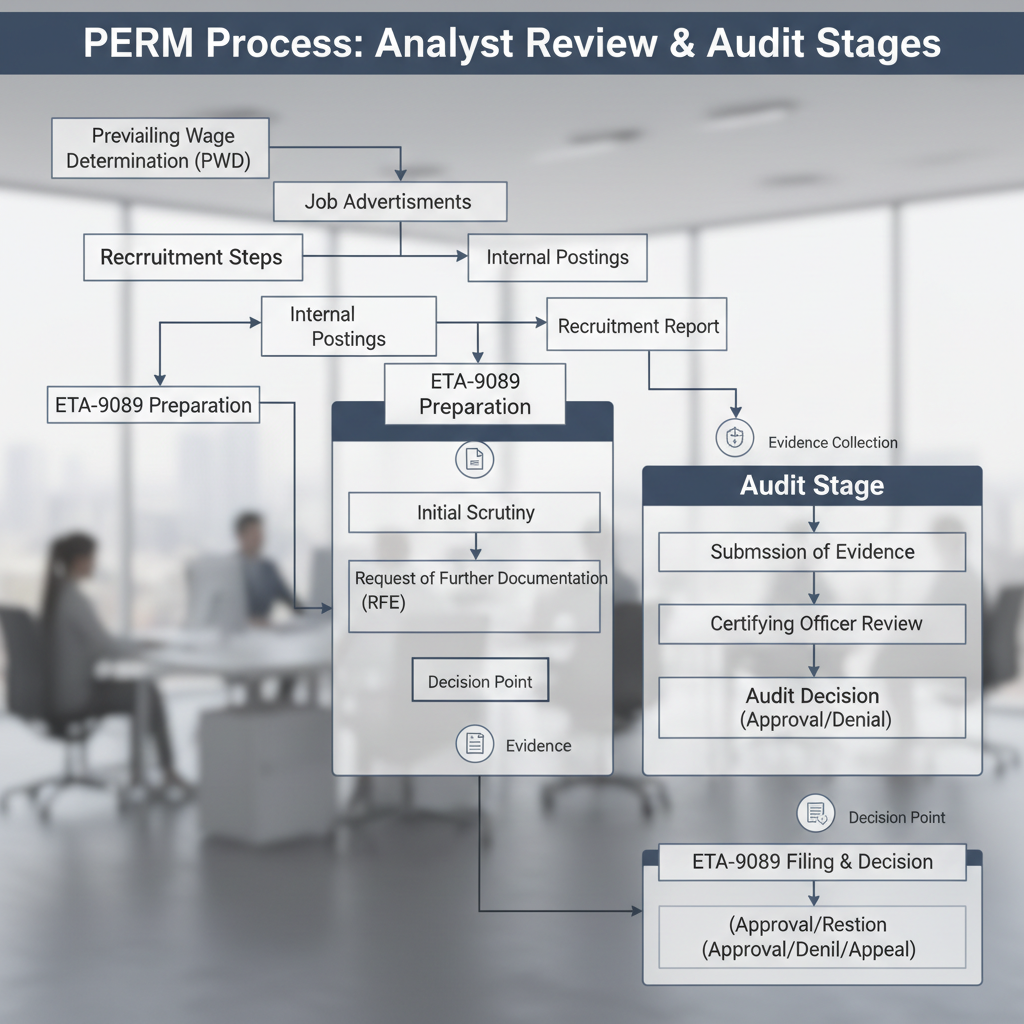
Average PERM & Green Card Timeline Overview
| PERM Processing Steps | Estimated Timeline (2026) |
|---|---|
| Prevailing Wage Determination | 5 to 8 Months |
| Recruitment Process | 2 to 3 Months |
| PERM Filling & DOL Processing | 8 to 12 Months |
| Audit Review (if applicable) | 6+ Months |
| Total PERM Time | 15 to 24 months (if no audit ) |
| Impact of Audit | Nearly doubles the green card PERM processing time |

Strategies to Avoid Delays in PERM Processing
Many people have asked on the web, Will perm processing time improve in 2026? So, I have tracked down these professional strategies after reviewing cases with serious delays to help you avoid similar problems in your PERM application.
Strategic Planning
If you plan to apply for an employment-based green card, you must start your application with a strong plan to avoid delays in PERM processing time for 2026. Employers who start the documentation earlier may reduce the risk of last-minute issues and audit delays. The HR department of an organization should use the PERM processing time tracker to calculate its hiring process and plan accordingly.
Accurate Documentation
The accuracy in your PERM application is the key to getting a green card earlier and minimizing audit risk. Employers must check the market recruitment steps and double-check the documentation accordingly. However, they should avoid premature filling as it can complicate the labor PERM processing time.
Understanding how the USCIS PERM processing times connect to the later steps helps companies plan the entire immigration journey for the foreign workers and save company resources. Preparing strong documentation is always the best strategy to reduce the overall PERM current processing time.
Professional Guidance
Using professional guidance can always help you avoid incomplete applications, which trigger a slowdown in labor department PERM processing time later. The professional help also prevents further document requests and audit review risk.
It also keeps your PERM application details aligned with the federal regulations. Employers should track the application timeline using a PERM processing time tracker to maintain compliance between the internal HR timeline and immigration steps.
Conclusion
The PERM process can feel long and unpredictable, especially when the national PERM DOL processing time continues to be at risk due to high demand. Whether the delay comes from the government, backlogs, or audits, every delay has a reason behind it.
The applicants must have patience, attention to detail, and strategic planning to avoid delays. Staying informed, planning early, and maintaining strong documentation can help you keep the process going. The right approach can make the PERM processing time H1B manageable, even when the timelines stretch longer.
FAQs
High demand increases the eb2 PERM processing time, but every case must go through multiple steps, like staffing, wage determination, and audit, which usually takes months to complete.
You can watch national updates or use an online tracker to check your DOL PERM processing times.
The latest PERM processing time varies, but most applicants have to wait 1 to 2 years or even longer if the audit occurs.
Strong and accurate documentation reduces the risk of audit delays, but audit steps still influence the overall PERM application process time because of the backlog of pending cases.
You can expect minor improvement if your documentation is strong. However, a substantial reduction in PERM processing time is unlikely soon.