A New Era of Pressure and Possibility
By 2026, small businesses will no longer compete on speed alone. They will compete on how efficiently their digital systems work together to reduce friction, eliminate wasted effort, and support steady growth. That shift is already underway: nearly 98% of U.S. small businesses now interact with AI-enabled tools in some form, and 91% expect these technologies to support future growth. As digital adoption deepens, efficiency is becoming less about adding more tools and more about making existing ones work smarter together.
Customers today want speed, clarity, and seamless interactions. Teams want relief from repetitive work. Owners wish to predictable systems that support growth rather than drain time and attention. All of this has created the perfect conditions for a new dominant priority: digital efficiency.
Digital efficiency isn’t about cutting corners. It’s about creating systems that work harmoniously, reducing friction, and empowering small businesses to compete with far larger organizations. In 2026, efficiency will no longer be a luxury it will be a competitive requirement.
Table of Contents
- A New Era of Pressure and Possibility
- The Technology Shift Fueling This Change
- What “Digital Efficiency” Actually Means
- Why Small Businesses Stand to Gain the Most
- Expert Insight: Why Efficiency Has Become a Strategic Advantage
- The Key Drivers Behind the Movement
- Practical Steps for Small Businesses to Become Efficient in 2026
- Potential Challenges to Expect
- The Efficiency Imperative of 2026
The Technology Shift Fueling This Change
The rapid acceleration toward digital efficiency is not happening by accident. It’s being driven by a convergence of new technologies that are becoming more affordable, more accessible, and far more powerful for smaller teams.
One notable perspective comes from StartUs Insights, which highlights key innovations expected to shape how businesses operate in 2026, including agentic AI, workflow automation, and learner digital infrastructure designed to eliminate redundancy and unnecessary complexity. These emerging tools matter because they make efficiency practical, not theoretical.
Unlike earlier AI models that answered questions or produced content, agentic AI can perform tasks, give situationally aware suggestions and even coordinate actions across systems. For small teams that wear a lot of hats, this change can enable AI to become like a silent operations partner, taking repetitive tasks off your plate and freeing up hours every week. Software consolidation, the shift toward unified platforms instead of scattered single-purpose tools, is also taking away the burden of dealing with too many disconnected apps. Where businesses once had to have 10 different tools, one integrated system can now do it all for them.
All of these point to 2026 as the year where efficiency becomes not only possible but expected.
What “Digital Efficiency” Actually Means
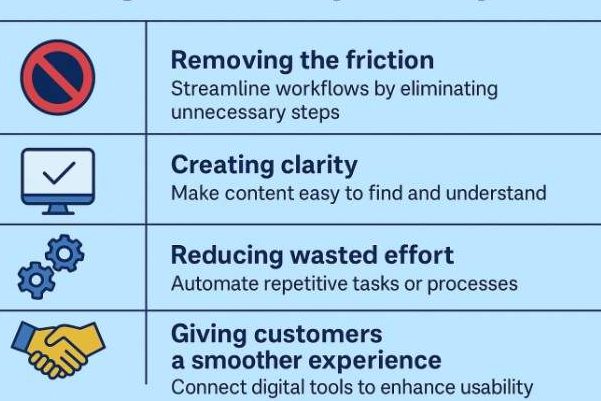
Digital efficiency is often discussed, but it’s rarely defined clearly. In 2026, it will be characterized by a few essential components:
1. Workflows That Reduce Manual Effort
Automation will handle scheduling, follow-ups, onboarding sequences, reminders, reporting, and nearly any predictable task. This doesn’t replace work it removes repetition so people can focus on higher-value activities.
2. A Simplified, Consolidated Tech Stack
Using fewer tools results in more clarity, stronger data, and better collaboration. Businesses are discovering that efficiency isn’t about having the most technology, but the right technology.
3. A Fast, Frictionless Customer Experience
Every slow or confusing step in a digital journey increases drop-off. Efficient businesses deliver clarity from the first click to the final conversion.
4. Cleaner, More Unified Data
Data only drives smart decisions when it’s consistent, complete, and accessible. Efficiency in 2026 means solving the scattered-data problem once and for all.
5. Systems Designed to Scale Not to Survive
Businesses are shifting away from “just make it work” solutions. Instead, they’re prioritizing structures that remain stable as they grow. These themes will define which businesses thrive in 2026 and which get left behind.
Why Small Businesses Stand to Gain the Most
Big businesses might have more resources, but small firms have something every bit as potent: agility. They can pivot more quickly, test out new tools fast, roll out new systems without the bureaucracy, and make swift changes in days rather than months. This flexibility allows them to gain valuable business update and insights and stay competitive in rapidly changing markets.
Digital efficiency will help small businesses:
- Compete on customer experience
- Reduce internal strain on small teams.
- Deliver faster and more consistently.
- Improve margins without increasing headcount.
- Operate with greater confidence and predictability.
The shift is not simply operational. It’s foundational. Efficiency becomes the mechanism that allows a small business to grow without burning out or breaking apart its internal systems.
Expert Insight: Why Efficiency Has Become a Strategic Advantage
To gain a better sense of why digital efficiency is shaking up our world in 2026, we reached out to Mendel Sites. This web design firm assists small businesses in creating cleaner, more scalable digital systems. This view reflects what more and more business owners are realizing: efficiency is not an IT upgrade; it’s a business strategy.
The Key Drivers Behind the Movement
1. Rising Costs Require Smarter Systems
As operational expenses continue to grow, inefficiencies become increasingly costly. Time lost is money lost.
2. Customers Expect Instant Clarity
If customers can’t quickly understand what you offer, how to navigate your website, or how to take action, they will go elsewhere.
3. AI Tools Are Becoming More Accessible
Tasks that once required specialized talent can now be handled through automation and AI-driven tools built specifically for small businesses.
4. Integrated Platforms Are Replacing Disconnected Apps
This reduces technical debt, simplifies workflows, and improves collaboration.
5. Predictability Has Become Essential
Efficiency creates order. And order allows for strategic growth.
Practical Steps for Small Businesses to Become Efficient in 2026
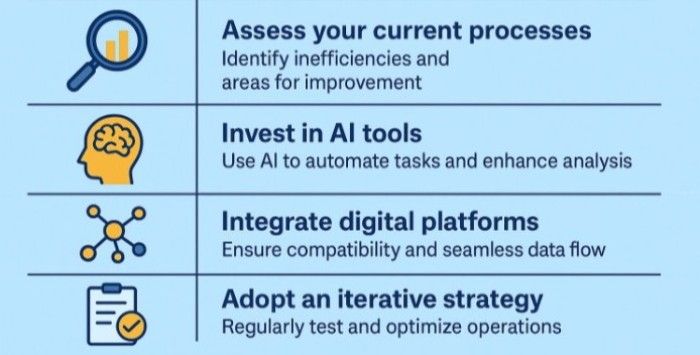
1. Identify Your Biggest Bottlenecks
Every business has manual processes, communication gaps, slow approvals, and outdated tools. The first step toward efficiency is recognizing where the friction actually is.
2. Simplify Your Toolset
Businesses often accumulate apps over time without realizing how much overlap and confusion they cause. Consolidation is one of the fastest wins.
3. Automate What Doesn’t Require Human Judgment
Follow-ups, reminders, lead management, customer onboarding, and data entry are perfect candidates for automation. Even partial automation yields immediate gains.
4. Strengthen Your Digital Foundation
A website that loads slowly, confuses users, or fails to integrate with business systems becomes an anchor weighing everything down. Efficient businesses prioritize fast, intuitive digital experiences that support their workflows rather than disrupt them.
5. Create Documented Processes for Consistency
Efficiency thrives on predictability. When tasks are performed the same way every time, outcomes become more reliable, and improvement becomes easier.
6. Track Efficiency Metrics That Actually Matter
Look at indicators like response time, conversion rates, cost per acquisition, time spent on repetitive tasks, and customer journey drop-offs. These show whether your digital ecosystem is genuinely becoming more efficient.
Potential Challenges to Expect
No transformation comes without obstacles, but understanding them in advance makes them far easier to manage.
1. Over-Automation Risks
Automation should support human connection, not replace it. Businesses must strike the right balance.
2. Data Privacy and Security
With more AI and interconnected systems comes greater responsibility for protecting customer information.
3. Team Buy-In
Even the best systems fail if team members don’t adopt them. Clear communication and training are critical.
4. Choosing Tools Based on Trends Instead of Needs
Not every solution fits every business. Digital efficiency is about intentional selection, not chasing the newest platform.
The Efficiency Imperative of 2026
What’s clear for the future is that , in 2026, businesses acting with clarity, speed, and intentionality will be well-served. Digital productivity is also the way to prosperity, creating a better customer experience and taking pressure off bank staff. It is the process that turns fragmented systems into integrated vehicles for lasting success. Small businesses no longer require large budgets to operate at a high level.
They want structure, automation where possible, and digital experiences that remove as much friction (not add it to) their day-to-day routines. The efficient will run faster, the effective’ll serve customers, and scale without crushing their teams. Ignore it at your peril, or be bogged down by the anchors of the past, as outdated systems and a mindset cannot meet modern expectations.
2026 won’t just be the year efficiency becomes essential; it will be the year it becomes unavoidable.