
The education sector is undergoing a significant transformation. Traditional models are struggling to meet evolving expectations, driving a fast push toward specialized digital tools. This change has created strong demand for custom software in the eLearning space that is designed for specific instructional methods and organizational workflows.
Generic solutions frequently fall short, creating space for developers with a deep understanding of educational challenges. Institutions now require dynamic systems, not static content repositories. The successful providers are those that view a learning platform as an integrated ecosystem. According to our analysts, the critical factors are scalable infrastructure, seamless integrations, and deliberate user experience design from the outset. This represents a foundational change in educational technology strategy.
Key Takeaways
- The eLearning sector is transforming, driving demand for custom software tailored to specialized instructional methods.
- Developers must create dynamic systems that include scalable infrastructure and user-centered design for effective learning solutions.
- Key players like Forbytes, Inoxoft, Emerline, Net Solutions, and Raccoon Gang develop innovative eLearning platforms with a focus on technical sustainability and flexibility.
- Assessing a platform’s technical readiness for growth is critical; factors include scalability, flexibility, and third-party compatibility.
- Choosing a development partner requires evaluating their deployment history, support structure, and communication protocols for successful collaboration.
Table of contents
1. Forbytes
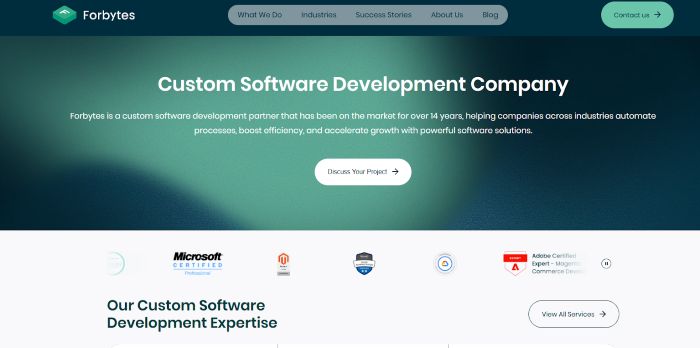
Forbytes eLearning software development focuses on adaptable platforms and deliberate user experience. Their work emphasizes reliable integrations and robust mobile access, supporting learning across environments. Forbytes creates solutions intended to align with an organization’s operational rhythm. With over 13 years of sector experience, they’ve observed numerous trends and can distinguish lasting functionality from temporary features.
Their team, which includes a high ratio of senior developers, approaches projects with an eye on both pedagogical impact and technical sustainability. They build on standards like SCORM and xAPI while ensuring architecture supports future growth. The objective is software that addresses immediate needs without limiting future adaptation.
What Forbytes Delivers for Education
They develop comprehensive digital learning environments. The aim is to produce systems that are straightforward for administrators and compelling for eLearning students. Their service scope targets several critical components:
- Custom LMS development,
- Mobile learning applications,
- Virtual classroom solutions,
- Learning analytics and reporting tools.
The outcome is a platform oriented around defined objectives. Their method connects technical execution with clear educational results, providing a structured approach to custom development.
2. Inoxoft
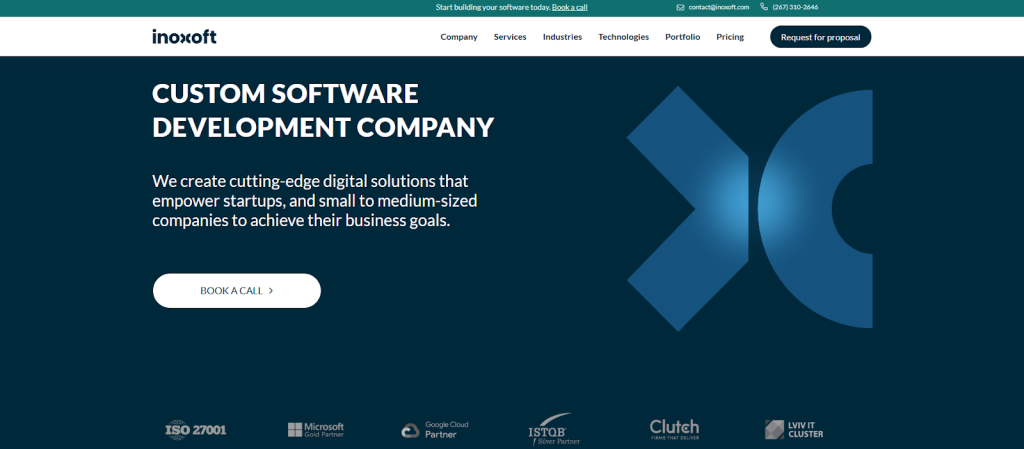
Inoxoft operates with a focus on velocity. They specialize in deploying a minimum viable product to validate concepts with reduced initial investment. Their EdTech approach incorporates AI capabilities and a strong emphasis on interface design. They manage projects from initial concept through to ongoing maintenance.
AI-Driven Capabilities for Modern Learning
Their implementations focus on personalization. This includes adaptive learning paths and automated assessment tools, designed to increase efficiency and maintain engagement. The integration of intelligent features aims to create a more responsive learning experience.
End-To-End Project Management For eLearning Platforms
They maintain oversight of the complete build process. This covers initial consultation, design, development, and deployment. Controlling these stages allows them to maintain a consistent pace and quality standard, informed by experience across a broad portfolio of projects.
3. Emerline
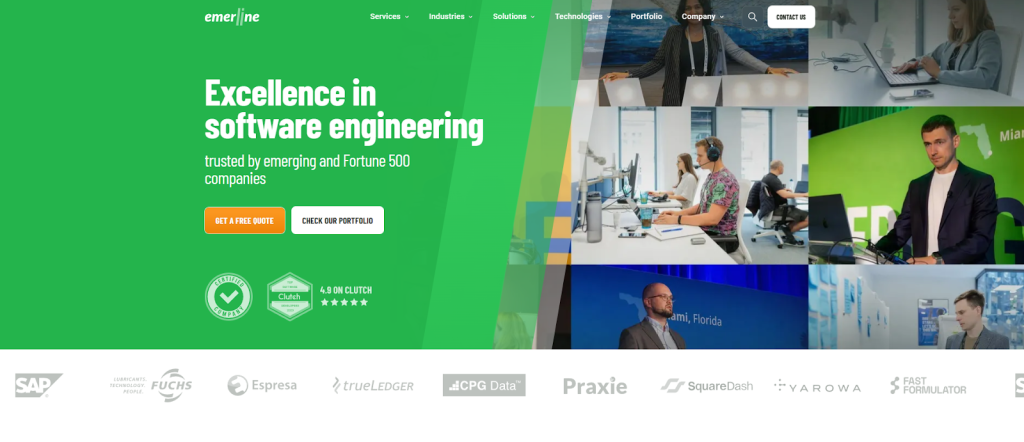
Emerline develops large-scale learning ecosystems for corporate and academic institutions requiring growth-oriented solutions. They provide complete project delivery, ensuring platforms can expand alongside user bases and content libraries. Their solutions are built to function as central operational hubs for training and development.
Core eLearning Solutions from Emerline
They offer a range of technical services focused on creating reliable, accessible platforms. Their primary outputs include:
- Custom LMS and LXP platforms,
- Enterprise learning portals,
- Mobile learning applications,
- Interactive and gamified learning tools.
The resulting system is designed for consolidation. It serves as a unified space for instruction, collaboration, and performance tracking. Their model is based on establishing a sustained technical partnership.
4. Net Solutions
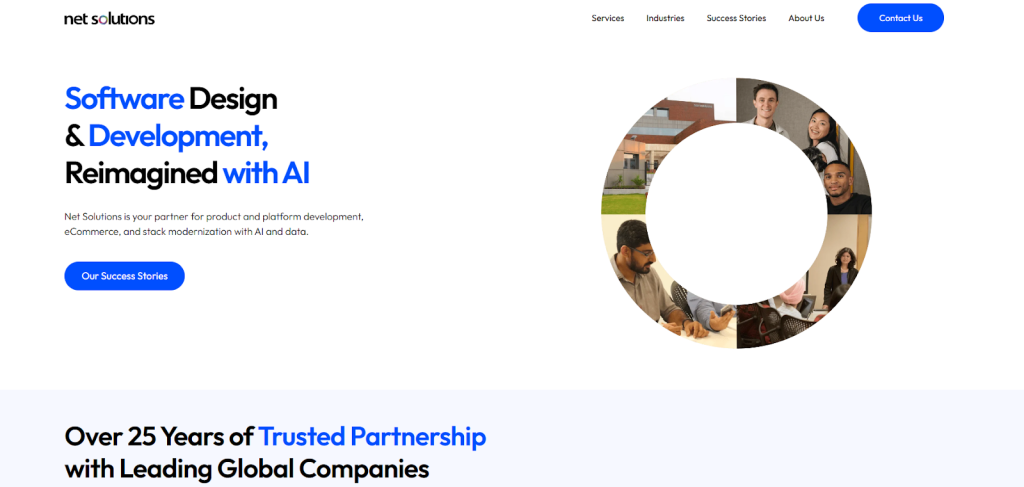
Net Solutions engineers for high demand. They create platforms built to manage thousands of simultaneous users smoothly. Their methodology combines resilient, high-capacity architecture with intentional user experience design, resulting in digital learning environments that are both robust and usable.
Enterprise-Grade Platform Architecture
The focus is on consistent performance. They design backend systems to maintain stability during intensive use periods. This engineering philosophy prioritizes delivering a reliable experience for every user, regardless of scale.
Features Aligned with Modern Education Models
They implement functionalities that reflect contemporary eLearning behaviors. This includes microlearning components, collaborative features, and detailed analytics. The platform’s framework is constructed to support continuous user interaction.
5. Raccoon Gang
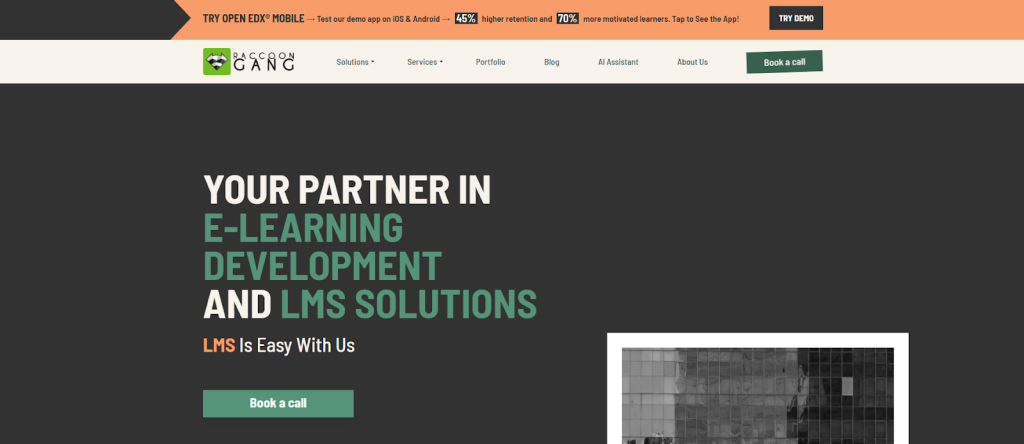
Raccoon Gang specializes in open-source learning management systems, with deep expertise in Open edX. They implement large-scale solutions for universities and global enterprises, emphasizing system reliability. Their skill lies in customizing a powerful open-source foundation into a tailored, institutional-grade platform.
Raccoon Gang’s Strengths in LMS Development
They transform open-source software into a refined, organizational asset. Their process involves extensive customization and integration with existing enterprise systems. Key service areas are:
- Open edX LMS customization,
- Integrations with CRM/HRIS/ERP,
- Gamification and learner engagement tools,
- Migration, hosting, and long-term support.
They focus on making a complex system feel integral. For large institutions needing a stable, scalable, and connected eLearning hub, their specialized approach is relevant. Their portfolio includes implementations for international organizations, demonstrating an ability to manage complex requirements.
Evaluating Technical Readiness for Long-Term Platform Growth
Many organizations underestimate how quickly their learning needs expand once a digital platform gains traction. User numbers rise, new departments request features, and administrators seek more granular oversight. A system that performs well during early adoption may face strain as the instructional workload increases.
This is why technical readiness must be reviewed before committing to any development partner. Platforms should be built with clear pathways for scaling architecture, adding integrations, and supporting new learning formats without causing disruption.
A useful way to assess long-term suitability is to break technical readiness into several practical dimensions:
- Capacity for scaling infrastructure without major restructuring,
- Flexibility to introduce new modules or update existing ones,
- Compatibility with third-party services used across the organization,
- Stability under peak usage and high content volume.
These factors show whether the platform can mature alongside your training goals. A development team that plans for expansion from the outset reduces the risk of future redevelopment cycles. It also helps ensure that the system remains reliable for both administrators and eLearning students as demands shift. Reviewing these elements early prevents avoidable limitations and supports smoother long-term operations.
Key Considerations Before Selecting a Vendor
Choosing a development partner requires looking beyond technical specifications. You need to examine their actual deployment history, especially for projects similar in scale and complexity to yours. Scrutinize their post-launch support structure because what happens after the platform goes live often matters more than the build phase.
Ask about their team’s composition because consistent access to senior technical leadership can prevent common project pitfalls. Finally, assess their communication protocol. Regular, clear updates and a defined process for handling changes are non-negotiable for a smooth collaboration. These operational factors frequently determine success more than any single advertised feature.
Final Thoughts on Choosing An eLearning Development Partner
Different educational models require distinct technical approaches. Corporate training objectives differ vastly from academic degree programs. An effective partner comprehends these specific requirements, whether the priority is rapid deployment, advanced data capabilities, massive scalability, or open-source adaptability.
Move past general marketing claims. Identify the team with demonstrated experience directly relevant to the challenge you aim to solve. The platform’s long-term effectiveness for eLearning hinges on this strategic alignment.