
Profit tracking in e-commerce isn’t just about looking at sales totals; it’s about understanding real financial performance across multiple systems. Most store owners rely heavily on software to process transactions, track expenses, and produce accurate reports. According to Forbes, global e-commerce sales are projected to grow by about 8.8% in 2024, a sign of how rapidly online retail is expanding and how crucial accurate financial tracking has become as businesses scale. This is why integrating Shopify with QuickBooks has become essential for modern businesses. Instead of chasing spreadsheets or patching information together manually, integration turns disconnected financial data into a single, reliable source of truth.
By automating workflows, syncing transactions, and centralizing revenue insights, merchants gain clarity, accuracy, and real-time visibility into profits. The real value doesn’t come from using Shopify or QuickBooks separately, but from how well the two platforms communicate through software automation.
Table of Contents
Why Profit Tracking Gets Complicated Without Integration?
Without integration, financial data becomes scattered. Shopify records sales, refunds, shipping charges, and fees, while QuickBooks stores expenses, vendor payments, and operational costs. When these systems operate independently, your financial picture becomes fragmented. Numbers do not match across platforms, payout amounts don’t align with revenue, and manual entries introduce errors that accumulate over time.
This is why many sellers feel lost when trying to understand their actual profit. The lack of real-time synchronization makes decision-making slower and less accurate. Software integration eliminates these barriers by allowing both platforms to share the same financial information instantly.
How Shopify and QuickBooks Work Together Behind the Scenes?
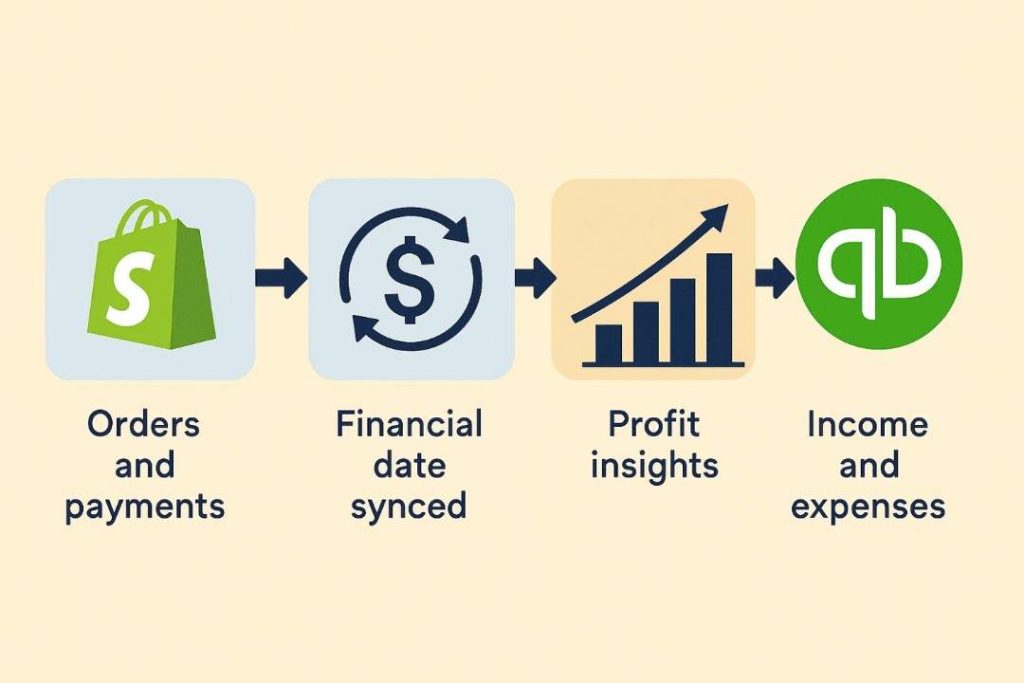
Once integrated, Shopify becomes the data source and QuickBooks becomes the processing engine. The systems communicate via secure APIs, allowing orders, taxes, fees, shipping charges, refunds, and payouts to be imported into QuickBooks automatically. This transforms raw Shopify activity into properly categorized financial records.
Every order is translated into accurate accounting entries. Income, liabilities, fees, and COGS are posted to the proper accounts without manual adjustments. Even Shopify payouts appear in QuickBooks with the correct breakdowns, eliminating guesswork during reconciliation. This level of automation dramatically reduces errors and ensures that the books reflect every detail of each transaction.
A Clearer Profit Formula Powered by Software
Once Shopify and QuickBooks are connected, your financial data becomes truly unified. QuickBooks automatically applies COGS, updates expenses, applies tax rules, and refreshes margins in real time. Instead of manually calculating anything, merchants get an instant view of profitability as soon as they open their dashboard.
This software-driven approach makes it simple to identify where money is being made and where it’s slipping away. Revenue, expenses, and margins become visible at a glance. Many merchants who switch to automated syncing report significantly fewer errors because the system no longer relies on manual data handling.
How Integration Improves Daily Financial Management?
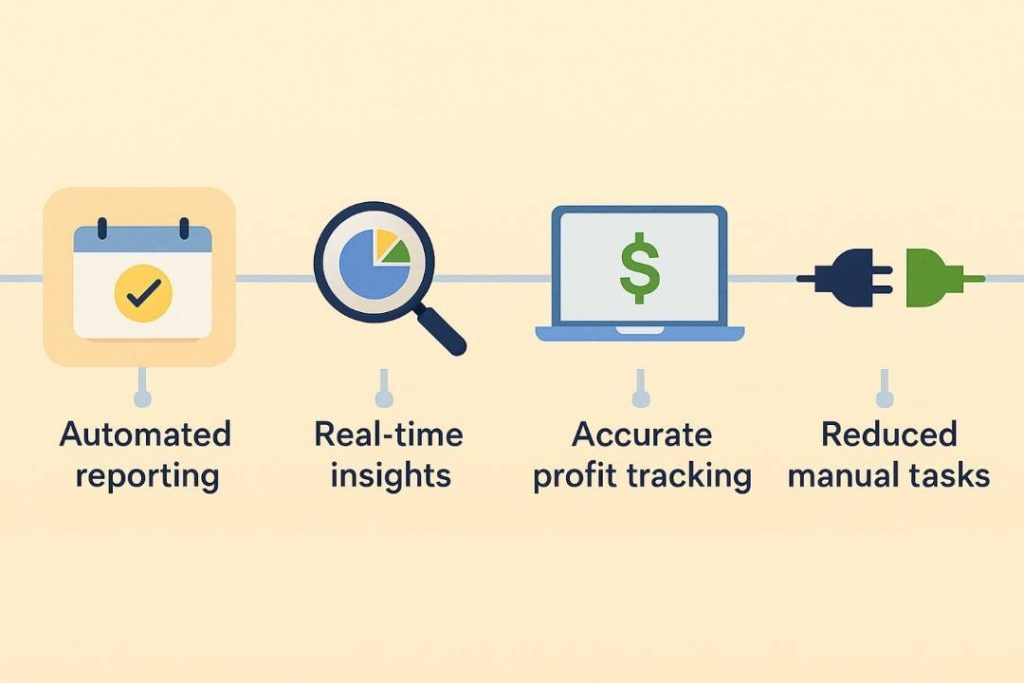
The benefits of integration become apparent the moment it becomes part of your routine. In the morning, you can log into QuickBooks and immediately see updated revenue, profit, expenses, and cost of goods sold, all synced from Shopify without any manual work.
Your bookkeeping becomes cleaner and more accurate. Shopify payouts include the correct fee breakdowns. Refunds sync automatically. Your product costs update consistently. Financial reports like P&L statements, cash flow views, and revenue trend graphs become far more reliable because they are driven entirely by synchronized data.
Overall, your workflow becomes more streamlined, and financial analysis becomes easier and more accurate.
Why Software Integration Is a Long-Term Advantage?
The power of Shopify QuickBooks integration isn’t just in automation; it’s in scalability. As your business grows, having a unified financial infrastructure prevents operational bottlenecks. You no longer need separate systems for sales reporting, expenses, inventory cost tracking, and payouts. Everything updates in one place.
This also improves compliance, audit readiness, forecasting accuracy, and financial planning. Instead of reacting to inconsistent data, you can make decisions based on real-time performance. The integration becomes a foundation your business can continue building on.
Final Thoughts
Profit tracking does not need to be stressful. Once Shopify and QuickBooks are integrated, your financial system becomes automated, organized, and accurate. Your numbers stay consistent, bookkeeping takes less effort, and you gain confidence in your business’s economic health.
By letting the software handle the heavy lifting, merchants can spend more time growing their stores and less time fixing spreadsheets. With both platforms working together, spotting profits becomes as simple as checking your dashboard.