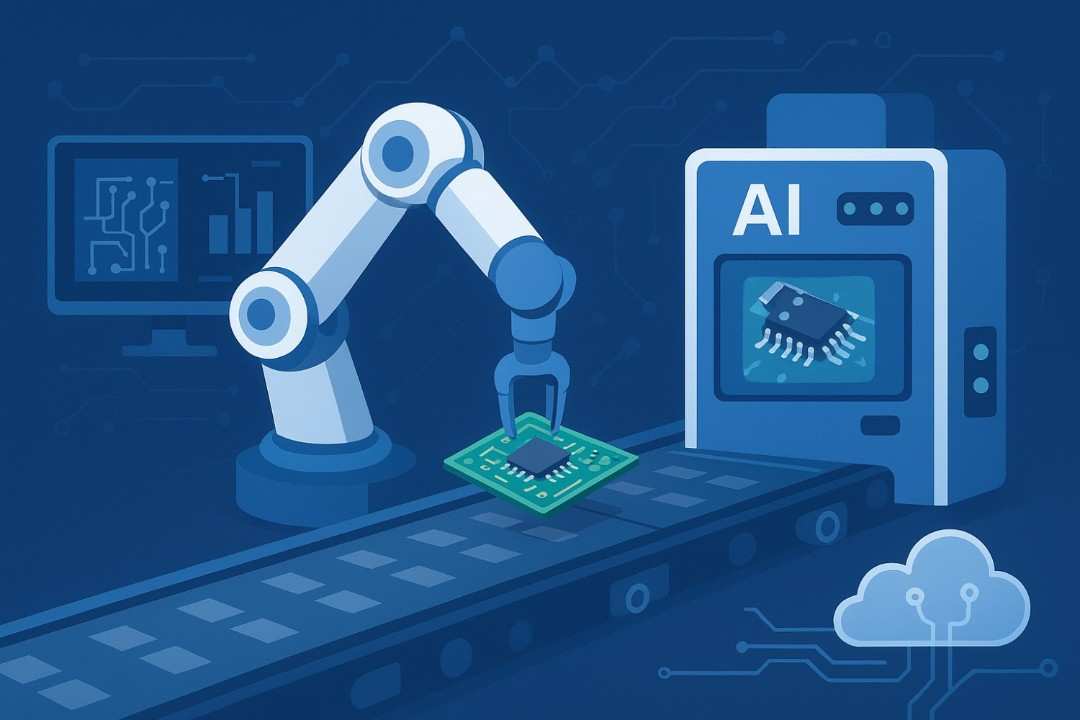
The nature of electronics manufacturing is undergoing fundamental changes. The catalyst for this transformation is not just hardware but also the rapid spread of software. Formerly based on machinery, soldered processes, and component placement, it is now driven by intelligent, advanced automation systems. These systems are connected to AI-enhanced inspection tools and cloud-based workflows. Together, they redefine how every Surface-Mounted Device (SMD) is designed, assembled, and verified.
Where hardware is the physical backbone of SMT production, the actual competitive value in today’s environment derives from software integration. Companies gain this value throughout the manufacturing lifecycle. This includes design simulation, real-time control, data-driven optimization, analytics, and predictive maintenance. As a result, all SMT assembly manufacturers, whether in China or overseas, need software dynamics as a strategic asset. It helps them retain precision and scale into 2025.
Key Takeaways
- The transition in SMD and SMT Assembly emphasizes software integration over traditional hardware methods.
- Modern SMT production relies on AI-driven inspection, MES platforms, and digital twins for efficiency and precision.
- Cloud connectivity and IoT sensors enhance data analytics, optimizing yield and preventing equipment failures.
- Software innovations enable real-time adjustments and fully automated pipelines, reshaping manufacturing practices.
- Investing in advanced software is essential for sustainability and competitiveness in the evolving SMD and SMT Assembly landscape.
Table of Contents
- Software as the Central Intelligence of SMT Production
- AI-Driven Inspection and Predictive Quality Control
- MES Software as the Operational Backbone
- Hardware Enhanced by Intelligent Algorithms
- Cloud, IoT, and Data Analytics Driving the Next Wave of SMT Efficiency
- Digital Twin Simulation for Faster, More Accurate Development
- Why Software Will Continue to Lead SMT Innovation
- Conclusion
Software as the Central Intelligence of SMT Production
The SMT line of today is no longer defined merely by mechanical precision. Instead, it operates as a synchronized digital ecosystem. Software platforms manage thousands of micro-processes simultaneously. These systems coordinate placement equipment, reflow ovens, conveyors, and inspection stations. They create a production environment that adapts dynamically to workload, design changes, and sensor feedback.
Digital Product Lifecycle Management (PLM) systems ensure the manufacturing process begins with accuracy. Before any component reaches the production floor, design files are translated seamlessly from CAD environments. They become machine-readable instructions. Design rule checks validate component sizes and tolerances. Moreover, BOM verification systems eliminate inconsistencies that previously caused delays. This tight alignment between design data and production reality minimizes human error. It ensures each PCB’s digital twin reflects exact assembly conditions.
AI-Driven Inspection and Predictive Quality Control
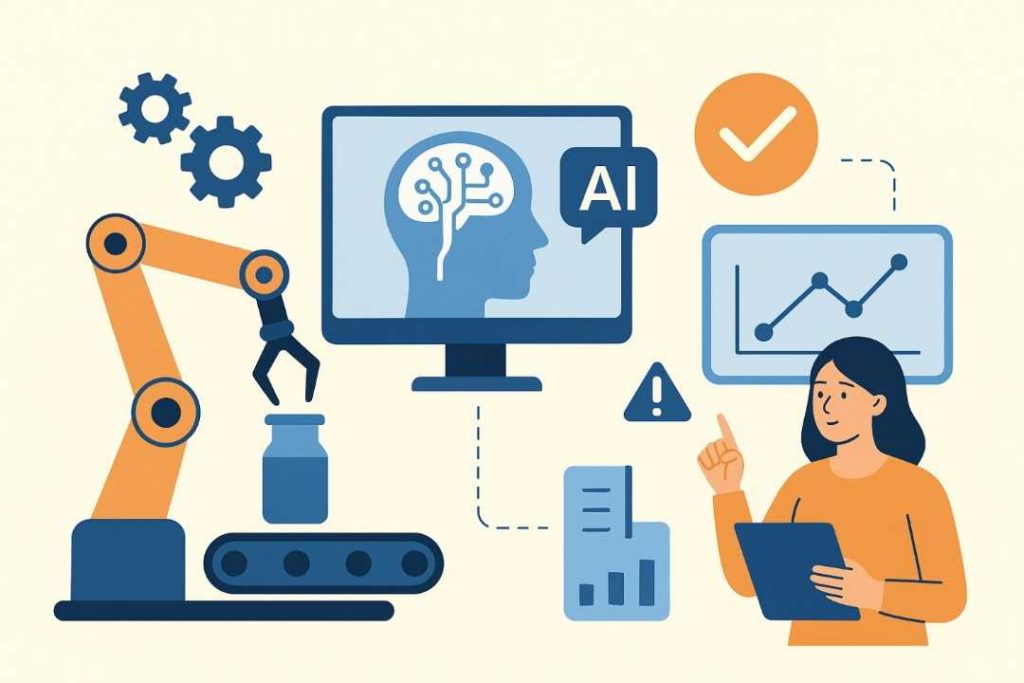
One of the most essential leaps in SMT production has come from AI-enabled optical inspection. Traditional AOI systems could detect surface irregularities but could not interpret subtle patterns or evolving defect signatures. Modern AI models analyze thousands of Surface-Mounted Device placements. They detect misalignment, incorrect solder volume, or micro-defects that technicians would struggle to spot.
These machine-learning systems get better and better as they gather data across production runs. Consequently, they predict defect patterns well before quality concerns arise. This type of real-time corrective understanding also helps factories transition from reactive quality control. They move towards proactive, intelligence-led manufacturing.
MES Software as the Operational Backbone
Modern SMT lines are integrated into a MES. A MES functions as an electronic brain with arms and legs, i.e., machines. Overseeing each machine separately would be time-consuming and inefficient. Therefore, MES platforms consolidate all this into a single digital interface. This interface supervises processes, including job scheduling, material flow, machine availability, operator assignment, tasks to perform, and traceability specifications.
For a high-volume SMT assembly manufacturer in China, MES integration is crucial. It helps meet international compliance standards while maintaining high throughput. Every movement on the production floor is captured, logged, and analyzed. This allows supervisors to identify bottlenecks, intervene in real time, and maintain consistency across entire manufacturing cycles.
Hardware Enhanced by Intelligent Algorithms
Although the SMT-System’s physical capacity is still on the hardware side, its performance is increasingly dominated by software algorithms. Pick-and-place machines use feed-forward motion control, trajectory-optimization models, and feedback to correct placement in real time. As a result, high-speed accuracy is not compromised. These software models enable placement speeds of more than 100,000 components per hour. Such speed is impossible with mechanical upgrades alone.
Reflow ovens, for example, no longer use static temperature curves. Instead, thermally integrated embedded controllers track thermal activity throughout the PCB. They respond quickly, adjusting heating profiles automatically for material thickness, component mass differences, or changes in airflow. This mutable process avoids challenges like overburning, gaping, and cold-joint issues. Previously, these could only be addressed through trial and error.
Closed-loop feedback control is now the norm on leading-edge SMT lines. Feedback is provided for solder paste volume, machine vibration, nozzle quality, and thermal drift. In the event of a deviation, the system automatically recalibrates without pausing for human intervention. This shifts over time to much lower defect rates and more stable productivity.
Cloud, IoT, and Data Analytics Driving the Next Wave of SMT Efficiency
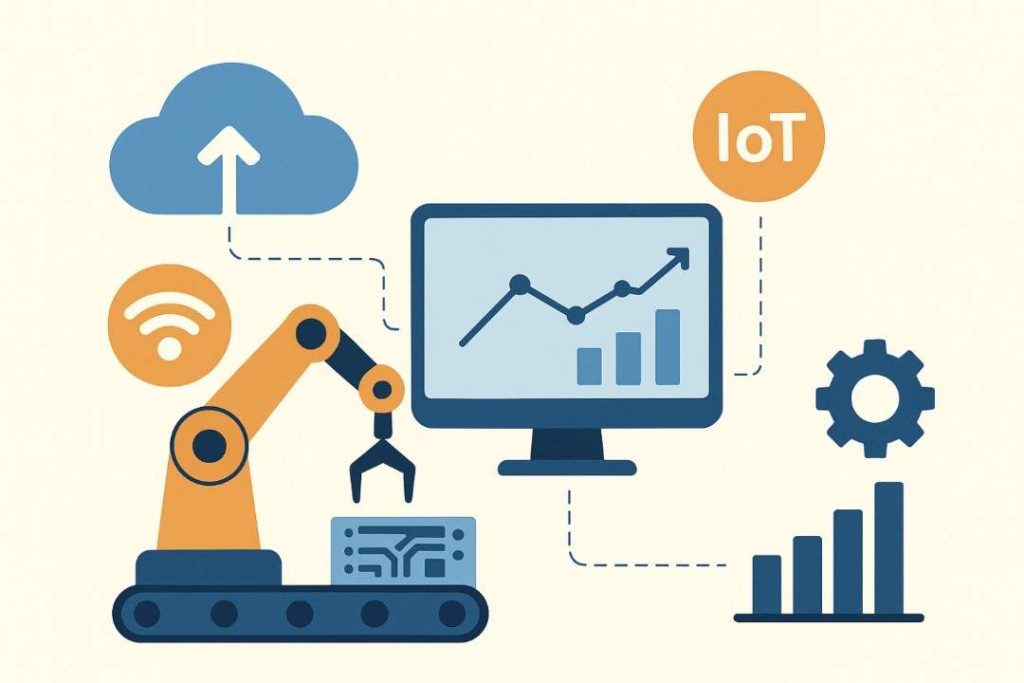
Cloud-connected SMT facilities are redefining how factories operate. Instead of isolated production floors, companies now manage multi-factory ecosystems where data flows seamlessly between lines and locations. Engineers can monitor equipment status, analyze batch performance, and simulate production scenarios remotely.
IoT sensors add another layer of intelligence by tracking vibration signatures, torque levels, humidity variations, and temperature changes. This sensor data feeds into predictive maintenance models that forecast failures before they occur.
Yield optimization has also become intensely data-driven. Every PCB produced generates millions of data points. Advanced analytics engines process this information to detect recurring defect patterns. They suggest reflow adjustments, fine-tune placement strategies, and even advise alternative sourcing options. Especially when component batches show inconsistent behavior.
Digital Twin Simulation for Faster, More Accurate Development
Digital twins are becoming one of the most impactful technologies in electronics manufacturing. Engineers can simulate thermal behavior, solder joint formation, component interactions, and placement paths before building physical prototypes.
For a large-scale SMT assembly manufacturer in China, this drastically reduces trial-and-error cycles. It shortens development timelines and ensures the first physical prototype is as close to production-ready as possible.
Why Software Will Continue to Lead SMT Innovation
Hardware improvements are reaching maturity, while software innovation continues accelerating. The next generation of SMT production will rely heavily on:
- AI systems capable of autonomous systems
- Fully automated design-to-manufacturing pipelines
- Factory scheduling algorithms that adapt in real time
- Cloud-integrated systems enabling global oversight
- Self-adjusting manufacturing lines powered by machine learning
Conclusion
SMD and SMT assembly have transitioned from hardware-centric disciplines into software-orchestrated production environments. AI inspection engines, MES systems, digital twins, cloud analytics, and predictive maintenance tools now form the core of modern manufacturing strategy.
Hardware remains essential, but it is software that ultimately delivers the precision, efficiency, and scalability required for next-generation electronics. Much like an antimalware service process that works quietly in the background to protect system performance, smart manufacturing software ensures stability, accuracy, and consistency on the production floor. For any ambitious SMT assembly manufacturer in China, investing in advanced software is no longer just a competitive advantage. It is now the foundation of sustainable, future-ready manufacturing.