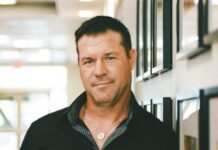
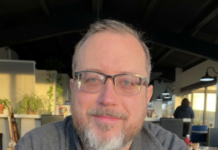
Nick Spina Podcast Transcript
Nick Spina joins host Brian Thomas on The Digital Executive Podcast.
Brian Thomas: Welcome to Coruzant Technologies, Home of The Digital Executive podcast. Do you work in emerging tech, working on something innovative? Maybe an entrepreneur? Apply to be a guest at www.coruzant.com/brand.
Welcome to The Digital Executive. Today’s guest is Nick Spina. Nick Spina is not just another founder in the Cleantech space.
He’s leading a company with the potential to rewrite the future of recycling as the CEO of Denovia. Nick and his team have developed game-changing depolymerization technology that can turn plastic waste back into its chemical building blocks in just minutes. Most people know plastics are a problem, but few understand the science behind why recycling hasn’t solved it.
Nick explains complex issues in a way that’s accessible, inspiring, and hopeful. While also grounding the conversation in real world solutions.
Well, good afternoon, Nick. Welcome to the show.
Nick Spina: Thank you for having me.
Brian Thomas: Absolutely, my friend. I appreciate it. Making the time. You’re an hour apart, you’re in the eastern time zone of Toronto, Canada, that area anyway. I’m in uh, Kansas City. So again, I appreciate you making the time. Nick, if we could, I’m gonna jump right into your first question. Denovia, depolymerization technology, can break plastics back into their chemical building blocks in minutes. What scientific breakthrough made this possible, and how does it differ from traditional recycling methods?
Nick Spina: Fantastic. Yeah, that’s a great question. So, we developed this technology. It, I mean, it’s a technology that has existed for some time. So, the core of it is called metanalysis and. It’s the way that we have spun metanalysis to be able to depolymerize rapidly. So, from what it seems like from all the data we’ve collected we can depolymerize or flash depolymerize in both 30 seconds.
So, it is extremely rapid and. It is something where essentially we break down at a molecular level, the core building blocks of plastic or monomers apart. And then what we do is we purify those monomers and then rebuild them back together again into. New Virgin State plastic, essentially turning plastic waste into a renewable resource, which is absolutely fantastic.
But why this is so exciting is not only is it extremely sustainable, but we are able to help businesses. And the world essentially turned trash into treasure. So you’re able to take something that people typically landfill or incinerate or unfortunately ends up in oceans and we can take that exact plastic and upcycle it again and reuse it.
So, it’s quite remarkable.
Brian Thomas: That’s amazing. Really, really cool. ’cause they say there’s this plastic recycling and you’ve heard all the horror stories out there from not, actually getting recycled to not really done very well and that sort of thing. But I’m not really the engineer scientist behind this stuff, but I think you mentioned depolymerization that processes metanalysis.
You basically break it down at a molecular level, purify it, and then rebuild these particles back into something that’s truly recyclable. And I think that’s amazing. So, I appreciate you sharing that with our audience. And Nick, you’re skilled at breaking down complex science into hopeful, accessible narratives.
How important is storytelling in driving public understanding and industry-wide change around plastics?
Nick Spina: It’s extremely important. I think that simplifying it to make it number one, understandable of what exactly is happening because it the typical method of recycling is something called heat and mold, which is mechanical recycling.
And you, you’re really, it’s exactly as it sounds, you’re heating up a piece of plastic. And molding it into a different shape. And we’re not doing that. We’re getting really down to the molecular level and rebirthing it essentially from its day one state again which number one, it kind of resets the integrity of that piece of waste into something that is brand new again.
So, on a number of different levels, it is it, it is really as good as this sounds.
Brian Thomas: Thank you. What I really liked about that is you take these things again at the science level but you message it, you make this complex science explainable to the average person, and that’s helpful. You know, I’ve got all kinds of people in my audience here, from quantum physicists to technologists to physicians, but I do have a lot of people that just are, want to learn more about technology and science, and I appreciate your message.
And Nick Denova’s process is fast and efficient. How do you ensure that advanced recycling not only works scientifically, but it’s also economically viable for large scale adoption?
Nick Spina: So essentially the chemicals that we use in our process is, um. Like they’re readily available. They, it is something that you can actually reuse almost near 100% of everything that we put into the process.
So, which makes it extremely on a say profitability level you knows a very high margin. You’re able to not having to continuously buy new chemicals, but you can upcycle it or. Use it to sell the output. For example, like one of our chemicals you can turn into like a fertilizer or even some of the, if it’s a mixed plastic that goes into a process say on there’s contaminants, you can actually take some of those contaminants and turn it into biochar.
On top of, uh, our process upcycling the plastic components of it. So, it is extremely on a financial level. Quite exciting on top of being extremely sustainable.
Brian Thomas: Thank you. Really appreciate that. And, traditionally and we’re learning still, I think in this whole recycling process of how to make things better for the environment.
Obviously, your process is a hundred percent effective, making this more sustainable, as you mentioned, less waste, more profitable. But I still think we have a long way to go in this world to do this stuff the right way, but you are definitely pioneering some of the great technology there and leading the way, so I appreciate that.
Thank you. And Nick, you’re welcome. The last question of the day, your team is piloting the ARC demo unit in Vancouver. What have we learned or you learned from real world deployment and how is it shaping your roadmap for commercial rollout?
Nick Spina: It is unbelievable. It is nothing short of remarkable. And the ARC is designed to be a unit that can be shipped around the world, that can operate outdoors, indoors if needed.
But it is a full, uh, full technology built by us. We’re showing the world that we can do what we do as fast as what we do it. On a commercial scale. And, um, so there’s some amazing tests that we’ve done with the arc, with a number of different type of feedstocks going into the process.
But one most importantly, most very exciting is actually getting into textiles because we know how. Textiles are clogging up landfills all over the world with fast fashion. But we have a group that we’re as a partner of ours, they’ve got 200 million pounds of textile polyester waste from the hospitals in Canada.
So, we’re actually. Have successfully depolymerized those polyester textiles down into its core monomers rapidly. So, we’re looking at we’ve also got shredded uh, Nestle plastic water bottles and all that kind of fun stuff that we’re running tests on. So, in terms of all different types of, plastics, we want to kind of put it through our machine and, and find the most optimized chemical balance in there to be able to depolymerize as fast as possible. And so, anyways, extremely exciting result of the arc. And uh, now we’re just working on scaling that up about seven and a half times the size of that for one of our commercial partners.
And then beyond that it will be deploying the technology all over the world.
Brian Thomas: I really love that. Very cool. The arc, it’s, as you said, it’s somewhat portable, I guess. You’re taking it to various places and it’s able to be shipped around the world, but you’re showing the world how this process is done at a commercial scale, which is amazing.
And I liked how you highlighted textiles textile waste is now in your sites to prevent another billion tons of annually of waste that we could certainly recycle and make the world a better place. So I appreciate that. And Nick, it was such a pleasure having you on today, and I look forward to speaking with you real soon.
Nick Spina: Thank you for having me, Brian. Much appreciated.
Brian Thomas: Bye for now.
Nick Spina Podcast Transcript. Listen to the audio on the guest’s Podcast Page.