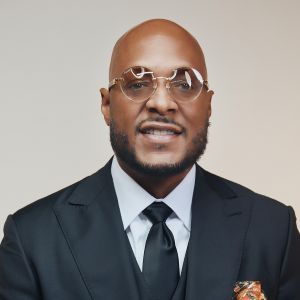
Morris L Parker Podcast Transcript
Morris L Parker joins host Brian Thomas on The Digital Executive Podcast.
Brian Thomas: Welcome to Coruzant Technologies. Home of The Digital Executive podcast.
Do you work in emerging tech, working on something innovative? Maybe an entrepreneur? Apply to be a guest at www.coruzant.com/brand.
Welcome to The Digital Executive. Today’s guest is Dr. Morris L. Parker. Dr. Morris L. Parker is an entrepreneur, author, and founder known for helping professionals elevate their standards, sharpen their systems, and deliver truly premium experiences.
In his book, the CMO Mindset, Dr. Parker shares how discipline, structure, and accountability transformed his own journey, and how those same principles can help others lead with confidence. Win in competitive markets and build a reputation people trust. As the founder of True Concierge and Luxury Transportation Academy, he trains operators and service professionals to think and operate at a VIP level, focusing on professionalism, client experience, and repeatable execution that earns referrals and long-term loyalty.
Dr. Parker is passionate about turning talent into consistency, helping teams create clear processes. Communicate with excellence and show up as the obvious choice for high-end clients. Well, good afternoon, Morris. Welcome to the show.
Morris L Parker: Hey, afternoon. Thanks for inviting me.
Brian Thomas: Absolutely, my friend. I appreciate it, and especially you taking the time there in Memphis, if I’m correct, Tennessee and I’m in Kansas City, so we’re just, gosh, an hour apart at most. And I always talk about where people are kinda located when I’m doing this, so I appreciate you making the time, brother. And Morris, I’m gonna jump right into your first question. You help professionals elevate from talented to consistently elite. Why do you so many capable people struggle to deliver premium experiences reliably? And how do standards fix that gap?
Morris L Parker: Well, most people think they struggle because of lack of talent. But the truth is, they struggle because they’re relying, purely on talent. Instead of combining talent with hard work, correct data and strong systems talent is more emotional.
Systems they get results. And when you, you ask about standards. Standards are like kind of the foundation to, whatever industry or, whatever profession you’re in, there’s a standard of doing that job or providing that service. And, most people, they, sometimes they skip over that lesson of, actually understanding what the standard of excellence is.
What the standard is for your particular industry or service. So, those are some things that, you can’t skip over. And sometimes that’s, that, that makes a difference because, you’re not really conducting the business in the way that it should be conducted.
You’re doing it the way that you think it should be done, not in the standard that it should be done or presented. And so, I think that, a way of doing that of fixing that gap is one getting the correct training of standards and processes doing your due diligence to inform yourself.
And then two, getting the correct systems in place that can, help you be more consistent and operate, at a certain level under pressure. I think those are, important things that can help you close the gap or remove a gap from and, and remove guesswork in your business.
Brian Thomas: Thank you so much. Really appreciate that. And just highlight a few things, Morris, and, and we do, we’ve seen some really talented people or people that have been really tenured in their space. We think that’s all it is. And then when that person’s out or leaves, it puts a big wrench in the whole system there.
But. Again, we can’t get caught up on just that talent. We’ve gotta really set that, have a structured, trained, presented standard no matter what industry or vertical you’re in, so that you have a consistent outcome, better customer experience. And I think that’s so important. So thank you for your insights on that.
And Morris, in your book, the CMO Mindset, you emphasized discipline, structure, and accountability. What was the turning point in your own journey that made those principles non-negotiable?
Morris L Parker: I think a turning point for me was when, coming around the block several times and you get to a point where you know your efforts.
You, you notice your efforts, but you’re, you’re not getting the results that you’re looking for. And as you keep coming around that block, something different has to happen in order to get those result results to change. So, I just hit a moment where effort wasn’t enough.
Good intentions weren’t enough. And, I could see clearly that without structure and correct systems and knowing the standards eventually, luck, runs out. You end up paying in stress, inconsistency, missed opportunity lost reputation and, lost income and even worse, lost time.
So I, I learned, to, I learned, something stuck, stuck with me that, motivation is just not enough. You, you gotta have systems a foundation of a certain standard to run your business or organization effectively. And that’s just kind of, just the bottom line.
That’s where the rubber meets the road. It’s not a guessing game to certain points or certain goals that you wanna accomplish. You have to one understand, what is the standard, and you know what systems are in place to help you accomplish those goals.
It’s almost like. Having a zero turn lawnmower, if you’re gonna start a, a, a lawn care company, you want to make sure that you got the best equipment, the best systems in place to capture your audience or to present your product. But, overall you want to, put your efforts and your time into establishing the best systems to be able to.
Operate your business with the right processes and clarity of what’s going on inside of your business.
Brian Thomas: Thank you very much. And you talked about, kind of going around the block, right? With your years of experience, you found that effort, luck, motivation, and good intentions just weren’t enough.
But the message I took away here, Morris, is that without a good documented standards that are trained and communicated on, all those other things don’t matter because at, at the end of the day, you gotta have those, again, consistent outcomes and that that great customer experience on a regular basis in order to continue to thrive and succeed and grow.
So, I appreciate that. Morris, you often say success isn’t accidental. It’s built through systems and habits. What are the first systems leaders should implement if they want calm control and excellence under pressure.
Morris L Parker: Daily non-negotiable. And this is for, yourself as a leader.
Whatever position that you play along that chain is, daily non-negotiables a system of discipline establishing knowing your numbers. Something really important is, is knowing your numbers, with, with your daily non-negotiables, inside of that you may have a daily goal for particular revenue or sales or new customers or pushups.
Or, you have to have daily non-negotiables and, and things that you can’t negotiate on. These things have to happen in order to accomplish a goal that we’ve set. So, that’s one of the first ones. It’s just, establishing that, that core discipline of, daily non-negotiables a clear scoreboard.
A clear scoreboard could mean a clear plan. Outline. We have to have a goal. We have to measure that out. And then we kind of reverse engineer and figure out what is the roadmap to get there. And so, we have to have a clear, clear scoreboard a, a standard operating playbook a playbook a playbook to, to attack, so that we can, win or accomplish the goals that, that’s on our scoreboard. We gotta have a operating playbook, some type of manual something that gives us an attack strategy to those different things. And then good commun, good communication. Paying attention to the results from our prospecting our efforts and then being able to put that into.
Some type of after action review plan, and then, rinse and repeat with our the things we’ve learned from that process. Then we, we repeat that with those those enhancements, we tighten up our program. And so that’s, that’s the way I would approach that’s what I, that’s those are the first steps I would make.
Brian Thomas: Thank you. I appreciate that. And just to highlight some of the things you talked about, obviously we need, we, it’s non-negotiables, right? We know what those are. A lot of it’s related to discipline, but having a system of discipline is what you said is really your foundation. All those are the fundamentals you need every day.
Having a dashboard, a roadmap, knowing your numbers, where you stand, what those goals are. Then you need that day-to-day tactical SOP playbook that will get you through. And as you go and grow and, and make changes, you need to look at that continual improvement as you talked about. So I really appreciate that.
And Morris is the last question of the day. As we look ahead in the future, as competition increases and expectations rise, what will separate premium brands? From everyone else over the next decade, especially in service driven industries.
Morris L Parker: I mean, the winners won’t be, the ones with just nice branding or competitive pricing.
Premium brands will be separated by trust at scale. Three things that that’ll define, consistency, any, anyone can wow once or twice. Premium is delivering excellence repeatedly, consistently over volume, skill, under pressure stress, mishaps, disrupts proactive communication, and, and certainty.
So, these are, some three things that, you know that can define, being proactive with communication. With a customer that’s, that’s premium. That, that, great communication is such an important thing in anything you do. And I, and I, and I stress that a lot, even in my academy good communication is a part of our program.
And, and this is something that, we’re, we’re, we’re carrying around precious cargo. And so, with those type of people and the things that you have going on, having good communication just sometimes solves a lot. So consistency, proactive communication. Customers are paying for pre for predictability, they want updates before people ask solutions.
Before problems grow, in confidence that you already have a, a, a secondary plan or worse, worst case scenario to, to, to handle things, systems that protect the experience. As, as, as expectations rise, the brands that that win will have tighter training, stronger standards real accountability and leadership that doesn’t tolerate close enough.
People who. Are really proactive in, in making sure that we make sure that this experience is always a premium one. The future belongs to brands that can deliver certainty, professionalism, and control every single time.
Brian Thomas: Thank you very much, sir. I appreciate that. And having that proactive approach you talked about. Or have and having that plan B as well. So, the outcome is consistent, but at the end of the day, you talked about the premium brands will always deliver excellence, consistency and communication, which provides that great customer experience. And I think that’s so important and that’s certainly a lesson for my audience and I today.
So, I appreciate that. And Morris, it was such a pleasure having you on today and I look forward to speaking with you real soon.
Morris L Parker: Brian, listen man pleasure was all mine. I appreciate, you inviting me on and I look forward to talking with you again sometime in the future.
Brian Thomas: Bye for now.
Morris L Parker Podcast Transcript. Listen to the audio on the guest’s Podcast Page.