Brad Carson Podcast Transcript
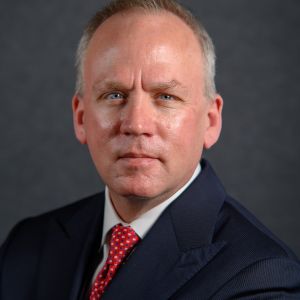
Brad Carson joins host Brian Thomas on The Digital Executive Podcast.
Brian Thomas: Welcome to Coruzant Technologies, home of The Digital Executive podcast.
Do you work in emerging tech, working on something innovative? Maybe an entrepreneur? Apply to be a guest at www.coruzant.com/brand.
Welcome to The Digital Executive. Today’s guest is Brad Carson. Brad Carson is president of Americans for Responsible Innovation or ARI, an organization that advocates for reasonable guardrails around frontier technologies like artificial intelligence and synthetic biology.
From 2021 to 2025, Brad was president of the University of Tulsa where he grew enrollment, made TU home to the most national merit scholars per capita of any university in the nation, and inaugurated new programs in the Great books and in engineering. Before coming to TU, Brad Carson was a professor at the University of Virginia.
Well, good afternoon, Brad. Welcome to the show.
Brad Carson: Thanks, Brian.
Brian Thomas: Well, I appreciate you jumping on. I know you had to navigate a time zone today and Washington, DC to Kansas City, and I appreciate that. And I know Kansas City was an old stomping ground of yours as well, so I appreciate that. I don’t always get to talk to somebody from Kansas City, so thank you.
Brad, let’s jump right into your first question. You served at the highest levels of the Department of Defense, including acting under Secretary for personnel and readiness. How does your national security experience shape your views on the risks and strategic implications of advanced AI?
Brad Carson: You know, I think national security is one of the great applications for AI.
The military is obsessed with AI, and so I think my background and understanding of how defense policy is made as well as my expertise in AI. It makes me almost uniquely positioned to offer some insights into how this new technology can affect us defense policy.
Brian Thomas: With your background in the Department of Defense and again, thank you for your service there.
I really appreciate that you do have some insights as far as that goes, but also, you’ve got a lot of experience and tenure in the emerging tech and AI space, so I appreciate your contributions. And Brad, switching to the next question. You lead Americans for Responsible Innovation, advocating for guardrails around frontier technologies like AI and synthetic biology.
What motivated you to launch ARI and what do responsible guardrails actually look like in practice?
Brad Carson: What motivated me was seeing at the Department of Defense and then when I was in higher education because I just left a job as president of the University of Tulsa, how these emerging technologies are really going to transform our world, maybe transform it in ways that are unimaginable to most people today.
And so, I wanted to be in the fight to help shape these technologies to make sure they are for the benefit of all of us because we’ve seen over the last 30 years technologies, like say social media we were increasingly skeptical whether they’re actually working for all of us, whether they’re even net positive, especially maybe for younger people who find themselves on social media at the expense of their own educational or personal development.
So, I really wanted to get involved to make sure this technology, which is so powerful, can be shaped. Constructively and really help us all. So that’s really why I got involved in it. And reasonable guardrails around this involve things like making sure that the Frontier Labs, companies like Google, Anthropic open AI, that they’re transparent about what they’re doing, that if it can produce child sexual abuse material, which many times they can, right?
That they’re testing for that and trying to eliminate that, if it can coach children into self-harm. And now we have an open AI. Five wrongful death suits about families whose children were led to suicide. They claim because of their interaction with chat GPT, that that’s, that those families are protected from that.
If terrorists can find their skills improving to make biological or chemical weapons or high explosives that kind of capabilities are tested for and screened out ahead of time, those are examples of reasonable guardrails.
Brian Thomas: Thank you. And we talk a lot about that on the podcast here about the guardrails.
There’s I think there’s not enough in the capitalistic west of the world, it’s leapfrog, which company can be the first out there to get the technology out. And I think we’re going a little bit too fast. I love to embrace the technology, but as you stated, there’s a lot of bad stuff that AI can do, and we need to have these guardrails in place, and I appreciate your interest and enthusiasm for getting into this.
Frontier technology like AI and synthetic biology as well, and Brad AI and synthetic biology are moving so quickly that traditional regulatory frameworks often lag years behind. What new policy approaches or institutional capabilities does America need to keep pace?
Brad Carson: I think we need a couple of things.
We need to have the capability in government of hiring some of the best engineers in the world and paying them accordingly because the opportunities to work in synthetic biology in ai, well you can make a fortune there and there’s not that many people who could even do it. So, if the government wants to have the people who can regulate the industry, you have to be able to hire them.
So that’s a big part of it, is more flexible personnel systems to bring in these kind of folks who, who are smart and capable and technically adept. At the other side, I think we have to think how regulation’s going to be done using maybe market mechanisms, the ability of insurance companies to help regulate the industry through their requirements.
Things that are more flexible, that move more quickly, that are actually from the private sector, but can have the effect of, of enforcing the public good on this question. So, I do think we have to, in the case of these rapidly emerging technologies, rethink how we do business a bit.
Brian Thomas: Thank you. I appreciate that.
And you’re absolutely right. The government needs to have this capability of hire that best talent not just, locally maybe, but maybe even in the world. Pay them that competitive salary. And looking to the private sector sometimes is a good thing. And I think the government can learn some things in that space as well.
So, I appreciate that. And Brad, the last question of the day, as we look ahead, what should policymakers, technologists, and the public be preparing for in the next decade of Frontier Technology? And what role do you believe organizations like ARI should play in shaping that future?
Brad Carson: I think the broader public across the globe should be prepared for the most transformative technology that we’ve seen in centuries, if not in human history.
A technology that promises to automate all cognitive labor. And if that does happen, and this is the stated ambition of the frontier AI labs to, to basically create an AI that can do everything a human can do is going to only affect our jobs, of course. It’s going to affect the entire social contract.
What does it mean to be a citizen? What does democracy look like when the bulk of the people can’t find meaningful work? What’s a human life when it’s separated from the work that we do each day? I think these are really fundamental questions that we haven’t thought about for centuries, if not millennia.
And they’re going to be presented to us by AI, so I think it’s gonna be a remarkable time of incredible flux, extraordinary danger. With, ARI, the group I lead wants to do is to help lead us in some way to a better future. There’s a lot of paths forward. Some of them lead into a world where we’re healthier, we’re wealthier, and we’re better educated.
We find more joy in life, but some of them are quite dystopian as well, and we want to make sure that we take those better paths.
Brian Thomas: Thank you. Appreciate your insights. Obviously, I think, and I would agree with you, you talked about in this area. It’s probably one of the most technological advancements in the history of mankind, and I think we’re on the, again, in the cusp of doing something really great.
Just we I truly believe we need more guardrails so we can really make. Life a better place on this planet and not so much a race to who’s first. So, I really appreciate your insights and Brad, it was such a pleasure having you on today, and I look forward to speaking with you real soon.
Brad Carson: Brian, thanks so much for having me on the show.
Brian Thomas: Bye for now.
Brad Carson Podcast Transcript. Listen to the audio on the guest’s Podcast Page.