
Companies are expected to produce goods faster, more accurately, and for less money as supply chains grow. In this case, a warehouse management system is very important. It is responsible for bringing structure, clarity, and control to your warehouse operations. The system helps companies stay competitive in markets like Canada and transportation hubs like Toronto.
Table of contents
What Is Warehouse Management?
Warehouse management means making sure that everything that happens inside it runs smoothly, from receiving goods to storing, tracking, picking, and shipping them.
It is an important part of the supply chain because it makes sure that products get from sellers to customers quickly and easily. Businesses often have problems with delays, mismatched supplies, and rising costs when they don’t have a good management system in the warehouse.
What Is a Warehouse Management System (WMS)?
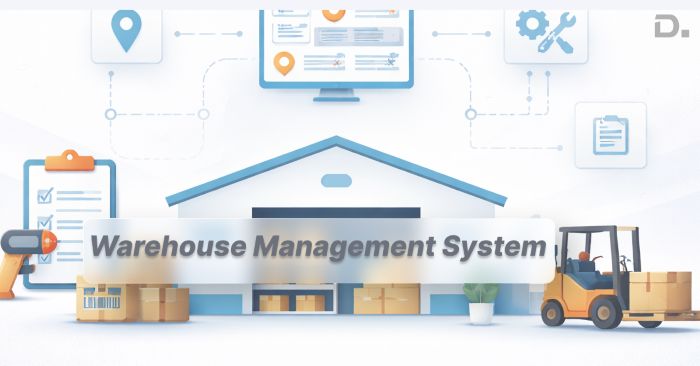
A warehouse management system is a piece of software that helps you run and improve your warehouse processes in real time. As a primary system, it keeps track of supplies, directs workflows, and makes it easier to fill orders.
It not only keeps things under control but also helps businesses make better use of room, cut down on mistakes, and boost output. WMS and ERP systems are often linked together in modern settings.
Dynamics 365 Business Central and Dynamics 365 Supply Chain are some of the solutions in Microsoft Dynamics 365 that offer tightly integrated warehouse options for companies that are growing.
How Does a WMS Work?
A warehouse management system works throughout the whole span of a warehouse.
When the goods come, the system keeps track of them and checks them against the purchase orders. Then, it chooses the best places to store things based on logic, like how often they are needed or the type of goods. As orders come in, the WMS figures out the best ways to pick them, which saves time and effort. Lastly, it makes sure that the packing, labelling, and shipping are done correctly during shipping.
Modern supply chain WMS software and advanced tools like D365 Finance and Operations handle this entire process so that people don’t have to do as much of it by hand.
Key Features of a Warehouse Management System
A strong warehouse management system is built around a few core capabilities:
- Inventory tracking: Real-time visibility of stock using barcodes or RFID, ensuring accurate inventory levels and fewer discrepancies.
- Order management: Streamlined order processing with optimized picking, packing, and fulfillment workflows.
- Labour management: Tracks workforce performance, assigns tasks efficiently, and improves overall productivity.
- Reporting & analytics: Provides actionable insights, real-time dashboards, and data for better decision-making.
These features are commonly embedded within platforms like Dynamics 365 Supply Chain and Business Central, especially for businesses expanding across Canadian markets.
Types of Warehouse Management Systems
It’s important to know the different kinds of warehouse management systems because each one meets different business needs:
Standalone WMS
A stand-alone machine is only used for warehouse tasks. It works for businesses that only need basic features and don’t need to connect it to other systems in a deep way.
Cloud-Based WMS
This kind is stored in the cloud, so anyone can view it from anywhere. It can be expanded and has lower start-up costs, making it perfect for companies that want to be flexible and get started quickly.
ERP-Integrated WMS
An integrated ERP system has a warehouse management system that is built right in. This group includes solutions like Dynamics 365 Business Central that make it easy for data to move between operations, banking, and inventory.
SCM-Based WMS
These are made for complicated processes and are part of bigger supply chain suites. Tools like D365 Supply Chain offer advanced features like planning for demand, automation, and seeing the whole process from start to finish.
Benefits of Using a WMS
Implementing a warehouse management system, integrated with Dynamics 365 Finance, delivers clear operational and financial benefits:
- Efficiency: It speeds up order handling and makes operations run more smoothly by automating processes and cutting down on manual work.
- Accuracy: Keeps track of supplies and fulfills orders more accurately, which makes customers happier.
- Cost reduction: Makes the best use of workers, cuts down on waste, and lowers the long-term costs of keeping goods.
- Scalability: This helps a business grow by letting it handle more customers and spread out to more places.
With the rise of the AI warehouse, these benefits tend to get better. At the moment, AI-powered warehouses can predict what will happen and do most of the crucial things automatically.
What’s Next for Warehouse Management
AI, robotics, and real-time data are shaping the future of warehouse management. Warehouses are getting better, more connected, and able to do more on their own.
AI and advanced analytics are already being used in warehouse operations by platforms like Microsoft Dynamics 365, which helps businesses build supply lines that are both flexible and reliable.
Conclusion
These days, a warehouse management system is more than just a useful tool for running a business; it’s an important part of modern supply lines. It makes things faster and more accurate, and it gives businesses the ability to grow in competitive areas like Canada.
Solutions like Dynamics 365 Business Central, D365 Finance and Operations, and Dynamics 365 Supply Chain can make a big difference in how well warehouses work for companies in and around Toronto.
Working with partners with a lot of experience, like Dynamics Square Canada, will make sure that your warehouse management system is set up correctly and in line with your long-term business goals.