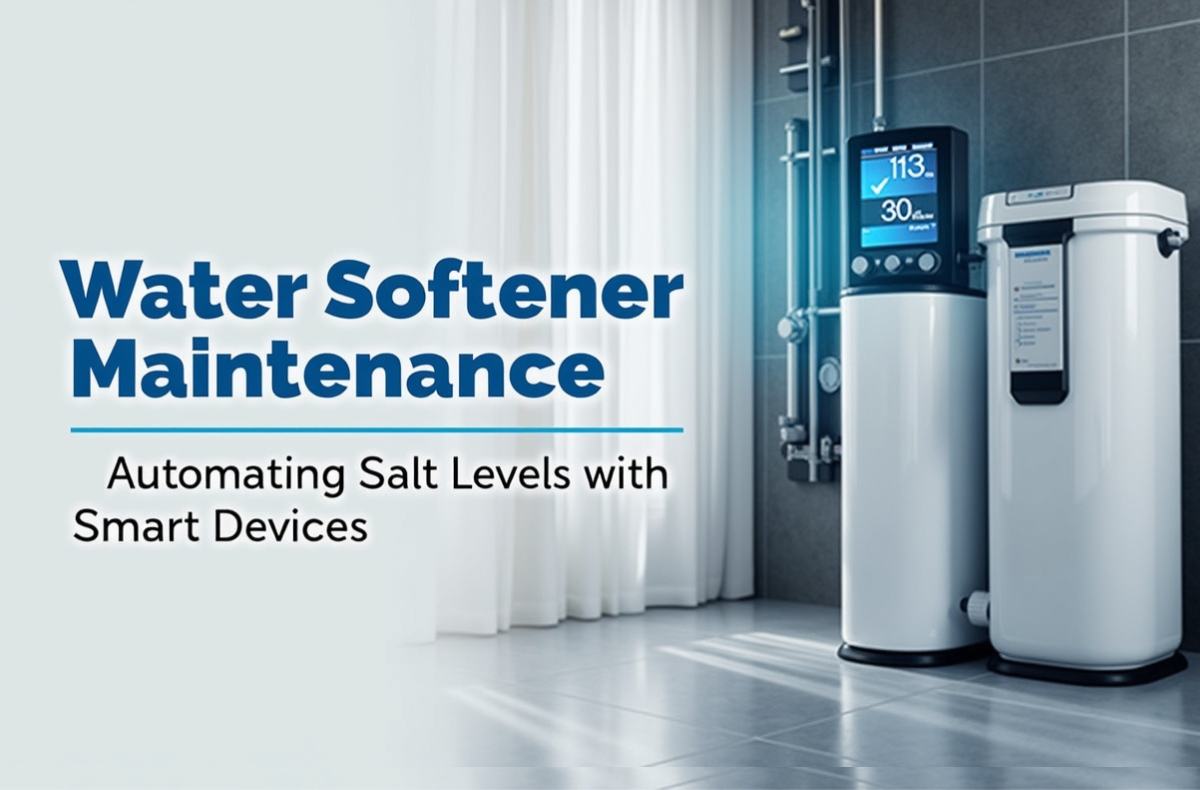
For years, water softener maintenance has been a frustrating cycle of guessing salt levels and hauling heavy bags, a necessary chore, but one prone to human error that can jeopardize your plumbing, piping, and appliances. In the modern era of smart home technology, manual checks have become obsolete. A new generation of smart water softener devices is emerging to completely automate salt monitoring, optimized dosing, and even ordering salt for delivery directly to your door.
This breakthrough technology is transforming a cumbersome chore into a seamless, hands-off process. If you are looking to protect your water heater and major appliances, conserve water, and permanently end the costly “salt guessing game,” this essential guide will show you how to upgrade your existing system with the latest smart devices to achieve truly set-it-and-forget-it automation.
Key Takeaways
- Smart water softener maintenance automates salt monitoring and ordering, reducing human error and appliance degradation.
- Switching to smart solutions extends appliance lifespan and saves homeowners thousands in repairs by ensuring consistent soft water.
- Smart devices provide real-time alerts and insights, helping detect leaks and prevent hard-water issues before they escalate.
- While smart systems don’t automatically add salt, they provide monitoring and alerts to optimize maintenance schedules.
- Investing in smart technology for water softener maintenance leads to significant long-term savings and peace of mind.
Table of Contents
- Why Smart Water Softener Maintenance Matters?
- How Smart Water Softener Devices Automate Maintenance?
- How to Choose Between Integrated and Add-On Smart Systems?
- Understanding Installation, Compatibility, and Local Service
- How Smart Monitoring Improves the Full Maintenance Schedule?
- The Real Benefits and Practical Limits of Smart Softeners
- Conclusion
- FAQs
Why Smart Water Softener Maintenance Matters?
If you own a water softener, you know the struggle is real. You are constantly worried about checking the salt. If the salt runs too low, your entire system stops working. Then, hard water rushes through your home, attacking your expensive appliances.
The Hidden Financial Cost of Hard Water
Hard water scale is a serious, systemic threat. It does not just leave spots on your shower doors. It actively degrades the expensive machinery that uses water.
Consider your water heater. It takes the biggest hit from mineral buildup and corrosion. Data from the Industry Business Home Safety (IBHS) suggests that 75% of water heaters fail prematurely due to this issue, often by year 12. When that happens, you are looking at a huge expense. Replacing a water heater damaged by hard water typically costs between $1,500 and $3,000.
Ignoring consistent water softener maintenance leads to expensive problems beyond appliances. Mineral buildup weakens pipes over time, causing small leaks to become major problems. Plumbing failures caused by hard water can result in claim costs ranging from $1,300 to $6,000 per incident.
Proactive Protection Saves Money
Switching to smart automation changes everything. You shift Water Softener Maintenance Cost from reactive repairs to proactive protection. When the system ensures you always have soft water, it extends the lifespan of your major appliances by 5 to 10 years. One analysis showed that soft water can help homeowners avoid more than $15,600 in potential appliance repairs and replacements over a decade.
Smart automation is the best solution for Water Softener System Maintenance because it provides constant, unseen vigilance.
Preventative Maintenance through Digital Insight
Smart devices offer crucial insight beyond simple low-salt alerts. They monitor water flow 24/7. Specialized flow sensors can track gallons per minute (GPM) in your main water line.
This continuous tracking is key to avoiding hidden disasters. If the flow sensor detects constant, minute water movement, say 0.1 GPM, late at night when no one is using water, it alerts you immediately. This flow pattern signals a potential slow leak in a toilet, a pipe, or an appliance. This moves your system from simply conditioning water to providing home plumbing security. This proactive detection is the most valuable part of Preventive Maintenance to Avoid Water Softener Leaks.
How Smart Water Softener Devices Automate Maintenance?
The old way of doing water softener maintenance meant lifting a heavy lid and sticking a hand or a broom handle into the brine tank. You had to guess the salt level. Smart devices completely replace this manual check with digital precision.
Precision Monitoring Improves Efficiency
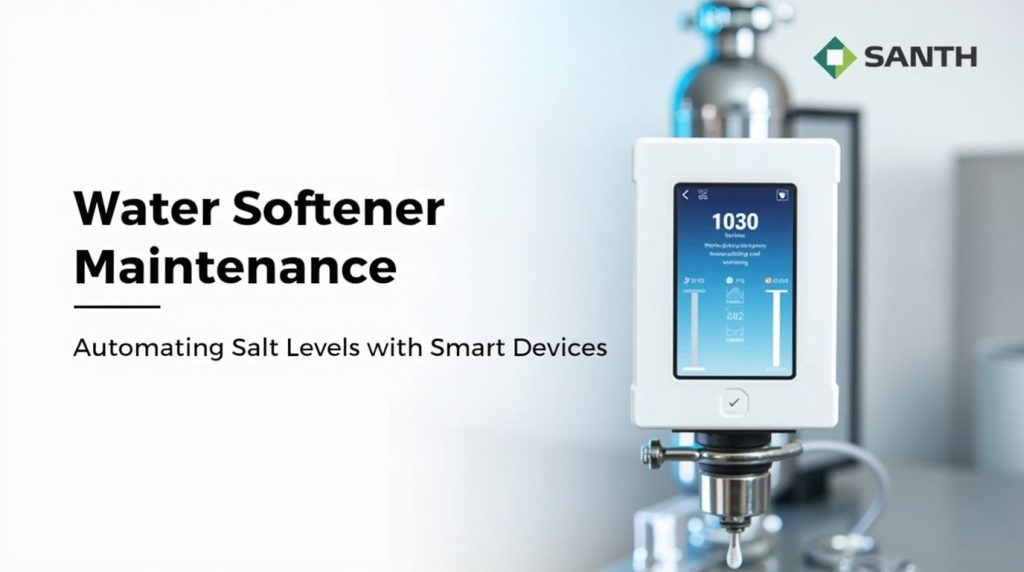
Smart systems use sensors to constantly monitor the salt level. They transmit this data via Wi-Fi or Bluetooth. You can then check the status remotely via a smartphone app, such as the Culligan Connect App or the Kinetico App.
But the true benefit of modern water softener maintenance is not just checking the level. It’s using that data for efficiency. Traditional systems regenerated (cleaned the resin beads) based on a fixed timer, wasting salt and water. Smart systems track your actual water usage and changes in water hardness in real time. They then regenerate only when needed, using an optimized process called proportional brining. This precise optimization enables some high-efficiency systems to achieve operational cost savings of up to 46% in salt, water, and electricity.
When we talk about proper Maintenance of Water Softener components, we must ensure the sensors are reliable.
Why Do Standard Sensors Corrode?
The brine tank environment is extremely harsh. It is a high-salinity, high-humidity space that is highly corrosive.
A homeowner might try to build a cheap sensor using common DIY components. For instance, many DIY projects suggest using ultrasonic sensors. These sensors use sound waves to measure distance. However, when these basic sensors are exposed to the corrosive salt environment, they quickly stop working. Salt particles cling to the exposed metal parts. This causes the sensor board to corrode heavily, resulting in static, unusable readings within months.
Professional add-on sensors are designed to solve this corrosion challenge. Devices like the EZsalt Sensor use non-contact optical or laser technology. These specialized components are sealed and mounted to the underside of the tank lid, away from direct contact with the brine, ensuring reliable, long-term performance.
How to Choose Between Integrated and Add-On Smart Systems?
The market offers two main paths to automation: replacing your system entirely or simply upgrading your existing one.
Integrated Systems Offer Maximum Efficiency
Integrated systems have the smart technology built directly into the control valve and hardware from the factory. They offer the deepest and most advanced integration of proportional brining, remote diagnostics, and data logging.
- Culligan Water Softener Maintenance systems integrate the iQua™ app. This app gives you real-time diagnostics and even allows your dealer to troubleshoot remotely (with your permission).
- Kinetico Water Softener Maintenance utilizes the Kinex™ Salt Monitoring System. This system provides automatic notifications when it’s time to add salt. You can check the status anytime using the Kinetico App.
- RainSoft Water Softener Maintenance offers the Remind® mobile app. This tool monitors salt levels and water usage, and it lets you schedule service appointments directly from your device.
These systems deliver the most hands-off experience.
Retrofit Sensors Provide an Affordable Upgrade
If your softener is still working well, you do not need to buy a new one to get smart features. Retrofit sensors allow you to upgrade without full replacement, making Maintenance on the Water Softener easy and affordable.
- Pentair Connected Salt Level Sensor: This is a universal clip-on device. It connects via Bluetooth and Wi-Fi to the Pentair Home app. It sends push notifications and emails when salt levels are low. These DIY sensors are very accessible, often priced between $71 and $99.
- EZsalt Sensor: This sensor is designed for fast DIY installation, often under five minutes. It uses advanced software to integrate with local salt providers, automating the ordering and delivery process when you are running low.
Understanding Installation, Compatibility, and Local Service
Achieving Hands-Off Operation
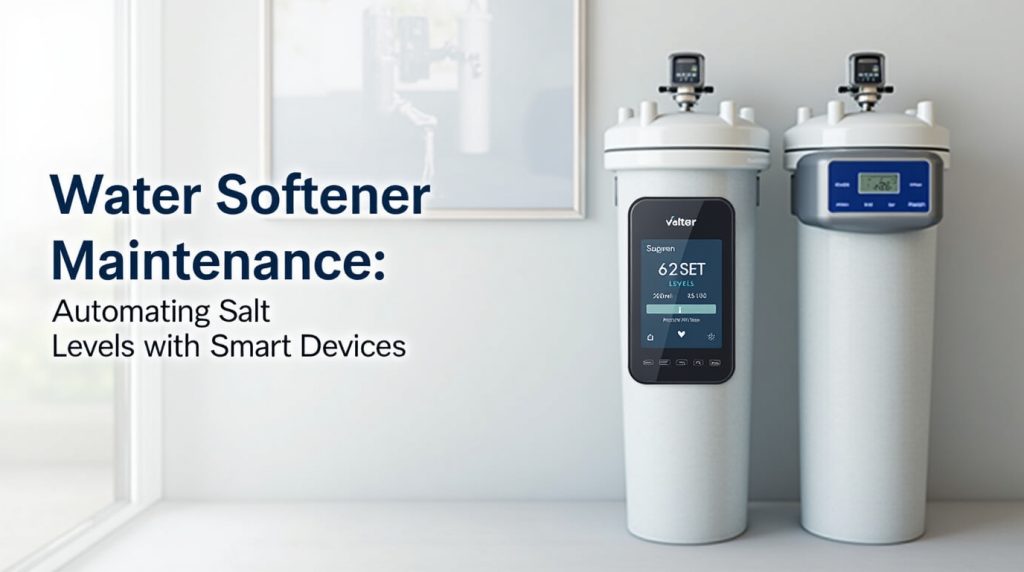
The goal of smart devices is to enable truly hands-off water-softener maintenance. Installation is designed to be simple for the average homeowner. For devices like the Pentair sensor, the process involves three simple steps: clip the sensor into the brine tank, connect it to the app via Wi-Fi, and perform a quick calibration.
Because most retrofit sensors are universal, fitting most side-by-side and cabinet models, they offer easy modernization for the vast majority of existing units.
Localized Service and Smart Alerts
Even with automated monitoring, expert professional inspections are still required once a year to ensure components are clean and functioning. This is where smart technology enhances local support.
Service providers offer Water Softener Maintenance Service in specific regions with challenging water hardness. For example, local experts serve communities across Arizona, including those needing Water Softener Maintenance Tempe, Water Softener Maintenance Queen Creek, and Water Softener Maintenance Apache Junction.
Automation dramatically improves the effectiveness of these local service calls. When a dealer can access system diagnostics remotely, they know the issue before they arrive. They can proactively contact you if an issue is detected, schedule necessary service, or even remotely bypass the system if there is a severe problem. This makes professional water softener maintenance faster and more efficient for everyone involved.
Scaling Up Commercial Automation
Smart automation is crucial not just for homes, but for businesses too. Commercial Water Softener Maintenance relies on advanced controllers. These large systems often feature sophisticated data-logging and connectivity to Building Automation Systems (BAS).
On a commercial scale, uninterrupted soft water is mandatory. These systems use features such as “Progressive Service,” which alternates among multiple tanks to ensure a constant flow and reduce wear on individual units. Remote monitoring guarantees optimal performance in operations where water quality affects production or inventory.
Comparison of Popular Smart Water Softener Automation Solutions
Choosing the right path depends on your budget and the level of automation you need. Are you looking for full efficiency optimization, or just a reminder to add salt? This table compares the options available today.
| Product/System Type | Sensing Technology | Primary Automation Benefit | DIY Cost Estimate (Sensor Only) | Compatibility/Installation |
|---|---|---|---|---|
| Fully Integrated Smart Unit | Proprietary Flow/Aqua-Sensor | Proportional Brining & Maximized Salt Efficiency (Up to 46% savings) | High (Requires purchase of new softener) | Professional, Seamless Integration |
| Universal Salt Level Sensor | Laser/Optical (Non-Contact) | Low-Salt Alerts & Remote Status Check | Low ($70–$100) | DIY, Universal Clip-on |
| Advanced Flow Monitor (Peripheral) | Ultrasonic/Flow Sensor | Whole-Home Leak Detection & Water Usage Analysis | Medium ($150–$400) | Advanced DIY or Professional Plumbing |
How Smart Monitoring Improves the Full Maintenance Schedule?
Smart technology does more than track salt; it helps manage the entire system’s health. Good water softener maintenance still requires a comprehensive checklist.
The Data-Driven Checklist
The essential tasks remain: checking salt, cleaning the brine tank, and inspecting components. Smart systems integrate these manual tasks into a digital, proactive workflow, providing a dynamic Water Softener Maintenance Checklist.
The system constantly monitors water consumption. It calculates the expected time until the salt runs low, projecting the system’s depletion rate. This data then triggers alerts that directly feed into your overall salt-free water softener maintenance schedule. Instead of checking the brine tank every week, you simply wait for the app to tell you exactly when to act. This prevents the formation of ‘salt bridges,’ hard crusts of salt that prevent water from reaching the salt below, crippling the system.
Better System Longevity
When a softener runs out of salt, hard water flows through the resin bed without regeneration. This stresses the resin and the overall system. By guaranteeing optimal regeneration cycles, automated monitoring significantly reduces this wear and tear.
This contributes directly to long-term Water Softener Systems Maintenance. Well-maintained softeners, especially advanced models, can reliably last for 15 to 20 years. Smart monitoring maximizes this lifespan by eliminating the single biggest point of failure: human forgetfulness.
The Real Benefits and Practical Limits of Smart Softeners
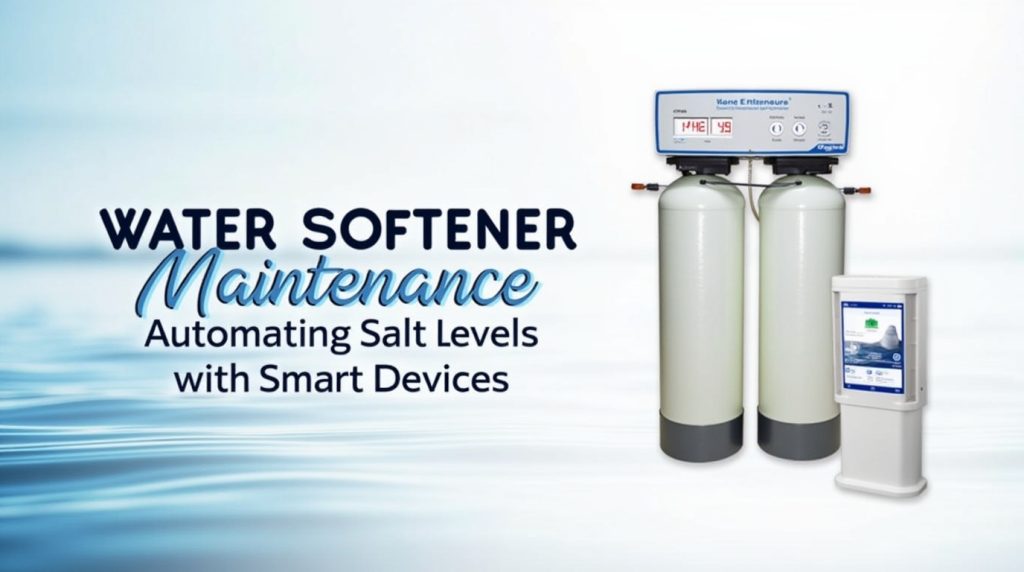
Smart softeners deliver clear, tangible benefits for water softener maintenance.
The Benefits of Automation
- Efficiency Maximized: Integrated systems use real-time data to perform proportional bringing. This means they use only the salt necessary to clean the used portion of the resin bed, reducing salt and water usage by up to 46%.
- Peace of Mind: Remote monitoring via an app ensures you always know the system status, so you never run out of soft water unexpectedly.
- Proactive Protection: Advanced flow monitors offer whole-home security by detecting small leaks and system malfunctions before they cause major water damage.
Key Practical Limits of Smart Softeners
It is important to manage expectations regarding Water softener maintenance. While smart devices automate monitoring and alerting, there is a fundamental limitation: no currently available consumer-grade water softener system automatically adds salt.
The system will alert you precisely when it is time to refill, and some services can even automate the ordering and delivery of the salt bags. However, the physical labor of hauling those heavy salt bags and pouring them into the brine tank remains manual. Automation eliminates the guesswork and the risk of failure, but not the heavy lifting.
Conclusion
The adoption of smart devices represents a major evolution in how we approach water softener maintenance. By automating salt-level monitoring and optimizing regeneration schedules based on data, these systems turn what was once a frustrating chore into a seamless, high-efficiency protective layer for your home.
This investment is fundamentally smart financial planning. Choosing smart technology for water softener maintenance ensures your family always benefits from soft water and maximizes the lifespan of your home’s most important and expensive assets.
FAQs
A smart water softener is a system or add-on device that connects to Wi-Fi. It uses sensors to track salt levels, water usage, and system performance in real time. It automates maintenance by sending alerts (notifications) to your phone when salt is low, or service is needed, and by automatically optimizing regeneration cycles to save resources.
Smart softeners use a combination of technologies. They use flow meters to measure water usage and highly reliable, often laser- or optical-based, sensors to monitor the salt level in the brine tank. This data is sent to a central control board and shared via Wi-Fi to a smartphone app, allowing for remote visibility and optimization of the system’s regeneration schedule.
Yes. Smart water softeners are a major asset. They eliminate the costly human error of running out of salt, saving thousands of dollars in premature appliance replacements and plumbing leak repairs over time. Additionally, many integrated models significantly reduce salt and water consumption through proportional brining, leading to long-term savings.
No, smart water softeners do not automatically add salt. They automate the monitoring and alerting process. They notify you precisely when salt is needed and how much to add, but the physical task of hauling and pouring the salt pellets remains a manual chore.
Yes, most smart water softeners and connected monitoring systems are controlled remotely via a dedicated smartphone app (e.g., iQua™ or RainSoft Remind®). This allows you to check system status, view water usage data, adjust regeneration settings, and even bypass the softener if needed, all from anywhere with an internet connection.