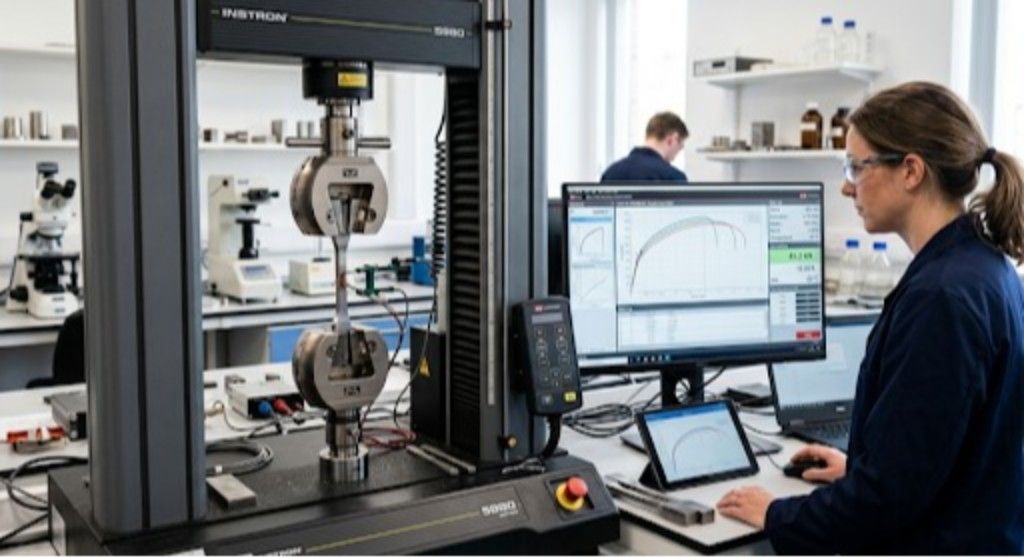
In an age where construction, manufacturing and engineering move at breakneck pace, one critical process is quietly but powerfully changing: material testing. Material testing has typically been perceived as a labor and laboratory intensive process, but emerging technologies like artificial intelligence (AI), the Internet of Things (IoT), automation and advanced data analytics are ushering in a new paradigm.
What was once a slow and labor-intensive procedure is now becoming faster, smarter, and more predictive, placing it firmly within the realm of modern technology innovation. In fact, organizations implementing AI engineering practices are expected to improve operational efficiency and model deployment speed by at least 25% by 2026, highlighting the significant impact of AI-driven transformation across industries.
Table of contents
- From Manual Testing to Intelligent Systems
- The Role of Artificial Intelligence in Material Testing
- IoT and Connected Testing Equipment
- Automation and Robotics in Testing Labs
- Digital Twins and Simulation-Based Testing
- Advanced Sensors and Non-Destructive Testing
- Data-Driven Decision Making
- The Rise of Smart Testing Equipment
- Challenges and Considerations
- The Future of Material Testing
- Conclusion
From Manual Testing to Intelligent Systems
Material testing has a long been an integral part of ensuring the safety and longevity of everything from bridges and buildings to aircraft and infrastructure. Traditionally, this process depended on a fair amount of manual setups, written records as well as human analysis of the outcomes.
Today, that landscape is changing.
The modern testing devices embrace digital systems, automated controls, and smart software that can complete your tasks with little human engagement. Today, machinery automates everything to guarantee uniform conditions, minimize human error and greatly boost efficiency.
It also reflects a transition from traditional engineering practices to tech-driven quality assurance systems.
The Role of Artificial Intelligence in Material Testing
Artificial intelligence is at the forefront of this transformation. AI is not just enhancing testing, it is redefining how results are analyzed and applied.
AI-powered systems can process massive amounts of data generated during testing and identify patterns that would be difficult for humans to detect. These systems can:
- Automatically analyze stress-strain curves
- Detect anomalies in test results
- Predict material performance under different conditions
AI significantly improves accuracy and reduces the time required for analysis, often completing complex evaluations in seconds.
Moreover, machine learning models can predict key material properties such as strength, durability, and resistance to environmental factors, reducing the need for repeated physical testing.
This predictive capability is especially valuable in industries where failure is not an option.
IoT and Connected Testing Equipment
The integration of the Internet of Things (IoT) is bringing connectivity to material testing equipment, enabling real-time monitoring and data sharing.
IoT-enabled sensors can be embedded directly into testing machines or even within construction materials themselves. These sensors continuously collect data such as:
- Temperature
- Moisture levels
- Stress and strain
- Vibration
This data is transmitted instantly to centralized systems, allowing engineers to monitor performance remotely and respond quickly to potential issues. Smart sensors can be placed in situ within the field, allowing for continuous insights into soil conditions and structural performance without delays from conventional testing of samples.
Automation and Robotics in Testing Labs
Another driver that is pushing innovation in material testing is automation. Robotic systems can perform such repetitive tasks as sample preparation, positioning, and test execution.
Not only do these systems improve efficiency, but they also reduce human involvement in potentially dangerous settings, thereby improving safety.
In high-volume laboratories, automation enables:
- Faster testing cycles
- Increased throughput
- Consistent and repeatable results
When combined with AI, these systems can adapt and optimize testing processes in real time, further improving accuracy and reliability.
Digital Twins and Simulation-Based Testing
One of the most exciting developments in this field is the use of digital twin technology.
A digital twin is a virtual model of a physical material or structure that can simulate real-world conditions. Engineers can use these models to predict how materials will behave under stress, temperature changes, or environmental exposure without the need for physical testing.
This approach reduces costs, accelerates development, and enables more innovative designs. By combining real-world data with simulation, digital twins are helping bridge the gap between physical testing and digital engineering.
Advanced Sensors and Non-Destructive Testing
Modern material testing equipment is equipped with highly advanced sensors that provide detailed insights into material properties.
Additionally, non-destructive testing (NDT) techniques like ultrasonic inspection, X-ray radiography, and magnetic flux leakage enables engineers to assess materials without incurring damage.
High-resolution imaging technologies can show things like internal defects, cracks or inconsistencies that would not be visible to the naked eye。” This is especially important for critical sectors in aerospace, construction and energy where even minor defects can throttle the entire operation
Data-Driven Decision Making
Perhaps the most significant impact of technology in material testing is the shift toward data-driven decision-making. Modern testing equipment generates vast amounts of data, which can be analyzed to:
- Identify trends and patterns
- Optimize material selection
- Improve design processes
- Prevent potential failures
AI-powered analytics platforms can turn this data into actionable insights, helping engineers make more informed decisions and improve overall project outcomes. This shift is transforming material testing from a reactive process into a proactive strategy.
The Rise of Smart Testing Equipment
Material testing equipment of today is no longer a simple piece of machinery but has evolved into an intelligent, connected world that drives precision and innovation. These new systems embedded AI for intelligent data analysis and proactive insights, IoT for smooth real-time connection and remote monitoring, automation for quicker, efficient workflows requiring lower human intervention, and high-precision sensors to give precise measurements consistently over variable conditions.
Beyond, cloud computing and detailed analytics facilitate storage, sharing, and interpretation of data between various platforms. These technologies work hand in hand to establish a holistic ecosystem that streamlines testing processes while allowing for predictive maintenance, quality assurance, and smart decision-making throughout the material testing cycle.
Challenges and Considerations
While the benefits of technology in material testing are significant, there are also challenges to consider.
- Data management: Handling large volumes of data requires robust systems and cybersecurity measures
- Training: Engineers and technicians must adapt to new technologies and workflows
- Cost: Advanced equipment and systems can require substantial investment
However, as technology continues to evolve, these challenges are becoming more manageable, and the long-term benefits often outweigh the initial costs.
The Future of Material Testing
However, the future points to massive integration of artificial intelligence (AI), Internet of Things (IoT) and automation in material testing and industrial operations. Additionally, we might also see the establishment of fully automated testing labs that work with little to no human interference, as well as AI-based instant decision-making systems that will increase precision and efficiency. Industries would be able to simulate and predict how a material will behave in different conditions before even reaching the physical testing stage, thanks to still-growing MDO simulation techniques and digital twins. There’ll also be deeper integration with smart infrastructure, allowing systems and devices to communicate seamlessly.
With industries advancing towards smarter and interconnected environments, material testing will be of prime importance in ensuring safety, performance optimization and sustainability.
Conclusion
Materials testing are no longer simply something that happens in the background within construction and manufacturing it is becoming a key frontier of technological development.
AI, IoT, automation, and advanced analytics are transforming testing equipment into smart systems that can provide faster, more accurate and reliable outcomes.
This evolution for tech platforms like Coruzant is a clear indicator that even the most old school industries are being redefined by digital innovation.
And, when it comes to material testing, the future isn’t just stronger materials–it’s smarter technology.