In today’s fast-paced world, the need for reliable and effective safety measures has never been greater. Fortunately, smart safety technology offers innovative solutions that enhance our ability to protect ourselves, our loved ones, and our assets. From personal security to operational efficiency, these advancements are revolutionizing how we approach safety, making smart technology the ultimate safety solution for modern life.
Key Takeaways
- Smart safety technology enhances personal security and asset protection through innovative solutions like GPS trackers and IoT devices.
- GPS technology provides real-time monitoring, geofencing, and emergency response capabilities for individuals and businesses.
- IoT and smart monitoring systems collect data, detect hazards, and automate safety responses in various environments.
- GIS and location intelligence improve emergency response, urban planning, and public safety through spatial data analysis.
- The future of smart safety technology includes advancements in AI, machine learning, and sensor technology for more effective safety measures.
Table of contents
GPS Technology and Safety
Global Positioning System (GPS) technology has become an indispensable tool for enhancing safety across various aspects of life. GPS trackers provide real-time location monitoring for individuals, vehicles, and valuable assets. These devices send location data to a central system, allowing for immediate response in case of emergencies or theft. Parents can use GPS trackers to ensure the safety of their children, while businesses can monitor their fleet vehicles to improve efficiency and prevent unauthorized use. Furthermore, GPS technology enables geofencing, which creates virtual boundaries that trigger alerts when crossed, providing an extra layer of security for sensitive areas or assets.
Enhancing Personal Safety with GPS
GPS technology plays a vital role in enhancing personal safety. Smartwatches and mobile apps with GPS capabilities allow individuals to share their location with trusted contacts during activities such as hiking, running, or traveling alone. In case of an emergency, these devices can send distress signals with precise location information, enabling rapid assistance from emergency services. The ability to quickly and accurately pinpoint a person’s location can be life-saving in critical situations.
Protecting Assets with GPS
GPS trackers are widely used to protect valuable assets from theft and unauthorized use. Construction equipment, heavy machinery, and expensive goods can be equipped with GPS devices, allowing businesses to monitor their location and recover them quickly if stolen. GPS technology also helps optimize logistics and supply chain management, ensuring that goods reach their destination safely and on time.
IoT and Smart Monitoring Systems
The Internet of Things (IoT) is transforming safety through interconnected devices and smart monitoring systems. Smart sensors, cameras, and other IoT devices collect and transmit data to central platforms, providing real-time insights into various environments. These systems can detect potential hazards, monitor critical infrastructure, and automate safety responses.
Smart Home Security
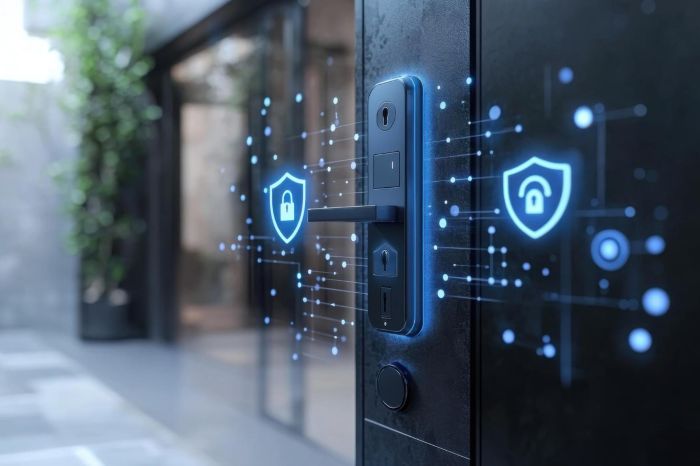
IoT technology is revolutionizing home security. Smart door locks, security cameras, and alarm systems integrate to provide comprehensive protection against intruders. These systems can be remotely monitored and controlled via smartphones, allowing homeowners to receive instant alerts and take immediate action in case of a security breach.
Industrial Safety Monitoring
In industrial settings, IoT sensors monitor equipment performance, detect leaks, and measure environmental conditions. This data helps prevent accidents, optimize maintenance schedules, and improve overall safety. For example, gas sensors can detect hazardous leaks and trigger alarms, while temperature sensors can monitor machinery to prevent overheating.
GIS and Location Intelligence
Geographic Information Systems (GIS) and location intelligence provide powerful tools for analyzing spatial data and improving situational awareness. By integrating GPS data, mapping technologies, and analytics, GIS helps identify patterns, predict risks, and optimize resource allocation.
Emergency Response and Disaster Management
GIS plays a crucial role in emergency response and disaster management. By mapping affected areas, identifying vulnerable populations, and tracking resources, GIS enables rapid and coordinated responses. Emergency responders can use GIS to optimize evacuation routes, allocate resources efficiently, and assess the impact of disasters.
Urban Planning and Public Safety
Location intelligence helps urban planners and public safety officials make informed decisions. By analyzing crime data, traffic patterns, and demographic information, GIS can identify high-risk areas, allocate resources effectively, and improve public safety. Location intelligence also helps optimize traffic management, reduce congestion, and improve response times in emergency situations.
Future of Smart Safety Technology
The future of smart safety technology is promising, with ongoing advancements in artificial intelligence (AI), machine learning (ML), and sensor technology. AI-powered systems can analyze vast amounts of data in real-time, providing predictive insights and automating safety responses. ML algorithms can learn from past incidents, improving the accuracy and effectiveness of safety measures. Advances in sensor technology will enable more precise and comprehensive monitoring of various environments, further enhancing safety and security.
Conclusion
Smart safety technology is revolutionizing various aspects of life. From GPS trackers and IoT devices to GIS and location intelligence, these advancements provide innovative solutions for personal safety, asset protection, and operational security. As technology continues to evolve, we can expect even more sophisticated and effective safety measures that will further enhance our ability to protect ourselves, our loved ones, and our assets in an increasingly complex world.