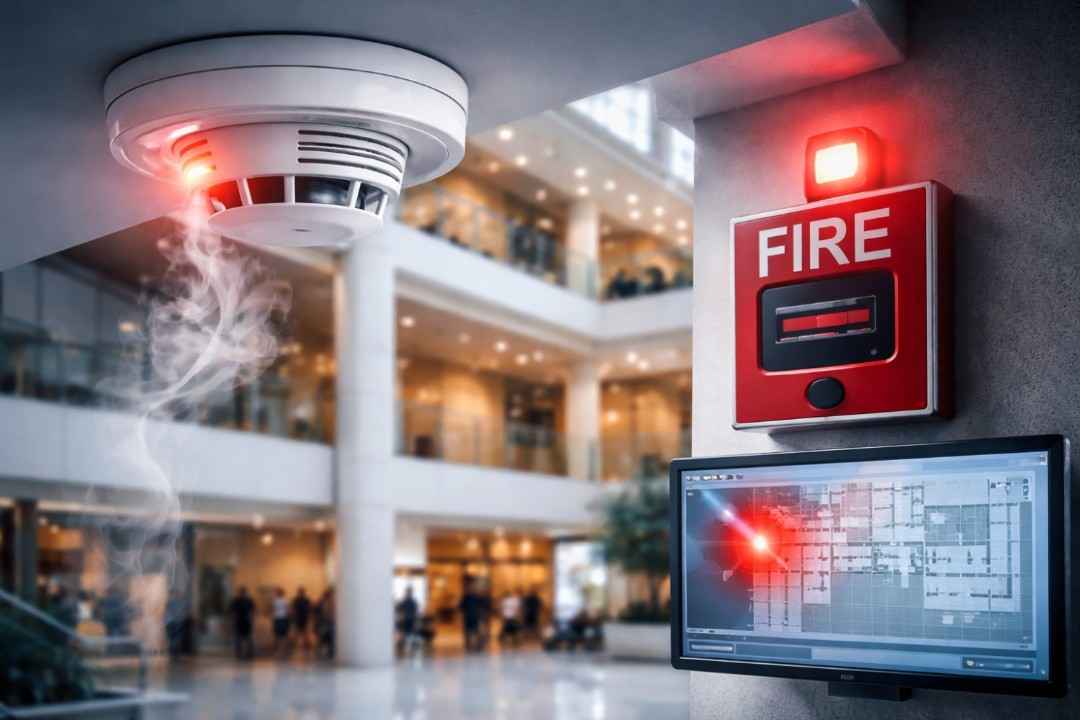
Fire safety has always been a key concern for commercial buildings, but in a large and fast-moving city like London, the risks and responsibilities are even greater. Offices, shopping centres, hotels, and mixed-use developments bring together large numbers of people, valuable assets, and complex building layouts. Advanced fire detection technology now plays a central role in protecting these spaces by identifying risks early and supporting faster, more effective responses.
Modern fire detection systems are no longer limited to simple smoke alarms. They are intelligent, connected, and designed to meet the demands of today’s commercial environments.
Table of contents
Understanding Fire Risks in Commercial Buildings
Commercial buildings face different fire risks compared to residential properties. Electrical systems, heating and cooling equipment, kitchens, storage areas, and high footfall all increase the likelihood of fire incidents. In London, many commercial buildings are also multi-storey or shared by several businesses, which adds further complexity.
Advanced fire detection technology helps address these risks by providing accurate, reliable monitoring across large, varied spaces.
The Importance of Early and Accurate Detection
Early detection is critical in reducing damage and protecting lives. The faster a fire is identified, the sooner people can be alerted, and emergency services can respond. Advanced systems are designed to detect signs of fire early, often before flames are visible.
How Advanced Fire Detection Technology Works
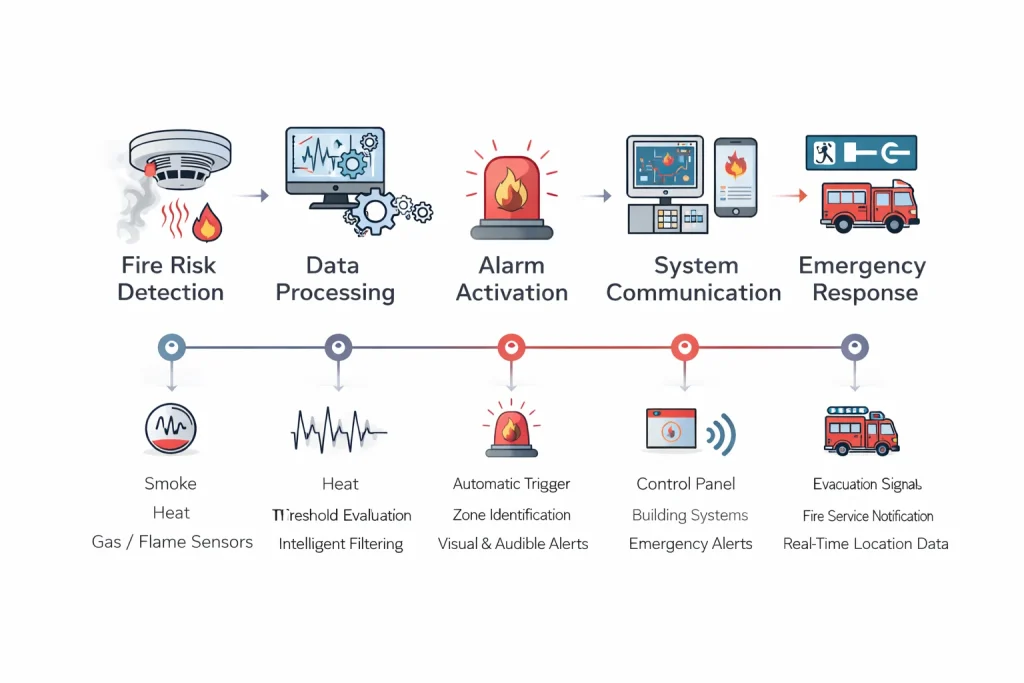
Modern fire detection systems use a combination of sensors, software, and communication tools to monitor conditions within a building. Instead of relying on a single trigger, these systems analyse multiple factors such as smoke particles, heat levels, and air composition.
This multi-sensor approach allows systems to respond quickly while reducing the risk of false alarms, which can disrupt business operations and reduce trust in safety measures.
Intelligent Sensors and Data Analysis
Intelligent sensors continuously collect data and compare it against known fire patterns. By analysing changes over time, the system can distinguish between regular activity and a genuine fire risk. This is especially useful in busy London workplaces where everyday activities might otherwise trigger alarms.
Improving Response Time Through Technology
One of the main advantages of advanced fire detection technology is improved response time. When a system detects a potential fire, it can trigger alarms, notify building management, and, in some cases, automatically alert monitoring centres.
Faster response means occupants can evacuate sooner, and emergency services can be informed with accurate details about the situation and location.
Supporting Clear and Timely Alerts
Modern systems often include clear audible alarms and, in some cases, voice alerts that guide occupants on what to do. Clear communication reduces confusion and panic, which can otherwise slow down evacuation in large commercial buildings.
Integration With Building Management Systems
Advanced fire detection technology is often integrated with wider building management systems. This allows different safety and control functions to work together during an emergency.
For example, systems can automatically release fire doors, shut down ventilation to prevent smoke spread, and activate emergency lighting. In London’s high-rise commercial buildings, this level of integration is essential for managing complex evacuations safely.
Adapting to London’s Commercial Landscape
London’s commercial buildings range from modern glass towers to older properties that have been repurposed for business use. Each type of building presents different challenges for fire detection.
Advanced systems are flexible and can be tailored to suit specific layouts and uses. Wireless detectors, discreet sensors, and scalable control panels enable effective fire detection without compromising the building’s function or appearance.
Protecting Historic and Modern Properties Alike
In older commercial buildings, sensitive technology can be installed with minimal disruption. In newer developments, fire detection can be fully integrated into the building design from the start, supporting long-term safety planning.
Reliability and Ongoing Monitoring
A fire detection system is only effective if it works reliably at all times. Advanced technology includes self-monitoring features that check system performance and identify faults early.
Regular feedback and alerts help building managers address issues before they become serious problems. In a city like London, where many commercial buildings operate around the clock, this reliability is essential.
Meeting Legal and Safety Expectations
Fire safety in commercial buildings is governed by clear legal responsibilities in the UK. Employers and building owners must take reasonable steps to reduce fire risks and protect occupants.
Guidance from the Health and Safety Executive explains the importance of suitable fire detection and warning systems as part of overall fire risk management.
Advanced fire detection technology supports compliance by providing dependable detection, clear alerts, and documented system performance.
The Role of Professional Planning and Installation
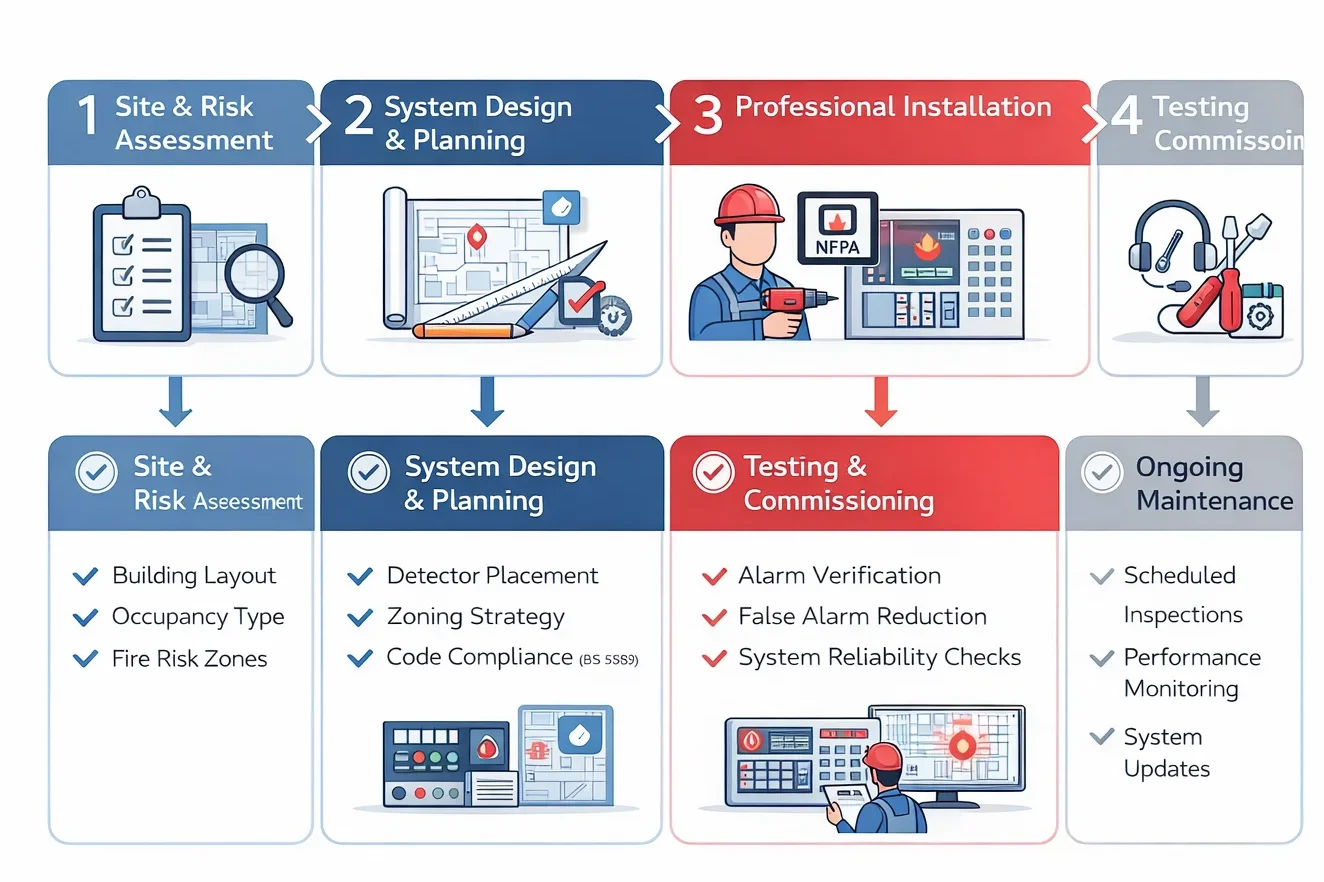
Adequate fire safety requires more than just advanced technology; systems must be appropriately designed, installed, and maintained to match the building and its occupants. In this context, professional London Fire Alarm Installation ensures that detectors, control panels, and alarms are correctly positioned and configured, enabling quick and reliable responses during emergencies. Proper installation combines careful planning with technology to maximise protection for both people and property.
Ensuring Systems Match Building Use
A commercial office, a retail space, and a hospitality venue all have different fire risk profiles. Professional planning ensures that the fire detection system reflects how the building is used daily.
Supporting Business Continuity
Beyond protecting life, advanced fire detection technology also helps reduce disruption to business operations. Early detection and quick response can limit damage, shorten recovery time, and reduce the impact of incidents on staff and customers.
In London’s competitive commercial environment, maintaining continuity is essential for both large organisations and small businesses operating in shared spaces.
Using Technology to Learn and Improve
Some advanced systems record data on alarms, activations, and response times. Reviewing this information helps building managers and safety professionals identify trends and areas for improvement.
Over time, this data-driven approach supports better planning and more effective fire safety strategies across commercial properties.
Conclusion
Advanced fire detection technology plays a vital role in modern commercial buildings by improving early detection, speeding up response times, and supporting coordinated emergency response. In a complex city like London, where buildings are busy, diverse, and often shared by many occupants, these systems provide an essential layer of protection. By combining sensors, real‑time monitoring, and integrated communication platforms, technology helps ensure that fire hazards are detected early and responses are swift.