One of the most important technologies for modern businesses is digital payments. Keep in mind, this includes everything from one-tap purchases up to online subscriptions and global B2B transactions. Every digital payment is important and valuable because they’re convenient and often instant.
However, while they have a lot of ways to ensure security, every new channel, device, and software introduced to wider systems expands the surface area that attackers can probe. Furthermore, new technologies like AI bring new ways of cyber attacks.
It’s crucial for companies to not only block fraud but also protect the trust of their users while still keeping the benefits of digital payments. Safety should feel effortless on the user’s side, while companies must be able to make their systems secure as they scale.
Innovation in cybersecurity has always been essential, and with research in AI and quantum computing, it’s becoming clear that those who want to protect their users must keep up with the latest trends.
Key Takeaways
- Digital payments are crucial for modern businesses, yet they face growing security challenges.
- Innovative security measures must evolve continuously to combat fraud and protect user trust in every digital payment.
- Core technologies like tokenization, encryption, and AI-powered fraud detection play a key role in enhancing security.
- Companies should prioritize understanding their vulnerabilities and implementing appropriate security technologies for every digital payment.
- Staying informed about the latest advancements in fintech and cybersecurity offers a competitive advantage in preventing fraud.
Table of Contents
Why Digital Payment Security Needs Constant Innovation
Fraudsters certainly aren’t waiting for them to get caught by using the same methods that were present during the age of fax machines. They change tools, tactics, and targets as soon as one becomes obsolete.
Something that’s been the standard for security in the past year can be vulnerable due to an update. This is why it’s important to keep up with implementing different security methods and keeping an eye out for the evolution of threats.
For example, if your e-commerce store has been operating for years using standard payment processors, and you implement a buy-now-pay-later feature that’s provided by a third-party, you’re opening the doors for a lot of new vulnerabilities.
This doesn’t mean that you should avoid implementing new features, but that you should ensure that they’re followed by the right security measures for every digital payment. Along with fraudsters, the payment and security technologies are also evolving. This also means that new regulations that require more robust security systems are emerging as well.
Platforms like seon.io are positive examples of software that’s focused on stopping fraud attempts before they cause any actual harm. They offer real-time risk analysis that’s streamlined with machine learning and artificial intelligence, along with the traditional rule-based system.

In practice, platforms like this are most useful when fraud problems are multi-layered. They are especially valuable if the business is faced with a mix of different fraud types, such as fake account creation, takeover attempts, card-not-present, and stolen credit cards.
They unify the data points they have on every user, allowing you to properly understand the risk each transaction carries. This kind of solution typically fits teams that want to move beyond simple rule sets and toward adaptive detection that learns from patterns across devices, networks, behavior, and historical outcomes.
Core Technologies Powering Safer Digital Payments
Safer digital transactions rarely depend on one single technology. The strongest systems combine data protection, encryption, identity access, and real-time risk analysis that understands patterns for every digital payment.
With these different layers working together, businesses can reduce multiple types of fraud at the same time without sacrificing efficiency. The list below includes some of the core innovations of safer digital payments:
Tokenization
Tokenization replaces sensitive payment data with a non-sensitive token that has no value if it’s stolen through spoofing. This is done in order to reduce the exposure of sensitive information during storage or transmission.
It is especially valuable when it comes to recurring subscriptions or payments done through electronic wallets. In short, it protects users who return repeatedly. Tokenization limits the situations in which real card data is used, which shrinks the attack surface.
Encryption
We’ve all heard about encryption and its importance. For those who are complete beginners in the tech world, encryption turns plain text into hashes that are unreadable if you don’t have the correct “keys”.
It’s one of the most important concepts for securing data in transit and at rest, and encryption is implemented everywhere from storing your instant messages, up to payment credentials and transaction records.
When paired with tokenization, encryption provides strong security levels for digital transactions. In theory, the standards that are currently used for encryption are unbreakable by brute force, but there are many ways that this can be avoided, such as using leaked passwords or social engineering.
Customer authentication
Authentication is the process of ensuring that the person signing in or initiating a transaction is who they claim to be. The modern approach to verification is risk-based, which means that additional authentication measures will be required if you try to make a payment that’s deemed risky.
On the other hand, low-risk transactions can pass with minimal action. For example, an account based in the US spends an average of 200$ to 300$ daily. Then, one day, their login location changes to Asia, and they attempt to make a transaction worth $10,000.
This could be completely legit, but it’s out of the ordinary. If it’s legitimate, then they could also verify the transaction by providing their government-issued documents, speaking with support personnel, or proving their identity in other ways.
On the other hand, if this is a scam, it’s unlikely that the fraudster will have access to verify their identity using Face ID or government-issued documents.
Biometrics
One of the most powerful ways to make authentication secure is through biometrics. This process includes verifying your identity with one more method that’s associated with your unique human trait.
This includes a fingerprint scanner, facial recognition, or retina scan. Passwords can be weak, or they can be leaked somewhere, while nobody besides you will be able to sign in if you’re using fingerprint scanning as an additional layer of authentication.
AI-Powered fraud detection
Artificial intelligence has been around for decades, but it has only recently gained widespread popularity. The intersection between security and AI is that companies can now develop software that’s continuously learning based on fraud attempt patterns.
AI and machine learning enable modern teams to detect patterns that traditional rules may miss. Instead of relying solely on static thresholds, these models evaluate complex combinations of signals, including device attributes, behavioral patterns, and network indicators.
However, the use of AI in fraud prevention for every digital payment is still in development, and it’s important that you pair it with traditional rule-based systems, or have a dedicated team that works on its accuracy.
Common Attack Types
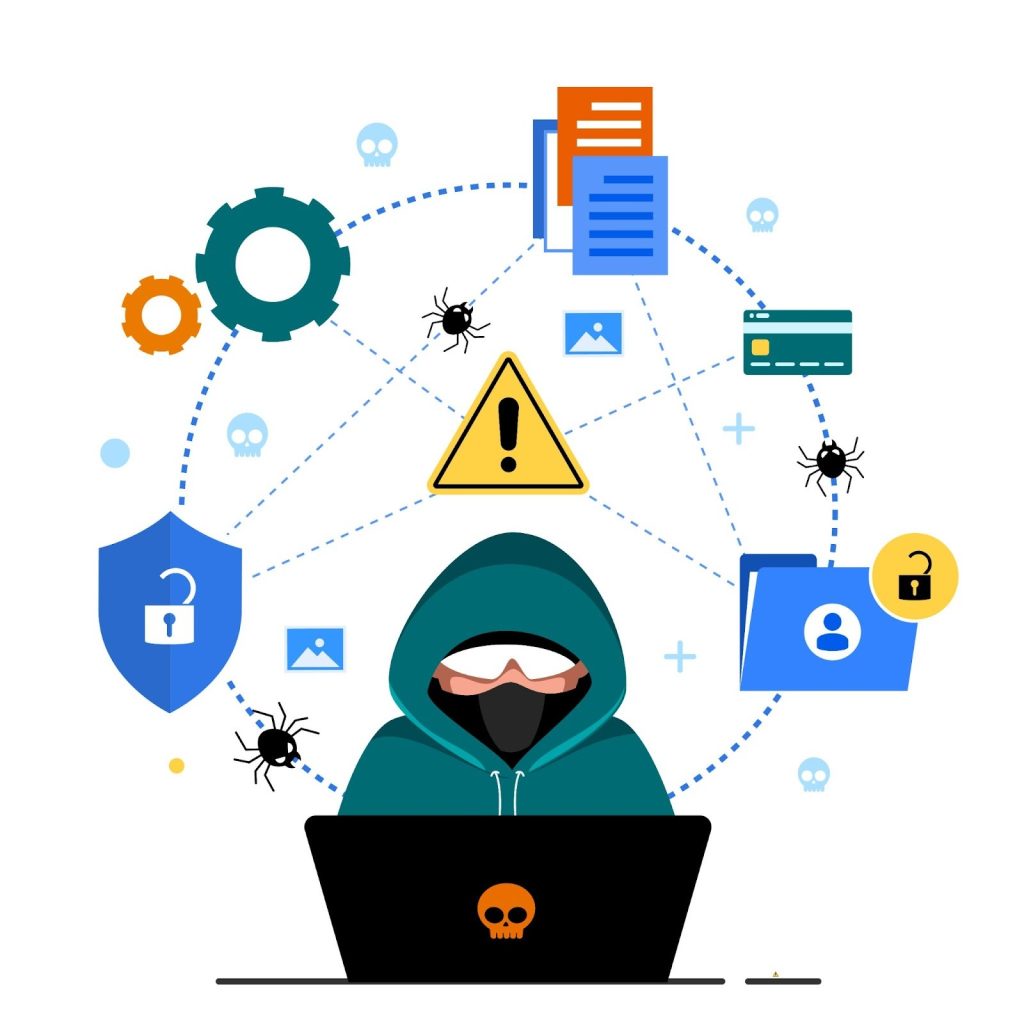
One of the simplest attack types in theory is account takeover. It includes stealing a user’s or employee’s account and misusing it to conduct fraud. This happens if a hacker gains access to a user’s credentials.
A more complex example that can be paired with account takeover is a brute-force attack. This type of attack includes trying out endless variations of passwords until they get access to the person’s account.
Many people use repeated passwords, such as “password” or “12345768”. Hackers often try out these passwords that have a higher likelihood of succeeding since they’re commonly used.
While AI can be helpful for detecting fraud, it can also be used for conducting it. Synthetic identity fraud has been around for a long time, but with the use of AI-generated images and personal information, fake identities can be created within minutes.
A common type of fraud in e-commerce is a chargeback. The term “chargeback fraud” is used when a customer or bad actor disputes a legitimate transaction and requests a refund. They can later refuse to return an item, or not, but the largest problem with chargeback fraud is the additional operational burden.
Secure Innovation Is a Competitive Advantage
Jumping on every new trend and technology is unlikely to bring any real progress. On the other hand, being rigid and avoiding software advancements while your competition implements them can also lead to problems in terms of security and convenience.
Paying attention to the latest proven innovations in the sphere of fintech and cybersecurity can provide a lot of value for your business. This is especially true if you’re operating in an industry where fraud is common or if you need to comply with extensive regulations.
Understanding the key problems associated with modern cyber threats can help you have a more objective look at the need for the latest security solutions. There isn’t a single software or device that will help you prevent 100% of fraud attempts.
However, identifying the key vulnerabilities of your system for every digital payment and selecting the right technology for it can help you comply with necessary regulations and minimize the chances of cyberattacks and fraud succeeding.