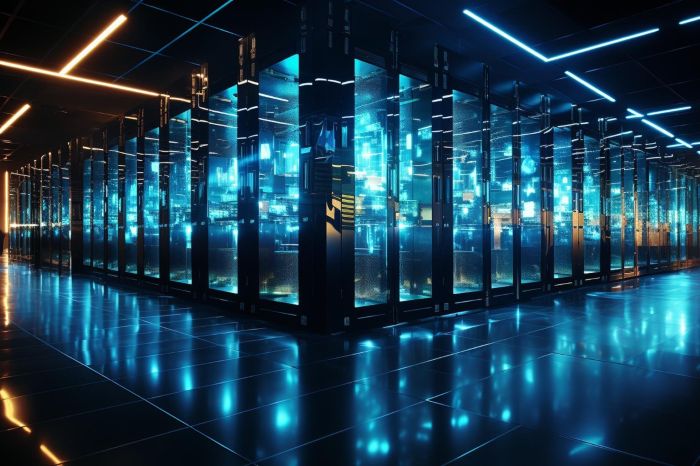
Artificial intelligence isn’t just a buzzword in the digital age; it’s changing the world at an incredible rate. AI’s need for computing power is never-ending, from chatbots that write essays to algorithms that guess what will happen in the market. Data centers, which are huge warehouses full of servers that do the math behind the magic, are at the heart of this revolution. But as AI gets better, these places change too, becoming specialized “AI data center” that are perfect for training and running complicated models. Recent news has shown a lot of excitement, partnerships, and arguments about these huge companies. The sector is booming with billions of dollars coming in, but people are worried about how much energy and water it uses and how it affects communities. Let’s look at the latest news in AI data centers and see how this surge is driving innovation while putting global infrastructures to the test.
Key Takeaways
- AI data centers are rapidly evolving, attracting huge investments and partnerships from tech giants, but raising concerns about energy use and environmental impact.
- Recent investments include Amazon’s $21 billion and Google’s $40 billion in AI infrastructure, highlighting a strategic shift towards AI as a core business focus.
- Innovative partnerships, like between Meta and Nvidia, aim to enhance data processing capabilities, while some companies explore sustainable energy sources.
- Communities face backlash from the expansion of AI data centers, leading to protests over local resource depletion, noise, and environmental consequences.
- Tech companies are pledging to address sustainability, but challenges remain as they struggle to balance growth with environmental responsibilities.
Table of contents
A Lot of Money Going Into AI Infrastructure
A typical AI data center now has a lot of money coming in. In 2025, the sector saw a record $61 billion in global dealmaking, which was a small increase from the previous year. Analysts call this a “global construction frenzy.” Hyperscalers, which are tech giants like Amazon, Microsoft, Google, and Meta, are racing to build the backbone for next-gen AI. This is what is driving the cash flow. For example, Amazon recently announced a huge $21 billion investment to improve its AI infrastructure in Spain. The goal is to improve cloud services and meet the growing demand for AI workloads across Europe.
Texas is a great place for new AI data centers because it has a lot of land and energy resources. Google is spending $40 billion on new ones there. This isn’t just about growing; it’s a smart move that puts Google in a good position to handle the huge growth in AI tools and applications like machine learning and generative tools. Nvidia, the chipmaker at the center of the AI boom, is also giving $4 billion to companies that are building up AI infrastructure, which speeds up the ecosystem even more.
These investments show a bigger trend: AI is no longer just a side project; it’s now a key part of business strategy. Microsoft’s capital expenditures for 2025 were about $370 billion, along with Alphabet, Meta, and Amazon. They expect even higher numbers in 2026. Last quarter, Microsoft was the leader, spending almost $35 billion, or 45% of its revenue, mostly on data centers. The US economy is being warped by this level of spending, and AI infrastructure is now a big part of growth. These numbers are very exciting, but they come with a warning: the size of the problem is putting a strain on resources in ways we’ve never seen before.
Partnerships and Big Steps Forward in AI Data Center Technology

Working together is taking AI data centers to new places, not just in terms of money. A big partnership between Meta and Nvidia is making waves. It focuses on advanced AI hardware to speed up data processing. The goal of this partnership is to make systems that are better at handling the huge amounts of data needed to train models like the ones that run Facebook’s algorithms or Instagram’s recommendations.
Companies are looking into unusual power sources to keep these energy-hungry buildings running on the innovation front. Bridge Data Centres in Asia-Pacific is looking into using nuclear power for next-generation AI data centers. They have signed a letter of intent with Singapore’s A*STAR to see if this is possible. Nuclear power could be a low-carbon option to traditional grids, which would help the sector’s growing carbon footprint. Adani Group in India has also promised $100 billion for green data centers, which shows that they want AI to grow in a way that is good for the environment.
But not all partnerships last. Oracle and OpenAI recently gave up on plans to build a big AI data center in Texas after talks broke down over money and changing needs. This cancellation, along with Oracle laying off thousands of workers to cut costs for AI buildout, shows how unstable the space is. The price of Oracle’s stock has gone up and down, but over the long term, it has gone up 143.9% in five years, which shows that investors still believe in AI’s potential.
Videos and reports about mega-projects like Hyperion, which is said to be the world’s largest AI data center, make it look like people are trying to do too much. This building, which could hold millions of GPUs and use up to 5 gigawatts of power, is much bigger than cities and shows off the idea of a “AI factory.” This kind of scale is needed for breakthroughs, but it also increases risks, like with Meta’s Prometheus supercluster in Ohio.
The Dark Side: Backlash from the Environment and the Community
AI data centers are making people angry all over the world, despite all the hype. People in places like Mexico and Ireland are suffering from blackouts and water shortages that are connected to these facilities. Tech companies have sent the construction boom to other countries where there is less oversight, which is putting a strain on weak infrastructures. In Querétaro, Mexico, for example, data centers have made an area that is already prone to drought even drier, which has led to protests and calls for moratoriums.
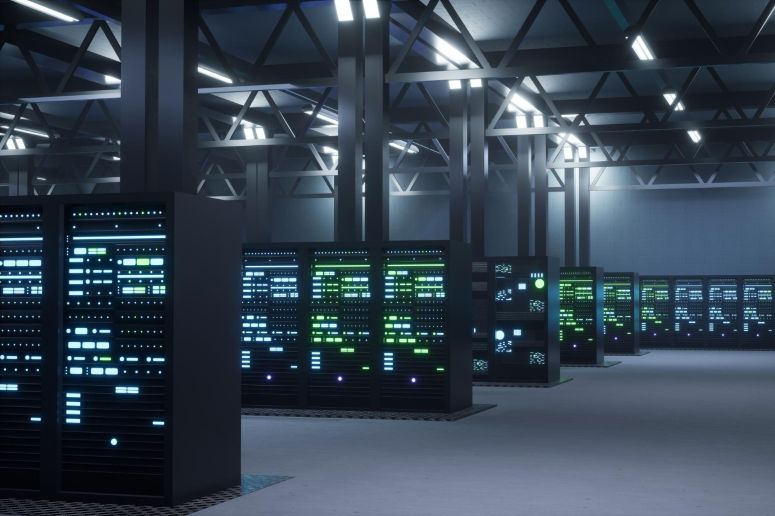
Back in the US, the rapid growth is raising concerns about the amount of power and water used, which could lead to higher utility bills for regular Americans. Some experts have warned of a “power crunch” as AI demands rise, saying that data centers could drain grids. Virginia is home to many data centers, and the rise in electricity prices has sparked debates in Washington about whether the boom is good or bad for the economy.
The backlash in the area is getting worse. In 2025, more AI data center projects were called off because people in the area didn’t want them because of noise, land use, and resource depletion. Bob Clark, who started the construction company Clayco, says that communities are more open to the idea of job creation when they understand that it will lead to a lot of long-term jobs that will help the local economy. These projects can change how schools, hospitals, and services make money, but “NIMBY” groups often spread false information that makes things less clear.
The story is the same around the world. Data centers in Ireland use more electricity than all urban homes put together, which causes problems with the grid and environmental concerns. These “AI factories” are coming for land, water, and power, and they use tools like ChatGPT to make answers while using up resources, as CNET points out. The planned $10 billion Hyperion center from Meta, which is set to open in 2030, is an example of the scale: it will have 4 million square feet of computing power, but at what cost to the environment?
Pledges for Sustainability: Are They a Step in the Right Direction?
In response to the criticism, tech leaders are making promises. Seven big companies—Google, Microsoft, Meta, Oracle, xAI, OpenAI, and Amazon—have promised to pay for the electricity used by AI data centers. This will help public grids. This initiative, which has the support of the White House, is meant to help keep electricity prices from going up, but some people doubt that it will work.
The most important thing is sustainability. Companies like VoltaGrid are giving Oracle’s AI centers energy that doesn’t pollute the air, and ABB and Nvidia are working together to power data centers that use less energy. Liquid-cooled systems in Macquarie’s Sydney data center can handle high-density GPU loads, which cuts down on wasted energy.
But there are still problems. Oracle’s layoffs and other cost-cutting measures show how hard it is to grow a business in a way that is good for the environment. And with AI datacenters possibly draining water supplies, as recent reports have warned, the industry needs to come up with new ideas faster.
Looking Ahead: Finding a Balance Between Growth and Duty
The AI data center landscape is a double-edged sword: it can help technology and the economy grow, but it can also put a strain on resources and communities. The sector seems to be on an upward path as investments keep coming in. For example, Alphabet is raising its 2025 capex to $93 billion. But for progress to last, tech companies, governments, and locals need to work together.
AI data centers aren’t just buildings; they’re the engines of the future. If handled well, they could start a time of innovation that has never happened before. But if we don’t listen to the warnings, we could get a backlash that stops the revolution that these things are meant to power. One thing is clear as we watch this story unfold: AI data centers will keep making news, for better or worse.