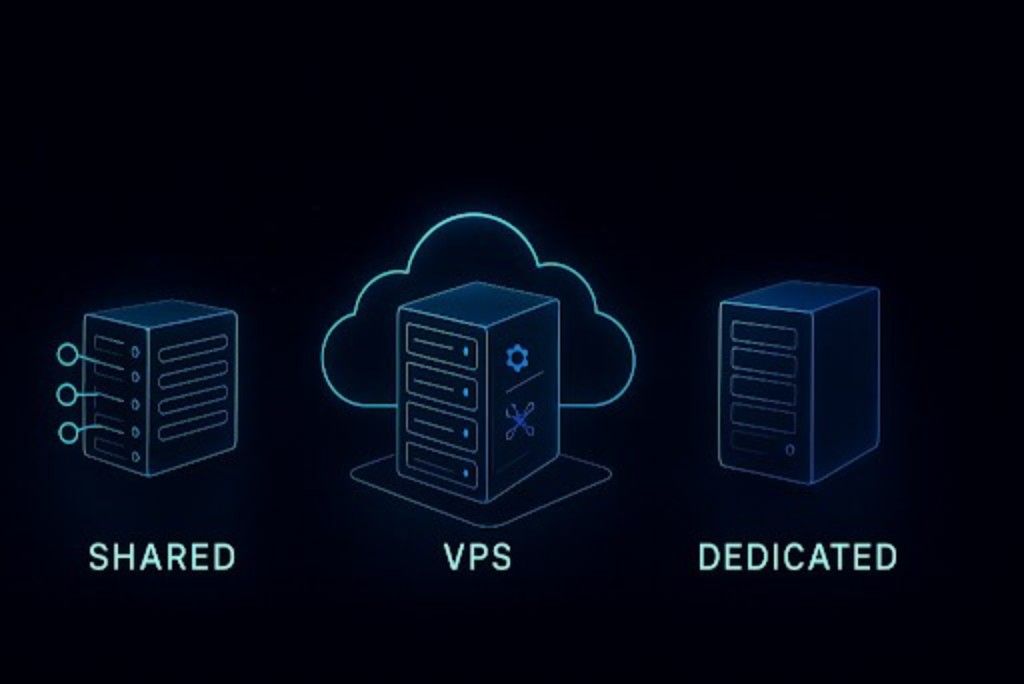
Evolution of Web Hosting in the Modern Digital Environment
The modern digital environment has transformed web hosting from a simple service into a critical technical foundation. Websites now support complex operations, including databases, user authentication, e-commerce transactions, and real-time content delivery. These functions require hosting solutions that can handle sustained workloads without performance degradation. As online competition increases, infrastructure quality directly affects usability, accessibility, and long-term stability. According to Forbes, 47% of web users expect a website to load in two seconds or less, making fast, reliable hosting infrastructure essential for maintaining engagement and meeting user expectations. Hosting has therefore become a strategic technical decision that influences growth, reliability, and operational efficiency rather than just online presence.
Table of contents
- Evolution of Web Hosting in the Modern Digital Environment
- Increasing Technical Demands of Websites
- Importance of Performance-Centered Hosting
- Concept and Structure of VPS Hosting
- Technical Characteristics of VPS Infrastructure
- Storage, Processing, and Network Architecture
- Cost Structure and Scalability of VPS Hosting
- Practical Use Cases for VPS Hosting
- Dedicated Servers Explained
- Infrastructure of Dedicated Servers
- Cost Optimization in Dedicated Hosting
- Dedicated Servers Use Cases
- Security, Privacy, and Data Control
- Server Management and Administrative Access
- Comparative Overview of VPS and Dedicated Servers
- Conclusion
Increasing Technical Demands of Websites
Websites today consume significantly more resources than in the past. Dynamic content generation, high-resolution media, and interactive elements require consistent processing power and memory availability. Search engines and users both expect fast response times regardless of traffic volume. Without adequate hosting infrastructure, even well-designed websites can fail to meet performance expectations. This growing demand has pushed many organizations to adopt VPS hosting and dedicated servers as stable alternatives to traditional shared environments.
Importance of Performance-Centered Hosting
Performance-centered hosting focuses on reliability, scalability, and predictability. Slow servers degrade user experience and reduce engagement, while frequent downtime undermines credibility and operational continuity. Even hosting environments that guarantee 99.9% uptime can still experience up to 8.76 hours of downtime per year, and even short outages can damage availability, user trust, and business operations. Hosting infrastructure must therefore provide guaranteed resources, efficient data handling, and minimal latency. These factors collectively support business continuity, data integrity, and consistent accessibility across different usage scenarios.
Concept and Structure of VPS Hosting
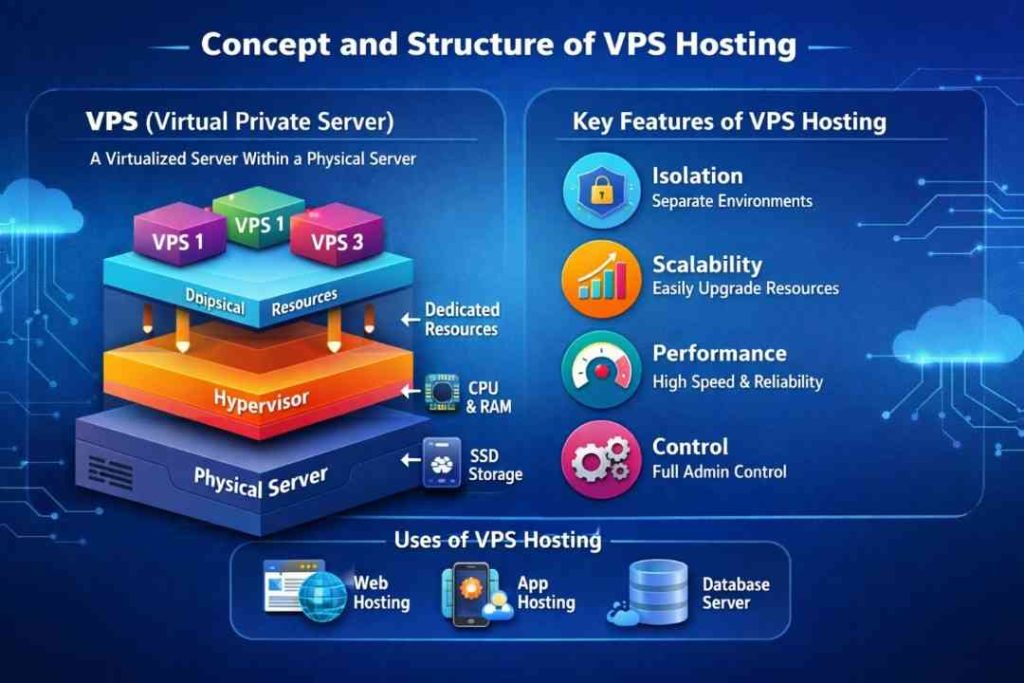
VPS hosting falls between shared hosting and dedicated servers. It is designed to provide dedicated resources while maintaining cost efficiency.
Definition and Working Mechanism of VPS Hosting
VPS hosting uses virtualization technology to divide a physical server into multiple independent virtual environments. Each virtual server operates as a standalone system with its own allocated resources. This structure ensures consistent performance regardless of activity on neighboring virtual servers. Users gain administrative access management and configuration flexibility while avoiding the costs associated with maintaining physical hardware.
Virtualization and Resource Allocation
Virtualization allows precise allocation of CPU cores, memory, and storage. Unlike shared hosting, where resources fluctuate unpredictably, VPS hosting ensures stability through predefined limits. This controlled allocation supports consistent performance and minimizes the risk of service disruption from external workloads.
Technical Characteristics of VPS Infrastructure
VPS environments are commonly built on modern server infrastructure optimized for stability and performance. The hosting environment provides dedicated resources, administrative control, and flexible configurations. Users can deploy applications, host websites, and manage services without interference from other accounts. This independence ensures predictable behavior under both normal and peak workloads.
Stability, Performance, and Resource Control
Resource isolation ensures that CPU usage, memory allocation, and disk performance remain consistent. Stability is achieved through optimized virtualization layers and proactive infrastructure management. These elements collectively support uninterrupted operation and consistent response times.
Storage, Processing, and Network Architecture
VPS systems typically utilize high-speed storage and efficient processors to handle data-intensive operations. Optimized networking minimizes latency and supports rapid data transfer. This combination ensures efficient application execution and reliable access for end users across geographic locations.
Reliability and Uptime Design
Uptime architecture is designed to minimize service interruptions. Redundant systems and continuous monitoring help maintain consistent availability. Reliable uptime supports continuous operations and reduces the risk of unexpected downtime.
Cost Structure and Scalability of VPS Hosting
Cost efficiency remains one of the strongest advantages of VPS hosting.
Budget Efficiency
VPS hosting offers a cost-effective solution by delivering dedicated resources without the expense of owning physical hardware. Organizations can access advanced hosting features while maintaining financial flexibility. This balance makes VPS hosting suitable for projects requiring reliable infrastructure without excessive capital investment.
Scaling Resources with Growth
As usage requirements increase, VPS resources can be scaled accordingly. Memory, storage, and processing power can be expanded without migrating to a new environment. This scalability supports long-term growth and evolving operational needs.
Practical Use Cases for VPS Hosting
Business Websites and Corporate Platforms
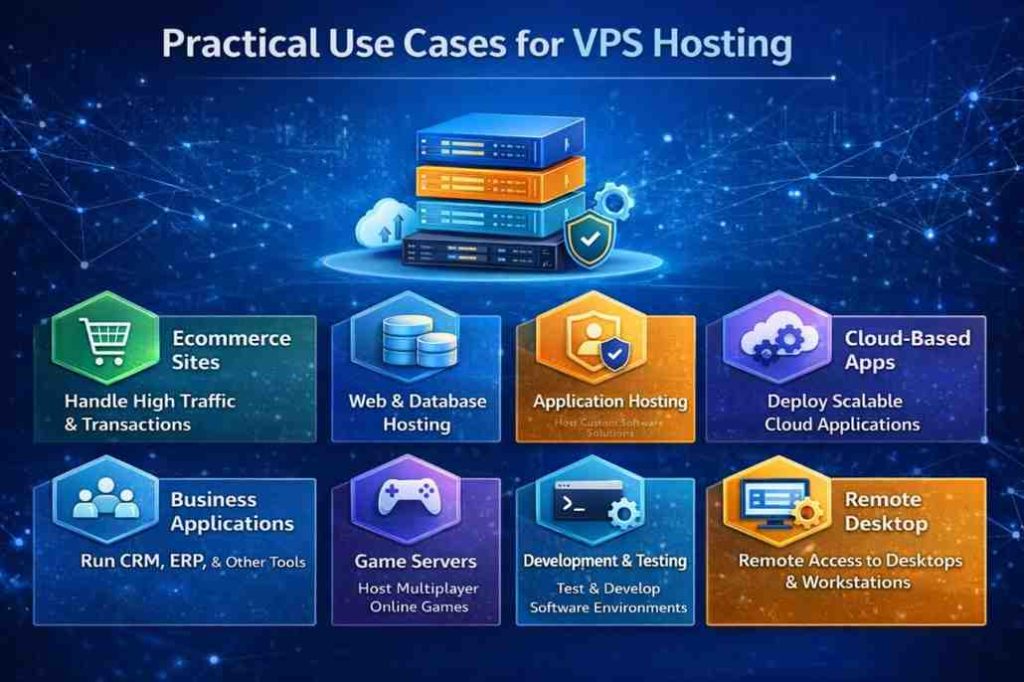
Business platforms require consistent availability and performance. VPS hosting supports internal systems, customer-facing websites, and transactional services with stable resource allocation. This ensures uninterrupted operations and reliable user experiences.
Development, Testing, and SEO Environments
Development teams use VPS hosting for testing, staging, and deployment environments. SEO specialists rely on consistent speed and uptime to maintain search engine visibility. VPS hosting provides the control and reliability needed for these workflows.
Dedicated Servers Explained
Dedicated servers represent the highest level of hosting control.
Definition and Core Characteristics
Dedicated servers provide exclusive access to physical hardware. All system resources are assigned to a single user, eliminating shared dependencies. This model delivers maximum performance, stability, and administrative authority.
Differences Between VPS and Dedicated Servers
While VPS hosting shares physical infrastructure through virtualization, dedicated Hosting eliminates virtualization layers. This results in higher processing efficiency and improved performance for demanding workloads.
Infrastructure of Dedicated Servers
Dedicated servers are designed for high-performance applications.
Hardware-Level Performance and Control
Dedicated servers offer direct access to powerful processors, large memory capacity, and high-speed storage. Full control allows precise system optimization for specific workloads and performance requirements.
Customization and Deployment Flexibility
Users can select hardware specifications and operating systems that match operational needs. This customization ensures efficient resource utilization and system compatibility.
Cost Optimization in Dedicated Hosting
Affordability does not necessarily require sacrificing reliability.
Operational Efficiency
Cost efficiency is achieved through optimized infrastructure management and streamlined operations. This enables access to dedicated servers at varying price levels while maintaining acceptable performance standards.
Balancing Cost with Performance
Flexible pricing models enable organizations to access dedicated infrastructure without incurring high costs. This balance supports sustainable operations and long-term scalability.
Dedicated Servers Use Cases
High-Traffic and Resource-Intensive Applications
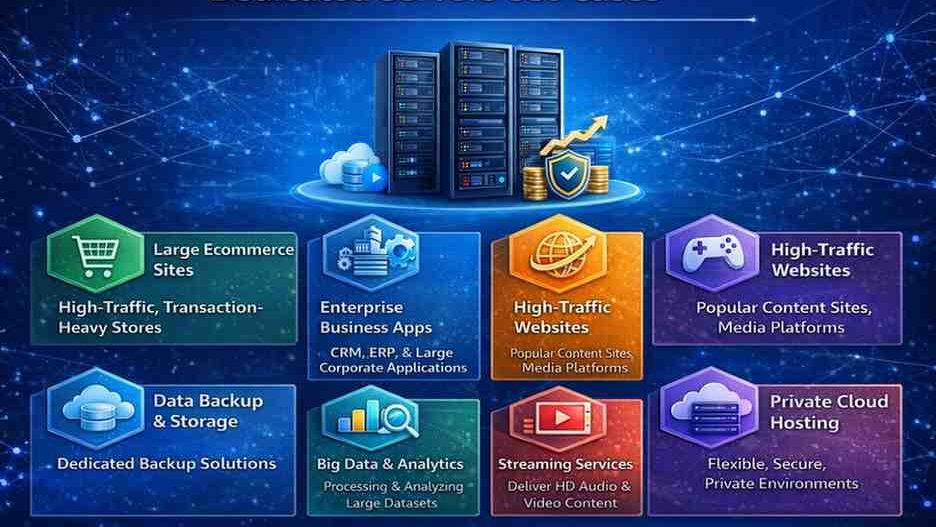
Large-scale websites and applications require consistent processing capacity. Dedicated servers manage high concurrency levels and sustained traffic without performance degradation.
Enterprise, Media, and Large-Scale Platforms
Enterprises benefit from the control and security offered by dedicated servers. Media platforms and data-intensive services rely on dedicated infrastructure for stability and throughput.
Security, Privacy, and Data Control
Security is an essential component of hosting infrastructure.
Network Protection and Threat Mitigation
Security mechanisms protect against unauthorized access and network-based attacks. These measures help maintain service integrity and operational continuity.
Data Ownership and Administrative Authority
Full administrative access ensures complete control over data handling and system configurations. This supports compliance requirements and internal governance policies.
Server Management and Administrative Access
Control Panels and Management Interfaces
Management interfaces provide centralized control for monitoring and configuration. These tools streamline routine administrative tasks and system oversight.
Operating System and Root Access
Root-level access allows full customization of system behavior. Multiple operating system options support diverse application requirements.
Comparative Overview of VPS and Dedicated Servers
Performance and Cost Comparison
Virtual private server hosting offers efficient performance at a lower cost. Dedicated servers deliver superior performance and greater resource availability. Each serves distinct operational needs.
Selection Based on Project Requirements
Projects with moderate workloads benefit from VPS hosting. High-demand systems require dedicated servers for optimal performance.
Conclusion
VPS hosting and dedicated servers represent two essential models of modern web infrastructure. VPS solutions provide a balance between cost efficiency and performance, while dedicated servers offer maximum control and processing power. The choice between them depends on workload intensity, scalability requirements, and long-term operational goals. Both models play a significant role in supporting stable, secure, and scalable digital systems in today’s online environment.