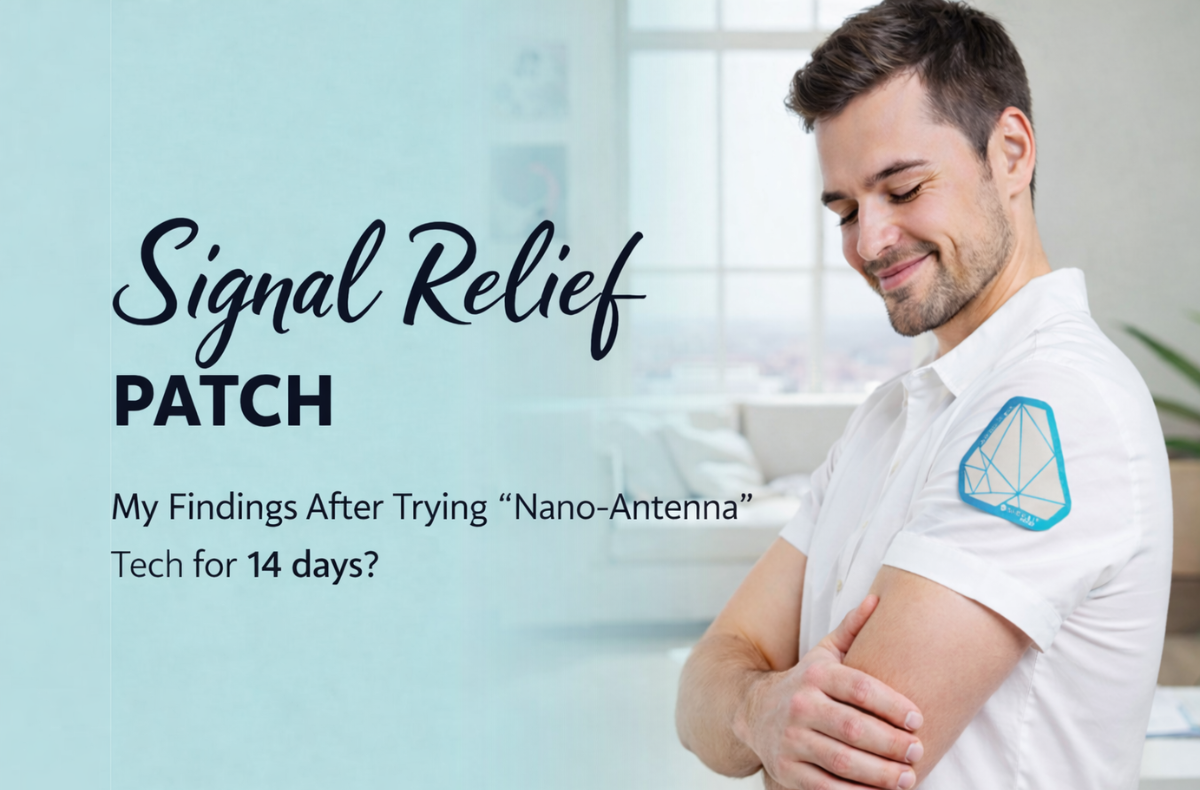
If you also deal with chronic musculoskeletal discomfort, you know how frustrating the constant cycle of pills, creams, and heating pads can be. I recently tried the Signal Relief Patch to see if it works for the pain I frequently experience on top of my right shoulder. Promising to interrupt pain using microscopic particle arrays, it sounds almost like science fiction.
If you are tired of temporary fixes, you might be wondering: Does the Signal Relief Patch really work? Over my 14-day trial, I tracked my pain levels, tested the adhesive longevity, and analyzed the overall cost, practical application, and whether this non-invasive pain management device deserves a spot in your daily routine.
Key Takeaways
- The Signal Relief Patch uses nanocapacitor technology to manage pain without drugs, offering a unique alternative to traditional treatments.
- Clinical studies show that the Signal Relief Patch significantly reduces pain and decreases reliance on medications.
- Users experience a learning curve to achieve optimal placement, but many report rapid pain relief and minimal side effects.
- At approximately $0.40 per day, the Signal Relief Patch offers a cost-effective long-term solution for chronic pain relief.
- Overall, the Signal Relief Patch provides noticeable relief for musculoskeletal discomfort, making it a valuable addition to pain management routines.
Table of Contents
- The Technology Behind the Signal Relief Patch
- Does the Signal Relief Patch Work?
- Signal Relief Patch vs. Traditional Options
- My 14-Day Experience with the Signal Relief Patch
- Is the Signal Relief Patch Price Justified?
- Signal Relief Patch Reviews, Complaints, and Hoax Concerns
- Safety and Signal Relief Patch Side Effects
- My Suggestions: Getting the Most Out of Your Patch
- Conclusion
- FAQs
Initial Impressions: Unboxing, Price, and Ingredients
My first impression of the Signal Relief Patch was its simplicity. The packaging is minimal, and the patch itself is remarkably thin and flexible.
Here is what you get when you order:
- One reusable 4.5-inch device
- Three double-sided, medical-grade adhesives
- A storage envelope and placement guide
Many people ask about its ingredients. Unlike medicated patches, this product contains zero drugs, chemicals, or herbs. The materials consist of latex-free, durable layers housing the internal nano-tech array.
Its price sits at around $144 for a single 4.5-inch patch (discounted from $179.95). While the initial cost of packages seems high compared to pharmacy heat wraps, this single patch is designed to last for an entire year.

The Technology Behind the Signal Relief Patch
Understanding what signal relief patch technology is helps explain why it feels different from traditional treatments. It does not use batteries, wires, or medication. Instead, it relies on advanced nanocapacitor technology.
So, how exactly does it work?
- Capacitive coupling: The Signal Relief Patch contains microscopic particles arranged in an array. This setup acts like an antenna.
- Pain signal interception: When any part of your body experiences pain, it generates extra electrical energy. It absorbs this excess energy, rerouting the signals away from our brain.
- Bio-electrical system integration: By interacting with our body’s natural electromagnetic field, it helps normalize local pH levels and reduce inflammation.
Because its ingredients do not include any actual drugs or chemicals, it functions entirely as a drug-free alternative.
Does the Signal Relief Patch Work?
To determine if the Signal Relief Patch is effective, we can look at a recent IRB-approved pilot study. Researchers tested this device in patients with general musculoskeletal discomfort.
The results showed significant improvements for participants using the Signal Relief Patch.
| Metric Evaluated | Average Reduction Achieved | Notes |
|---|---|---|
| VAS (Visual Analog Scale) Pain Reduction | 59.7% | 75% of subjects experienced a ≥ 30% reduction. |
| Non-Opioid Medication Use | 96.5% decrease | Drastic drop in over-the-counter pill reliance. |
| Opioid Medication Use | 91.4% decrease | Highlights its potential for serious chronic pain relief. |
| Adverse Events | 0 reported | No side effects occurred during the trial. |
These numbers highlight why so many signal technology pain relief patches are gaining traction in the medical community. The 91.4% drop in opioid use presents a massive opportunity for safer rehabilitation.
Signal Relief Patch vs. Traditional Options
How does the Signal Relief Patch stack up against other popular treatments? I compared it against traditional and advanced pain management tools.
| Treatment Type | Mechanism | Pros | Cons |
|---|---|---|---|
| Signal Relief Patch | Nanocapacitor technology | Reusable for 365 days, zero drugs, no batteries. | High initial cost, requires finding the exact placement. |
| TENS Unit | Neuro-stimulation (electrical shocks) | Strong immediate distraction from pain. | Requires batteries, bulky wires, and skin irritation from pads. |
| Lidocaine Patches | Numbing medication | Easy to find, familiar to most users. | Single-use only, chemical absorption, loses stickiness quickly. |
| Zynrelef™ / Exparel™ | Advanced liposome formulations | Highly effective post-surgical relief. | Prescription-only, invasive, expensive medical procedures. |
A direct TENS unit comparison shows that while both interrupt pain signals, the Signal Relief Patch achieves this without shocking your muscles or restricting your movement with wires.
My 14-Day Experience with the Signal Relief Patch
Here was the day-to-day routine showing my personal experience with the Signal Relief Patch.
Days 1-3: Finding the Placement “Sweet Spot”
When you try signal relief patch products for the first time, placement is everything. I applied it to my right shoulder. I learned quickly that moving it just an inch or two changes everything. Once I found the optimal placement, the throbbing sensation faded significantly within minutes.
Days 4-8: Testing Application Methods
I tested direct-to-skin application using the adhesive provided with the signal relief patch. The medical-grade silicone held up well. I also tested its over-clothing effectiveness. Surprisingly, placing it over a tight undershirt still provided noticeable relief, which is great if you have sensitive skin.
Days 9-14: Durability and Waterproof Testing
While taking a shower, I realized the Signal Relief Patch is water-resistant, not completely waterproof. You can sweat with it, but you should not soak it. The adhesive longevity impressed me. I used the same adhesive backing for about 4 days before needing to replace it on this device.
After wearing the Signal Relief Patch regularly for 14 days, I can say that it doesn’t completely eliminate my 100% pain, but it gives me reasonable relief that justifies its cost.
Is the Signal Relief Patch Price Justified?
The upfront cost of its kits usually ranges from around $144 for a single 4.5-inch patch. While this seems high compared to a box of disposable lidocaine, a cost-per-wear analysis changes the perspective.
The Signal Relief Patch boasts a 365-day reusable lifespan. If you use it every day for a year, the cost breaks down to roughly $0.40 per day. You will occasionally need to get its replacement adhesive packs, but you can also use standard medical tape to hold it in place to save money.
Signal Relief Patch Reviews, Complaints, and Hoax Concerns
When researching a new wellness product, it is natural to ask: Is Signal Relief Patch a hoax? A quick search for its reviews and complaints reveals a mix of highly enthusiastic users and a few skeptical voices.
Common Positive Feedback:
- Users report rapid relief from knee, shoulder, and back aches.
- Many appreciate the lack of odors or messy residues.
- Reviewers praise the long-term value compared to disposable patches.
Common Complaints:
- Some users struggle to find the exact placement spot for optimal relief.
- The upfront cost is a barrier for some buyers.
- A few complaints focus on the recurring cost of buying adhesive packs for signal relief patch replacements.
While you won’t find official reviews, consumer reports, or articles just yet, the clinical data and overwhelmingly positive reviews indicate it is a functional tool, not a scam.

Safety and Signal Relief Patch Side Effects
Safety is a massive advantage here. Because it is completely drug-free, there are zero chemicals inside it, and side effects are almost none.
During my test, I experienced no skin irritation from the patch itself. If you have extremely sensitive skin, the optional silicone adhesives might cause mild redness, but you can easily avoid this by tucking the Signal Relief Patch into a tight waistband or using a soft wrap instead.
My Suggestions: Getting the Most Out of Your Patch
To maximize your assets, follow these usage strategies.
- Move it around: If the signal pain relief patch isn’t working after 10 minutes, move it an inch to the left, right, up, or down.
- Preserve the stickiness: To extend the patch’s adhesive longevity, apply it only to clean, dry skin free of lotions.
- Order backups: When you get your initial kit on signalrelief.com or a trusted retailer, grab an extra pack of its adhesive. You will run out of the original three strips within a few weeks of daily use.
Conclusion
After two weeks, I can confidently say it delivers tangible results. These signal technology pain relief patches excel at managing daily musculoskeletal aches without the hassle of wires or the grogginess of pills.
If you deal with chronic back pain, knee aches, or shoulder tension, this device is a smart acquisition. It may take a few tries to perfect your placement, but the long-term, reusable relief is hard to beat.
FAQs
While you cannot get a free signal-relief patch, some retailers offer a few-week money-back guarantee. If you get one and it does not work for you, the return policy allows you to send it back for a refund.
The FDA does not formally approve or clear general wellness products. The patch is marketed as a low-risk, general wellness device for comfort.
Normally, the Signal Relief Patch itself is not sticky. You apply double-sided medical-grade silicone adhesives to the back. When the adhesive loses its grip after a few days, you simply peel it off and apply a fresh one.
You can get the patch directly from signalrelief.com, Amazon.com, or authorized distributors to ensure you receive the authentic product and the warranty.
The Signal Relief is specifically designed for musculoskeletal discomfort. Users report high success rates with joint aches, muscle spasms, and back tension. It works by interrupting the localized electrical signals your nervous system sends from the injury site.