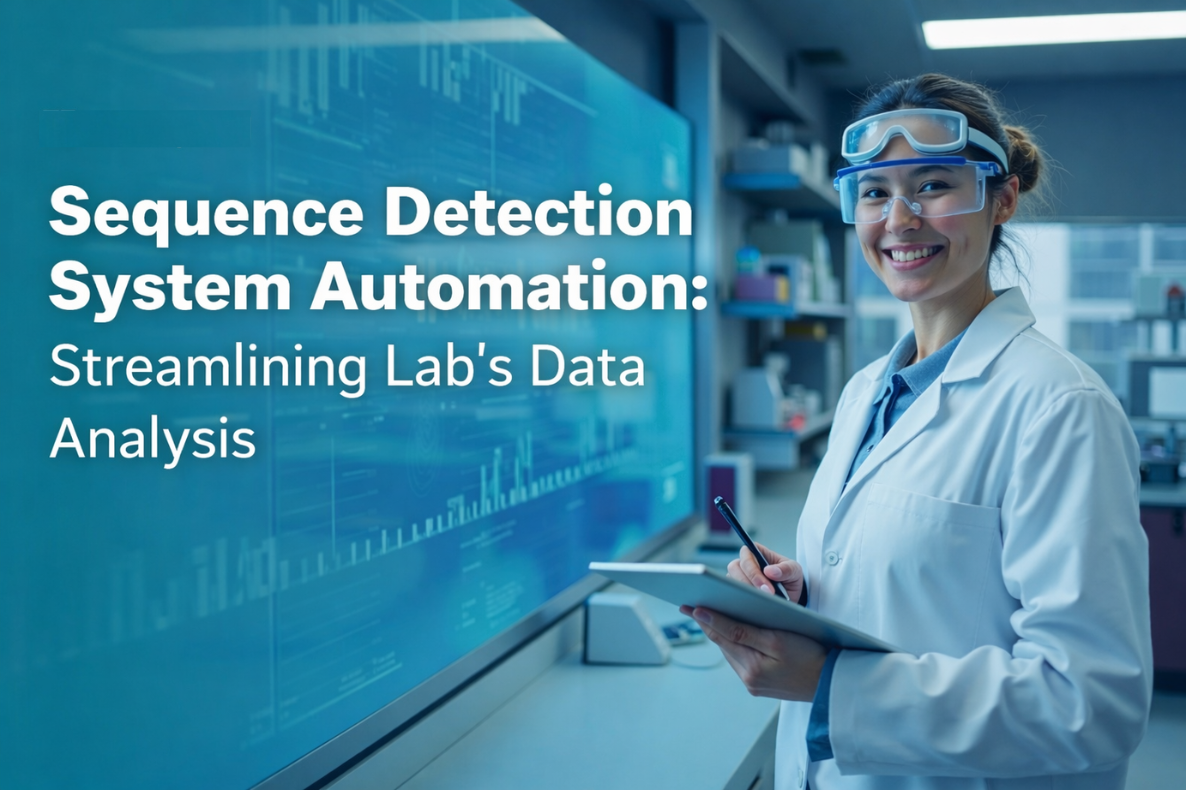
Modern genomics demands accuracy, speed, and reliability. As research and diagnostic workloads grow in 2026, laboratories rely on sequence detection system instruments to automate DNA and RNA amplification analysis, ensuring dependable results across clinical testing, drug development, and molecular research.
The latest inventions in software and hardware in sequence detectors are more accurate, efficient, and user-friendly interfaces that enable laboratories to minimize the process of analyzing their data and maximize productivity. In this post, we’ll cover the available sequence detection systems as of 2026, what they are capable of, and how your lab might benefit in workflow by automating sequence detection.
Key Takeaways
- Sequence detection systems (SDS) are crucial for automating DNA and RNA analysis, enhancing accuracy and speed in labs.
- Automation in SDS reduces human error, improves efficiency, and allows researchers to focus on higher-level tasks.
- Key features of modern SDS include real-time PCR analysis, high sensitivity, and data automation for quick results.
- Popular models like ABI Prism systems offer various throughput options, making them suitable for different lab sizes and budgets.
- Choosing the right SDS involves considering throughput needs, budget constraints, ease of use, and support availability.
Table of Contents
- What is a Sequence Detection System (SDS)?
- Why is Automation Critical in SDSs
- Key Features of Sequence Detection Systems
- The Role of ABI Prism Sequence Detection System Software
- Key Models in the ABI Prism Series
- Choosing the Best Sequence Detection System for Research Labs
- Challenges in SDS Automation
- Conclusion
- FAQs
What is a Sequence Detection System (SDS)?
A highly specialized laboratory instrument, a sequence detection system identifies and analyzes DNA, RNA, and other biomolecules using amplification methodologies such as quantitative PCR (qPCR). The systems are crucial in genetic variation research, pathogen diagnostics, and research on gene expression. They enable high-throughput, reproducible, and reliable results by automating the detection and quantification of nucleic acids.
Besides the hardware itself, the sequence detection system software is equally valuable in analysing and interpreting the data. The software takes the raw data represented by the machine and converts it into something meaningful that can be used to further research.

Why is Automation Critical in SDSs
The automation technology in sequence detection systems provides a more efficient and faster data analysis for the research lab. Conventional manual practices can be quite lengthy and are subject to human error, causing discrepancies in their outcomes. Automation reduces much of this variability, yielding more accurate, reproducible results while freeing lab personnel to take on other important tasks.
The advantages of automation in a system of sequence detectors include:
- Better efficiency: The automated systems can process a large amount of data within a shorter time compared to the manual systems, and accelerate research.
- Consistency and Accuracy: With automation, there are reduced opportunities for human error, and more reliable data is provided.
- Efficient Workflow: With automated repetitive functions like data acquisition and analysis, the laboratory will only be focused on analysis of results and experimentation instead of manual processing of data.
- Real-Time Monitoring: Several sequence detection systems, for example, the ABI Prism 7900HT Sequence Detection System, provide the opportunity for researchers to view experiments as they run in real-time and make changes to protocols, as necessary.
Key Features of Sequence Detection Systems
Modern SDS systems are characterized by numerous features rendering them irreplaceable to research labs. The following are some of the major features:
- Real-time PCR Analysis: The keystone to SDS systems, real-time PCR enables the quantification of nucleic acids within a sample. By measuring the fluorescence as a byproduct of PCR amplification, the system can inform the presence of genetic material in a sample and thus provide real-time measurements of it.
- High Sensitivity and Accuracy: SDS systems have been designed to be sensitive in order to detect even the smallest quantities of nucleic acids with high sensitivity and therefore provide dependable results. This is critical in other procedures like the analysis of gene expression, where even slight changes in gene expression can count.
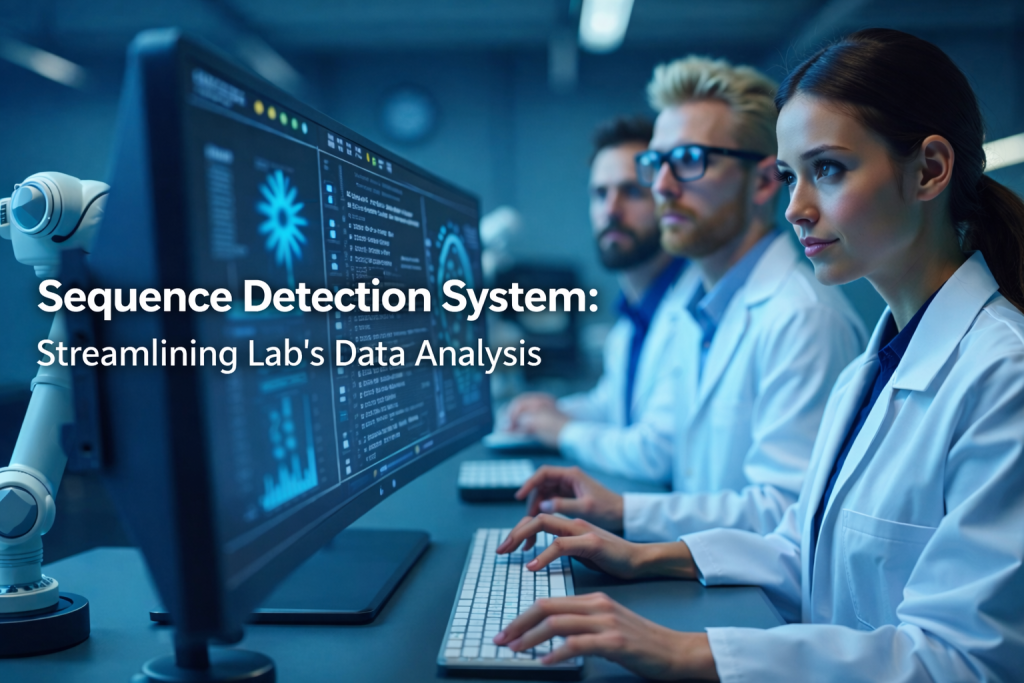
- Data Automation: SDS systems are installed with strong software for data analysis. These systems are capable of tracing the progress of the reaction, signal detection, and the calculation of the results in real time, thus releasing the researchers from manually analyzing the raw data.
- Scalability and Throughput: Advanced SDS models are also capable of high-throughput screening, where researchers are capable of running multiple samples at the same time. It is especially helpful for large-scale research and diagnostic testing where efficiency and time are vital.
- Integration with Lab Management Software: Contemporary SDS systems can be connected to other laboratory information management systems (LIMS), hence further increasing automation and data management. Such an integration ensures that tracking of all the samples, results storage, and reports is simplified and easy to obtain.
The Role of ABI Prism Sequence Detection System Software
The data analysis is based on ABI Prism Sequence Detection System software. The hardware of the detection system attaches it, manipulates the raw data, and translates it into biological information. This software automates a number of critical functions, which include:
- Data Acquisition: It handles the acquisition of the fluorescence data in the amplification cycles.
- Analysis of Data: The software is used to analyze the data to determine and measure the level of gene expression or mutations and other biological markers.
- Normalization and Calibration: It offers the methods of system calibration and data normalization to achieve accurate and repeatable results.
- Reporting: With automated reporting tools, it is easy to produce detailed results that are free of errors and can be shared and stored.
Implementing a sequence detection system software into the workflow delivers faster and more precise results. This improves lab productivity and allows researchers to focus on high-level scientific inquiries instead of routine data analysis.

Key Models in the ABI Prism Series
Research laboratories regard several sequence detection systems highly for their precision, dependability, and sophisticated features.
Here is a review of the best sequence detection systems for research labs in 2026:
1. ABI Prism 7000 Sequence Detection System
The ABI 7000 sequence detection system was one of the original real-time PCR instruments, providing robust amplification and sensitive detection for analysis of gene expression and quantitative PCR. While discontinued, numerous labs still maintain their work on existing ABI Prism 7000 platforms or depend on refurbished units to fulfill their research endeavors.
- Applications: Gene expression analysis, SNP detection, and quantitative PCR.
- Key Features:
- Real-time PCR for highly sensitive detection of rare targets.
- Accurate Data Analysis with ABI Prism 7000 sequence detection system software.
- The ABI Prism 7000 Sequence Detection System manual and ABI Prism 7000 Sequence Detection System user guide provide thorough instructions for setup and troubleshooting.
2. ABI Prism 7300 Sequence Detection System
The ABI Prism 7300 is a compact 96-well real-time PCR system that serves smaller laboratories or facilities with moderate throughput needs. Although newer models have replaced it in recent product collections, the marketplace still offers it in 2026, both as used and refurbished equipment.
- Applications: Quantitative PCR, gene expression analysis, mutation detection.
- Key Features:
- Simple operation with a user-friendly interface.
- Real-time PCR capabilities with four-color detection.
- Compatible with ABI Prism 7300 sequence detection system software for data analysis.
3. ABI Prism 7700 Sequence Detection System
The ABI 7700 sequence detection system was one of the earliest high-end models in the ABI Prism series, and researchers regarded it highly for its sensitivity and ability to use multiple fluorescent colors. Despite discontinuing the product, many legacy research laboratories still use it and acquire it through secondary markets.
- Applications: Real-time PCR, gene expression analysis, and molecular diagnostics.
- Key Features:
- An advanced optical system for high sensitivity.
- Integrated sequence detection system software for comprehensive data analysis.
- Good target detectability at low abundance.
- User documentation on improved user support and troubleshooting..
4. ABI Prism 7500 Sequence Detection System
ABI 7500 sequence detection system is a high-power, real-time, mid-range PCR system providing high-quality accuracy and reproducibility to various PCRs. Additionally, production of the ABI Prism 7500 was discontinued in 2025, yet the machine continues to be a valuable resource in many labs through used or refurbished sales.
- Applications: Gene expression profiling, viral load quantification, and general PCR applications.
- Key Features:
- High-performance optics for reliable signal detection.
- Real-time PCR for accurate quantitative results.
- ABI Prism 7500 sequence detection system software for streamlined data analysis and workflow.
5. ABI 7900HT Sequence Detection System
The ABI 7900HT leads among high-throughput models. Researchers use the system for large-scale genomic research, including gene expression profiling, SNP detection, and drug development. Although the company discontinued the ABI 7900HT in 2012, research laboratories still use it widely and consider it a gold standard in real-time PCR because of its scalability, reliability, and performance.
- Applications: High-throughput gene expression analysis, SNP detection, and drug development studies.
- Key Features:
- High throughput with a 384-well capacity.
- Excellent scalability for large research projects.
- Advanced software integration for real-time analysis and reporting.
- The Applied Biosystems 7900HT sequence detection system offers exceptional flexibility for conducting assays on hundreds of samples simultaneously.
Here’s a quick comparison of the ABI Prism sequence detection system in 2026:
| Model | Throughput | Key Features | Recommended Use | Price Range |
|---|---|---|---|---|
| ABI 7900HT | High (384-well) | High throughput, scalable, advanced software | Large-scale genomic research | $60,000 – $80,000 |
| ABI Prism 7000 | Medium (96-well) | Reliable, sensitive, user-friendly software | Gene expression, SNP detection | $2,000 – $10,000 |
| ABI Prism 7700 | Medium (96-well) | High sensitivity, advanced optical system | Molecular diagnostics, PCR | $2,000 – $3,000 |
| ABI Prism 7500 | Medium (96-well) | Affordable, high-performance optics | Routine PCR, viral load quantification | $1,000 – $35,000 |
| ABI Prism 7300 | Low (96-well) | Simple operation, compact design | Entry-level PCR | $300 – $7,000 |
The ABI Prism 7500 and the ABI 7900HT are the best options because of their high flexibility and throughput, and very good performance in various applications. However, for those of you who have a small lab and a limited budget, the ABI Prism 7000 and the ABI Prism 7300 are still great products and do provide value for money, especially as used units.
For SNP detection, gene expression profiling, or quantitative PCR, these systems and their sequence detection system software help you get dependable, fast results from labs worldwide.
Choosing the Best Sequence Detection System for Research Labs
With so many models available, choosing the right SDS system for your lab can be daunting. Some things to keep in mind when choosing an SDS include:
- Throughput Needs: If you have a large number of samples in your lab, you’ll require a system that can handle high throughput. Devices such as the ABI Prism 7900HT and the 7500 provide greater sample capacity, which suit high throughput laboratories.
- Budget: While high-end systems offer advanced features, they can come with a significant price tag. Consider your lab’s budget when choosing between models like the 7000 and 7900HT.
- Ease of Use: Select a system that features simple software and an easy-to-use interface. Many less technically proficient labs praise the ABI Prism 7000 for its simple interface and ease of use, making it a popular selection in those settings.
- Support and Maintenance: Ensure that the system you choose is well supported and that replacement parts and software upgrades are readily accessible. Without long-term support, your SDS will lose effectiveness and reliability.
Challenges in SDS Automation
While automated sequence detection systems offer numerous advantages, they are not without their challenges. However, some of the potential ABI Prism sequence detection systems issues that labs may encounter include:
- Initial Cost: High-throughput systems with broad automation capabilities may be expensive, especially for smaller laboratories with modest budgets.
- Software Complexity: Advanced software for sequence detection systems may be complex and require training to use effectively, which can delay the lab staff’s full utilization of the system.
- System Maintenance: Automated systems usually require periodic maintenance to work properly. Labs have to be ready with maintenance and troubleshooting.
Conclusion
Sequence Detection Systems (SDS) enable researchers to obtain precise data in real time and simplify complicated procedures, essential for every researcher. These systems make the process of detecting and quantifying nucleic acids faster, more accurate, and less prone to human errors. Whether gene expression analysis, diagnostics, or high-throughput screening is your focus, an SDS can bring significant productivity and efficiency gains to your lab.
However, the best SDS system for your lab will depend on the application, your budget, and the number of samples you plan to process. As these technological developments become more mature, the systems will evolve further, with more advanced functions for data automation and analysis. With automation, researchers can spend more time making scientific discoveries and less time processing data manually, ultimately making more progress in their fields.
FAQs
A Sequence Detection System detects and quantifies DNA, RNA, or other biomolecules during amplification processes like qPCR. It enables real-time analysis of genetic material, critical for gene expression, mutation detection, and pathogen identification.
Automation speeds up data processing by eliminating manual data handling, reducing errors, and improving consistency. Researchers can focus on analysis rather than routine tasks, leading to faster, more reliable results.
SDS systems can perform gene expression analysis, SNP detection, viral load quantification, mutation detection, and more. They support both qualitative and quantitative PCR methods, providing versatile applications in genomics and diagnostics.
Real-time PCR amplifies DNA or RNA and measures fluorescence emitted during amplification cycles. However, the fluorescence correlates with the amount of genetic material present, allowing for real-time quantification.
SDS can process a variety of biological samples, including blood, tissue, saliva, and cultured cells. Additionally, researchers commonly use it in genomics, diagnostics, and clinical studies to analyze DNA, RNA, or specific proteins.