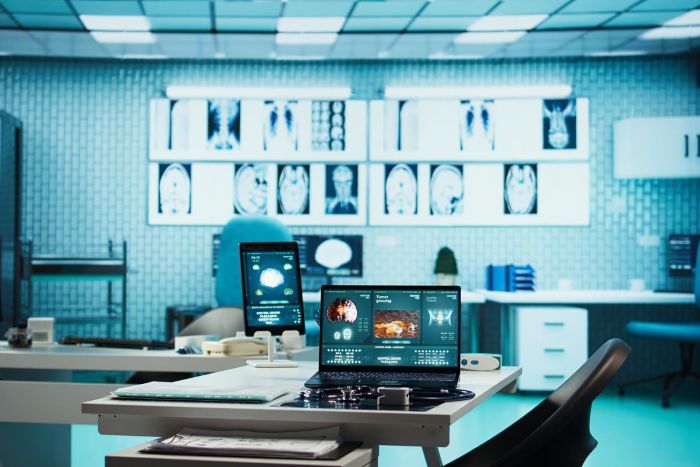
Medical technology has advanced rapidly over the past two decades. From AI-assisted diagnostics to wearable monitoring devices and connected surgical tools, innovation in medtech products is reshaping how care is delivered across hospitals, clinics, and homes.
But the path from a promising prototype to a device used in real clinical settings is long and complex. Unlike most consumer technologies, medical products must balance engineering innovation with strict safety, regulatory, and usability requirements. A breakthrough idea alone is rarely enough.
Successful medtech products emerge from a development process that blends clinical insight, engineering rigor, regulatory awareness, and thoughtful design. Understanding how that process works helps innovators build solutions that not only function well technically but also succeed in real healthcare environments.
Key Takeaways
- Medical technology has evolved rapidly, but developing medtech products involves complex regulatory and usability challenges.
- Successful medtech products start by addressing real clinical problems through insights from healthcare professionals.
- Designing for clinical environments requires user-centered design and consideration of factors like sterilization and usability under pressure.
- Regulatory approval is vital, necessitating early integration of compliance with engineering decisions to avoid costly redesigns.
- Collaboration among engineers, clinicians, and regulatory specialists is essential for creating medtech products that effectively improve patient care.
Table of contents
- Identifying Real Clinical Problems
- Moving From Concept to Functional Prototype
- Designing for Clinical Environments
- Navigating Regulatory Pathways
- Testing and Clinical Validation
- Scaling for Manufacturing
- Integrating With Healthcare Systems
- The Importance of Cross-Disciplinary Collaboration
- Building Technology That Improves Care
Identifying Real Clinical Problems
Strong medtech products begin with a clear understanding of a clinical problem. Many promising ideas struggle because they are designed around technological capability rather than real healthcare needs.
Clinicians operate in fast-paced environments where tools must be reliable, intuitive, and efficient. A device that adds complexity to a workflow—no matter how advanced—can face resistance from healthcare professionals.
Early problem validation often involves conversations with physicians, nurses, technicians, and healthcare administrators. These discussions help identify challenges such as:
- Inefficient diagnostic workflows
- Delays in patient monitoring
- Data fragmentation between systems
- Manual processes that could be automated
By grounding product concepts in real-world clinical friction points, development teams increase the chances that a solution will ultimately be adopted.
Moving From Concept to Functional Prototype
Once a problem is clearly defined, development teams move toward creating early prototypes. At this stage, the goal is not perfection but functionality.
Prototypes help answer key questions:
- Does the technology work as expected?
- Can it operate reliably in realistic conditions?
- Is the user interface understandable for clinicians?
In many cases, multiple iterations are required before a concept becomes technically viable. Early prototypes may involve simplified hardware setups, simulation environments, or limited software implementations.
Rapid iteration is particularly important in medical technology because technical feasibility must align with clinical usability. A device that works in the lab but fails in a clinical workflow will ultimately require redesign.
Designing for Clinical Environments
Healthcare environments present unique design challenges that differ from typical consumer or enterprise technology settings.
Medical devices must function reliably in settings where time pressure, infection control, and patient safety are constant concerns. Designers must account for factors such as sterilization requirements, equipment compatibility, and ease of operation during high-stress situations.
User-centered design is especially important. Clinicians often interact with devices while multitasking, wearing gloves, or operating under urgent conditions. Controls, displays, and alerts must be intuitive and easy to interpret.
Human factors engineering plays a major role here. Testing with real users helps reveal design issues that may not be obvious during internal development. Even small usability improvements can significantly reduce error rates and improve workflow efficiency.
Navigating Regulatory Pathways
Regulatory approval is one of the most defining aspects of medical technology development. Before devices can be marketed or used in clinical settings, they must demonstrate safety and effectiveness through established regulatory frameworks.
In the United States, the Food and Drug Administration (FDA) evaluates medical devices based on risk classification. Lower-risk devices may follow streamlined pathways, while higher-risk technologies require more extensive testing and clinical validation.
Preparing for regulatory review requires careful documentation throughout development. Design decisions, testing protocols, and risk assessments must all be recorded clearly.
Because regulatory considerations affect everything from device architecture to testing strategies, many teams integrate compliance planning early in the process rather than treating it as a final hurdle.
Teams experienced in medtech product development often stress the importance of aligning engineering decisions with regulatory strategy from the outset. When compliance is considered early, organizations can avoid costly redesigns and accelerate the path toward validation and approval.
Testing and Clinical Validation
Before any medical device reaches patients, it must undergo rigorous testing to confirm it performs safely and consistently. In medtech products, validation is not a single step near the end of development—it’s a layered process that begins early and continues through regulatory review.
The goal is simple: prove that the technology works not only in controlled environments, but also in real clinical settings.
Bench Testing
Bench testing focuses on verifying that a device performs reliably under controlled conditions. Engineers evaluate core performance metrics such as durability, accuracy, electrical stability, and response times.
These tests often simulate years of use in a compressed timeframe. Devices may be exposed to repeated operating cycles, environmental stress, and mechanical strain to identify weaknesses before they appear in clinical environments.
This phase is critical for confirming that the core technology behaves as expected before moving to more complex testing stages.
Usability and Human Factors Testing
Technical performance alone is not enough in healthcare. Devices must also be intuitive for clinicians who often operate under time pressure.
Usability testing places real healthcare professionals in simulated clinical scenarios and observes how they interact with the device. Researchers evaluate whether instructions are clear, controls are easy to use, and workflows remain efficient.
These studies often reveal issues that engineers may not anticipate, such as confusing interface elements or steps that slow down patient care.
Clinical Evaluation
For higher-risk medical devices, clinical studies may be required to demonstrate safety and effectiveness with real patients.
These studies help confirm that the device performs as intended in real healthcare environments. The resulting data often support regulatory submissions and provide healthcare providers with confidence that the technology can be safely integrated into clinical practice.
While this testing process can extend development timelines, it plays a crucial role in ensuring that new medical technologies meet the high standards required for patient care.
Scaling for Manufacturing
Once a device has proven its technical feasibility and passed key validation steps, development shifts toward manufacturing readiness.
Scaling a medical device introduces its own set of challenges. Manufacturing processes must produce consistent, high-quality devices while meeting regulatory and quality management standards.
Key considerations include:
- Component sourcing and supply chain stability
- Quality control processes
- Device traceability and documentation
- Cost efficiency for large-scale production
Manufacturing strategies must also account for the device’s lifecycle. Updates, servicing requirements, and future improvements often influence design decisions during this stage.
Integrating With Healthcare Systems
Modern medtech products rarely operate in isolation. Many devices must integrate with broader digital health ecosystems that include electronic health records, hospital IT systems, and remote monitoring platforms.
Interoperability plays an increasingly important role in device design. Healthcare providers want technologies that connect easily with existing systems rather than creating additional data silos.
This integration requires attention to data standards, cybersecurity safeguards, and system compatibility. As healthcare becomes more data-driven, these considerations are becoming central to successful product development.
The Importance of Cross-Disciplinary Collaboration
Medtech innovation thrives when multiple disciplines work together throughout development. Engineers, clinicians, regulatory specialists, designers, and manufacturing experts each contribute essential expertise.
Early collaboration helps teams anticipate challenges that might otherwise emerge late in development. For example, clinician feedback can shape usability decisions, while regulatory insight can guide documentation and testing strategies.
This collaborative approach also encourages solutions that balance technical innovation with practical usability—an essential combination for products that must function reliably in real healthcare settings.
Building Technology That Improves Care
Developing a medical device requires patience, precision, and a deep understanding of healthcare environments. The journey from prototype of medtech products to patient involves far more than engineering a functional product.
Successful medtech innovations address genuine clinical problems, integrate smoothly into healthcare workflows, and meet the rigorous standards required for patient safety.
As healthcare continues to evolve through digital transformation, the organizations that approach product development thoughtfully—from early concept through clinical validation—will be best positioned to deliver technologies that truly improve care.