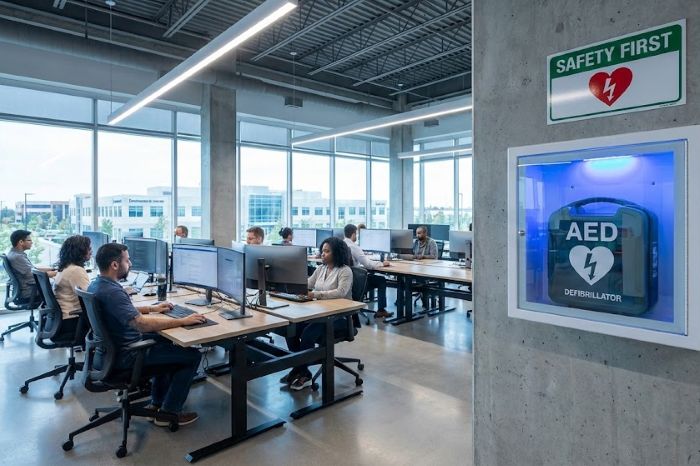
Executive Summary: This article addresses the unique safety challenges within Markham’s technology sector. Despite being perceived as “low-risk” environments, modern tech campuses face significant health threats, particularly regarding cardiovascular health and sedentary work styles. The post argues that true corporate leadership involves recognizing and protecting the human operating system that powers every innovation, integrating advanced First Aid protocols—like AED deployment and mental health awareness—into the company culture, ensuring that “Silicon Valley North” is as safe as it is innovative.
Markham, Ontario, has earned its reputation as “Canada’s High-Tech Capital.” With over 1,500 technology companies—including giants like IBM, AMD, and Honda Canada—the city is a bustling hub of innovation. The focus here is rightly on software, semiconductors, and scaling digital infrastructure.
However, amidst the focus on digital transformation, there is a physical reality that many C-suite executives overlook. While we optimize our servers and secure our networks, we often neglect the most critical hardware in the building: The Human Body.
In the pristine, climate-controlled environments of a modern tech campus, “safety” feels like a solved problem. There are no forklifts, no hazardous chemicals, and no heavy machinery. But the absence of industrial hazards does not mean the absence of risk. In fact, the sedentary nature of the tech sector creates its own specific, silent threat profile.
Key Takeaways
- Markham’s tech sector faces unique safety challenges, despite being seen as low-risk environments.
- Cardiovascular health risks arise from sedentary work styles and high-pressure conditions in tech roles.
- Integrating advanced First Aid protocols, including AEDs and mental health training, is essential for corporate culture.
- Investing in a safety culture improves employee retention, resilience, and reduces liability.
- As Markham grows in technology, its safety standards must evolve to match the innovation within the sector.
Table of contents
The “Low Risk” Myth
The biggest misconception in the corporate world is that a quiet office is a safe office.
Data from the Heart and Stroke Foundation reveals a different truth. The risk of sudden cardiac arrest (SCA) does not discriminate by industry. In fact, the risk factors associated with high-pressure tech roles—prolonged sitting, high stress, and “crunch time” deadlines—can significantly increase cardiovascular strain.
When a software engineer collapses at their desk from a cardiac event, the “low risk” environment suddenly becomes a high-stakes emergency room. The response time of an ambulance in a sprawling corporate park can be 8 to 12 minutes. Brain damage begins in four.
The gap between those two numbers is where corporate leadership is tested.
Upgrading the “Safety Stack”
Modern safety is about more than just a first aid kit in the breakroom. It requires a systemic approach, much like any other critical business infrastructure.
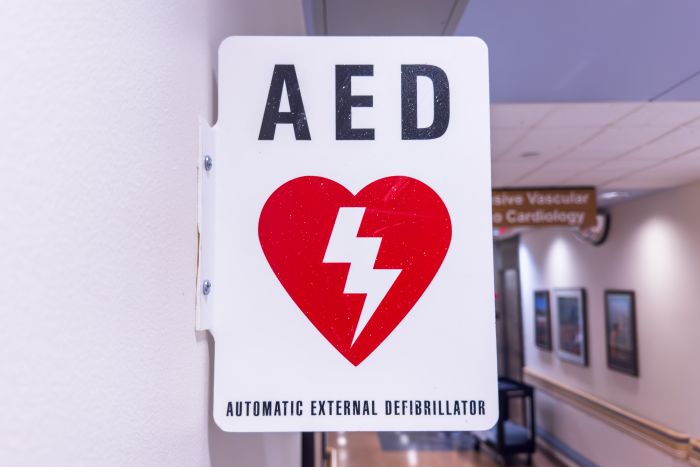
- Hardware (AEDs): Automated External Defibrillators should be as ubiquitous in tech offices as fire extinguishers. They are the only effective treatment for SCA and serve as critical protection for the human operating system that powers every organization.
- Software (Training): Hardware is useless without the user knowledge to operate it. This is where high-quality training becomes the “software” that powers the response.
For companies in the GTA, localizing this training is key. Leading companies are partnering with Coast2Coast First Aid Markham to ensure their staff are protected, turning safety into a key component of their corporate culture. By working with local experts who understand the specific layout and density of Markham’s tech parks, businesses can design response protocols that actually work in real-time.
Mental Health: The New First Aid Frontier
The definition of “First Aid” is also expanding. In the high-pressure world of startups and tech giants, “burnout” is not just a buzzword; it is a medical reality.
Progressive organizations are now integrating Mental Health First Aid into their standard protocols. Recognizing the signs of a panic attack, acute anxiety, or substance abuse is just as vital as knowing how to bandage a cut.
It signals to the workforce that the company values their psychological safety as much as their physical output.
The ROI of Safety Culture
From a governance perspective (ESG), investing in advanced safety training is a clear win.
- Retention: Top talent wants to work for companies that demonstrate genuine care.
- Resilience: A team that feels prepared for emergencies is a team that is less anxious and more focused.
- Liability: Demonstrating that you have exceeded the minimum WSIB standards protects the organization from negligence claims.
Conclusion: The Ultimate Update for the Human Operating System
Innovation is about looking forward. It is about anticipating problems before they happen and building solutions.
Applying that same mindset to employee safety is the mark of a mature, world-class organization. Investing in systems that protect the human operating system — the people whose expertise, creativity, and decision-making drive every breakthrough — is not a compliance exercise. It is a strategic imperative.
Executive Resource: Audit your current safety readiness. You can review corporate training solutions for the Markham area here: https://www.c2cfirstaidaquatics.com/markham-first-aid-cpr-training-facility/
Corporate Safety FAQs
Q: Do we legally need an AED in our office? A: While not universally mandated for all private offices yet, the trend in Ontario is moving toward wider public access defibrillator (PAD) legislation. From a liability and best-practice standpoint, having one is strongly recommended for any office with over 50 employees or aging demographics.
Q: How does “Blended Learning” benefit a tech company? A: It minimizes disruption. Staff can complete the theoretical modules online (asynchronous learning) and only attend a short, focused in-person session for skills verification. This respects the time constraints of dev sprints and project deadlines.
Q: What is the ratio of First Aiders to staff in an office? A: In Ontario, for an office with 6 to 15 employees, you need at least one Standard First Aid certified person per shift. For larger offices, the requirement scales up. Best practice in large tech campuses is to have a “Safety Warden” for every department or floor.