Great healthcare comes down to communication. Good healthcare communication skills with patients leads to a better understanding of their conditions, treatment plans, and how to care for themselves. With the help of modern technology, the internet has many useful tools that make it easier to share information and talk to people. This guide talks about how different technologies can help you interact with your patients in a better way.
Digital platforms also make it easier for healthcare providers to keep patients informed between appointments. When used correctly, these tools can build trust, reduce misunderstandings, and create a more supportive care experience.
Key Takeaways
- Effective healthcare communication skills enhance patient understanding and care.
- Digital tools support skill development, patient interaction, and team communication.
- Simulations offer a risk-free environment to practice challenging conversations with patients.
- Feedback tools help healthcare workers analyze and improve their communication abilities.
- Integrating technology strengthens healthcare communication skills and improves patient support.
Table of contents
- Use Digital Learning Platforms for Skill Development
- Practice Patient Interaction Through Simulations
- Use Collaboration Tools for Team Healthcare Communication Skills
- Improve Documentation with Digital Systems
- Use Video Communication for Patient Support
- Analyze Communication Skills with Feedback Tools
- Technology Helps Build Better Healthcare Communication Skills
Use Digital Learning Platforms for Skill Development
When it comes to technical training, it can be hard to get professional training. As a healthcare worker, you can practice saying and talking to people with conversational forms on online platforms that include interactive lessons and situations.
For example, soft skill training for healthcare professionals includes simulations, where you get to practice how you communicate with patients and coworkers. These tools allow you to build your confidence and be solid as a speaker in a risk-free environment.
Practice Patient Interaction Through Simulations
To avoid the pressures of the real world, you can acquire the skills necessary to communicate with patients in a virtual setting. They’re simulations of things that happen in real life: reviewing a treatment plan, delivering bad news.
By practicing these scenarios, you can learn to communicate better and handle stressful situations more effectively. When you want to communicate with the patient, you are clear because you have received training on what you are saying. Simulations also help healthcare professionals strengthen their healthcare communication skills by allowing them to repeat difficult conversations in a safe environment. Over time, this practice builds confidence and helps providers respond with greater clarity and empathy during real patient interactions.
Use Collaboration Tools for Team Healthcare Communication Skills
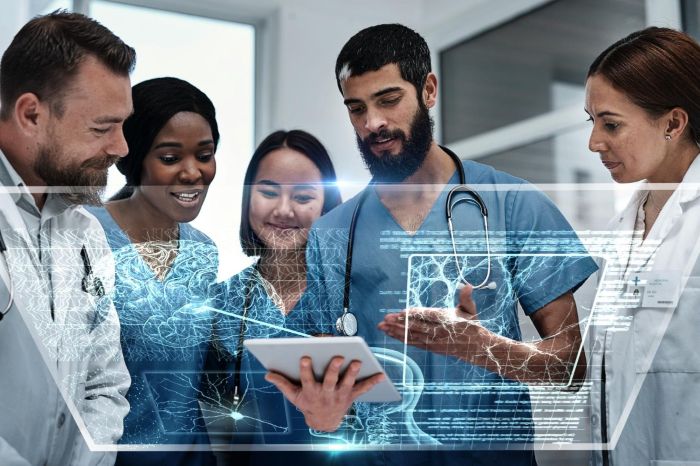
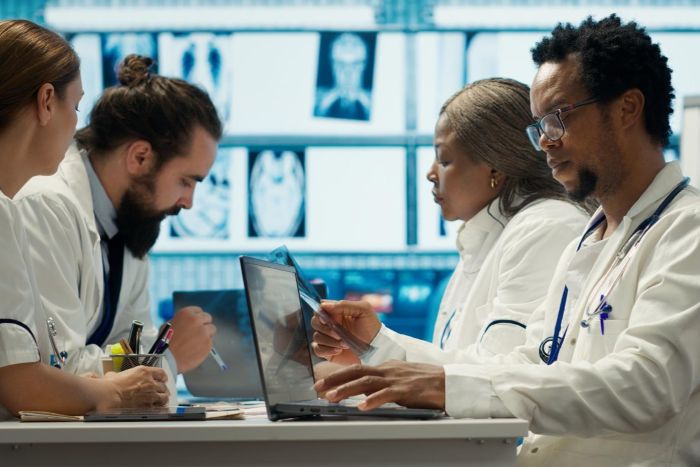
Healthcare teams depend on departments being able to talk to each other quickly and correctly. Digital collaboration tools make it easy for your staff to share news, coordinate care plans, and keep records.
These systems keep important information organized and easy to find, which cuts down on misunderstandings. When your team members can talk to each other easily, you can better coordinate patient care.
Improve Documentation with Digital Systems
Accurate documentation is an essential component of effective communication in the healthcare industry. The use of electronic health record systems enables medical professionals, such as nurses and doctors, to maintain patient records that are exact and unambiguous.
With these systems, it is much simpler to keep track of details such as the history of treatments, the results of tests, and the instructions for care. When your paperwork is well organized and easy to find, it’s easier for your healthcare teams to talk to each other.
Use Video Communication for Patient Support
In the modern healthcare system, video consultations and telehealth have emerged as helpful means by which patients and physicians can communicate with one another. They enable medical professionals to communicate with patients from a distance while still providing them with individualized guidance.
Video chat can help patients understand better because they can see explanations and talk to the doctor at the same time. It also makes it simpler for patients to receive medical attention when it is difficult for them to physically visit a doctor.
Analyze Communication Skills with Feedback Tools
There are some new training platforms that come equipped with feedback mechanisms that evaluate communication abilities. The purpose of these tools is to listen to phone calls to pick up on emotional responses, tone, and clarity.
As a healthcare worker, structured feedback will help you figure out what you need to work on. What you learn from this will gradually improve how you talk to people.
Technology Helps Build Better Healthcare Communication Skills
Technology is changing the way you learn to talk to other people and how you practice. Better teamwork among healthcare workers can make care safer and improve relationships with patients.
Improving healthcare communication skills with the help of technology can also lead to clearer instructions and better patient understanding. Digital tools allow providers to share updates, educational resources, and reminders more quickly. As a result, patients often feel more supported and confident about managing their care. When used thoughtfully, technology becomes a powerful partner in strengthening healthcare communication skills across the entire care team.