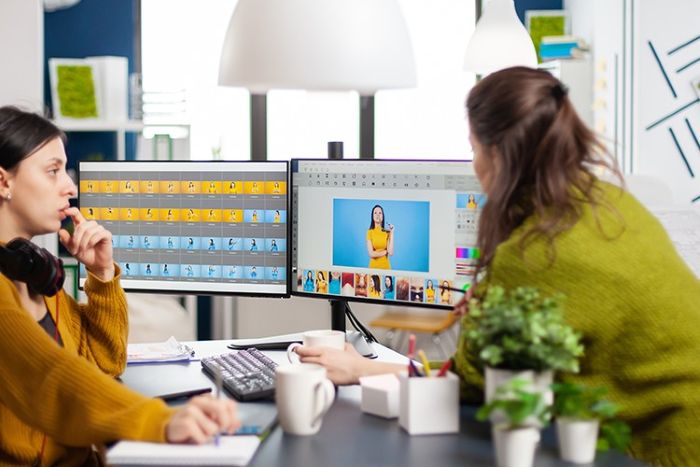
We used to think of motion graphics as polish. A shiny layer on top of “the real content.” That era’s gone. Today, motion sits inside the content. It explains, persuades, invites. It’s not a spectacle for its own sake, it’s language. This shift defines the future of visual communication. If you need a working example rather than a slogan, visit the One Bright Dot motion graphics studio, notice how they build clarity first, then style on top. That order matters, especially when most of your audience is skimming with one eye and a thumb.
Motion is how digital brands speak under pressure. Tiny screen, little time, competing sounds, fractured attention. You either design for that reality or you get ignored. The future favors studios that think like editors, designers and psychologists at once.
Key Takeaways
- Visual communication is shifting from decorative motion to a functional language that guides attention and understanding.
- The most effective motion graphics prioritize clarity, hierarchy, and system-based design over spectacle.
- Platform-native formats, accessibility, and sound design are now core to modern visual communication.
- AI accelerates production, but human taste and editorial judgment determine quality.
- Strong motion work feels calm, intentional, and repeatable while remaining emotionally engaging.
Table of contents
- Why Motion Graphics Are Becoming the Default Interface for Visual Communication
- The Modern Motion Stack: From Concept to System
- Data Storytelling That Respects Humans
- Platform-Native Motion Beats Post-Hoc Cropping
- Sound As Motion’s Quiet Partner
- Ai Is A Tool, Taste Is A Decision
- Brand Identity, But Kinetic
- Localization With Personality, Not Dilution
- Measuring Impact Without Killing Soul
- How To Work With A Motion Graphics Studio Without Losing Your Mind
- What The Next Two Years Are Likely To Bring
- What To Remember
Why Motion Graphics Are Becoming the Default Interface for Visual Communication
Most interactions online are visual plus kinetic. A button doesn’t just exist, it hints. A chart doesn’t just show, it guides. A headline doesn’t just announce, it arrives at a pace that sets mood. Motion gives digital content three gifts that define effective visual communication: orientation, emphasis, and memory.
Orientation: show me where to look in a second and a half. Emphasis: hold the beat that matters, release the beats that don’t. Memory: create a small, repeatable pattern the brain can recognize later. You can feel when a studio understands this. The work feels calm even when fast.
The Brain Wants A Path, Not Fireworks
Kinetic clarity beats kinetic complexity. Grids help. Hierarchy helps. Micro-delays between elements help. A strong motion team will use timing as punctuation, not a magic trick. They will cut flourishes that confuse and keep the tiny signals that direct.
The Modern Motion Stack: From Concept to System
If you’re evaluating a studio, don’t stop at a reel. Ask how they build systems. Kits for transitions, annotation styles, icon families, title behaviors, data states, microinteractions. Systems are speed and consistency in disguise.
A shop like One Bright Dot will map the narrative first, then assign motion roles. Typography becomes a guide, icons become actors, depth becomes context. It’s theatrical, but restrained. You want the audience to feel led, not pushed.
2.5d Realism Without The Render Tax
Depth is useful and expensive, so pick tactics wisely. Parallax, shadow discipline, camera moves that imply space rather than simulate it. You get tactility, but your renders land in hours, not days. Better for deadlines, kinder to teams.
Data Storytelling That Respects Humans
We’ve all suffered through charts that felt like arguments. Motion can fix that, if you treat numbers like characters. Enter, do their job, exit. Build beats, not dumps. Reveal relationships, not just values. Let the audience follow a thread.
There’s also a tone question. Corporate graphs often try too hard. Add air. Let labels breathe. Use rhythm to pace insight. A studio with taste will turn complexity into curiosity rather than intimidation.
Accessibility, Captions And The Silent Viewer
Half your audience watches without sound. More than half will thank you for captions that are readable, well placed, and timed to speech. Make them designed, not dumped. Contrast matters, line breaks matter, idioms matter. The future of visual communication is kinder than the past. It invites.
Platform-Native Motion Beats Post-Hoc Cropping
Vertical isn’t a crop, it’s a composition. If your work lives on TikTok, Reels, Shorts, or stories, plan hooks for portrait, stack type without crushing, hold eye line close, keep touch target metaphors legible. Good motion in vertical feels intimate and guided. Bad motion feels busy.
Horizontal has its place, especially for long-form explainer and product films. Smart studios plan both, then keep kit libraries so the voice stays coherent while format flexes.
Micro-Series, Not One-Offs
The feed rewards continuity. Motion systems let you create episodic arcs that audiences actually follow. Character motifs, title behaviors, data reveal styles, sound beds. Your content feels connected without feeling repetitive. Brands thrive here when the studio behaves like an editorial team with design chops.
Sound As Motion’s Quiet Partner
Yes, we’re talking visuals, but sound rides with them like a bike chain. Your music cues carry pace, your SFX locate space, your mix protects the human voice. Test on phone speakers. Test with noise. The craft is pragmatic, the outcome is emotional.
A mature motion studio will keep curated sound libraries, license with foresight, and design silence as a character, not an accident. That restraint earns trust.
Ai Is A Tool, Taste Is A Decision
AI can propose timing, flag awkward overlaps, accelerate rotoscoping, clean edges, and pre-score pacing suggestions. Useful. But taste decides. A strong studio sets guardrails, reviews with human eyes, and refuses “auto energy” when it fights clarity.
Brand Identity, But Kinetic
Static guidelines are a start, not an end. Translate palette, type, shape language and voice into motion behaviors. How does your brand arrive? How does it emphasize? How does it exit? What is its default pace? Where does it breathe?
A good studio documents this, then builds kits around it. Designers and editors move faster, stakeholders argue less, the audience learns your visual voice subconsciously. That’s the holy grail: recognition without repetition.
Texture, Not Just Resolution
High resolution is common, convincing texture is rare. Micro-contrast, measured grain, gentle bloom, restrained glow. The tricks are older than social media and still work when you use them with taste. Texture makes digital feel human.
Localization With Personality, Not Dilution
Translating motion is more than swapping words. Humor, gesture, cultural rhythm. Some beats land differently in different regions, so let regional teams lead where it matters, then pull best-in-class back up into global. You keep your voice, and gain relevance.
Captions and typographic nuance change per language too. That means testing, not assumptions. A future-facing studio will budget for this, quietly, and treat it as craft rather than compliance.
Measuring Impact Without Killing Soul
You have to prove value. Fine. Design measurement in ways that respect the art. Track watch-through, pause points, replays, exit points, tap targets, and comments that quote moments. Use the data to refine pacing and placement, not to sand off personality.
Look for teams who share editorial rationale alongside metrics. Numbers alone won’t tell you why a moment works. Language helps the learning travel.
How To Work With A Motion Graphics Studio Without Losing Your Mind
Set intent, not micromanagement. Describe the feeling at second seven and the change you want at second forty-five. Bring constraints early, especially platform and length. Share rough scripts and let motion interrogate the shape before you lock.
Expect kits, not chaos. Expect predictable review windows, naming that makes sense, versioning that protects sanity. Expect kindness when the work pivots at the last minute. The best teams carry calm like a habit.
Red Flags You Can Catch In A Week
Reels without full pieces. Flourish-heavy animations with weak hierarchy. Captions jammed wherever. No vertical examples. Defensive answers to accessibility questions. Vague schedules and loose revision rules. If your gut feels fog, listen.
What The Next Two Years Are Likely To Bring
- More intimate motion. Personal scale beats billboard scale. Faces, hands, small stories.
- Better data interaction. Charts you want to touch, even when you can’t. Emotional labeling.
- Platform templates that aren’t generic. Voice-coherent kits, faster output, fewer re-edits.
- Mixed reality behaviors creeping into everyday content. Light and shadow implying a shared space.
- Sound is treated as a design system, not just tracks. Cohesive, recognizable, adaptable.
And underneath, the same principle: clarity first. Then charm.
What To Remember
Motion graphics are shifting from decoration to language. Studios that build systems, design for platforms, protect accessibility, and collaborate with sound and engineering will lead. The work that wins feels guided, humane and repeatable without feeling mechanical.
If you’re choosing a partner, look for narrative discipline and kinetic kindness. Watch how they handle busy screens and quiet moments. Ask for kits. Ask for caption craft. Ask for a vertical. Trust the teams that understand visual communication is not about impressing viewers but about guiding them. Your audience will feel the difference in three seconds. Your schedule will thank you later.